Separate the effects on consumers and producers
- An exchange rate change does not simply help or hurt the UK, because it works by moving prices and the two groups meet those prices from opposite sides.
- Consumers meet the rate through the price of imported goods on the shelf and through what their money buys on holiday abroad.
- Producers meet it twice over: through the price foreign customers pay for their exports, and through the cost of any materials they buy in from abroad.
A stronger pound seen by UK consumers
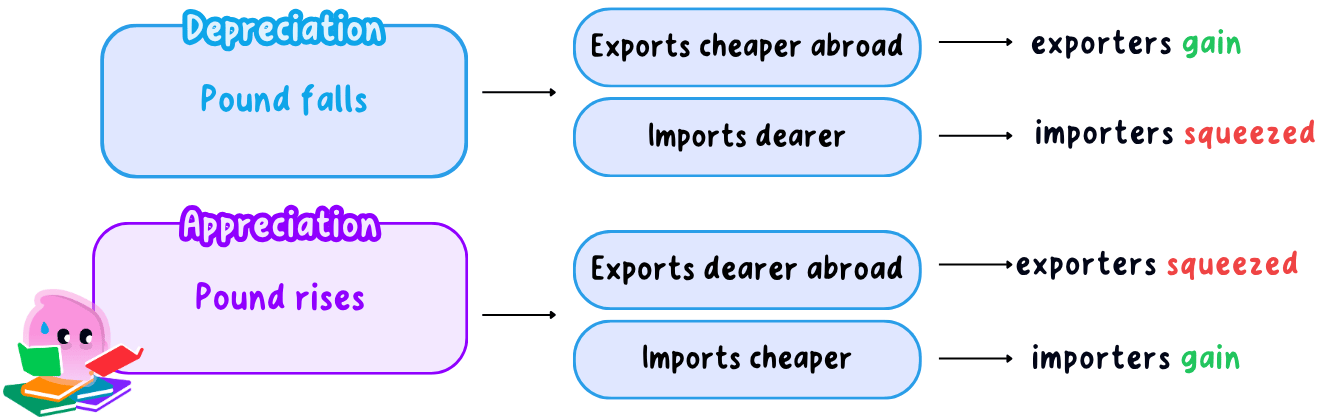
- When the pound appreciates each pound buys more foreign currency, so goods priced abroad cost fewer pounds on the shelf here.
- Cheaper imported food, fuel, clothing and electronics leave a household able to buy more with the same weekly budget.
- There is a wider gain too, because imported goods and imported materials feed into UK prices, so a stronger pound helps hold the cost of living down.
A stronger pound seen by UK producers
- Exporters are squeezed, because a price set in pounds converts into more foreign currency and their goods look dearer to overseas buyers than they did.
- Fewer export orders can mean lower output, and if the strong pound lasts it can mean fewer jobs in the industries that sell abroad.
- Producers buying materials or components from abroad gain, because those inputs now cost them fewer pounds and their costs fall.
- A single firm can feel both at once, so its overall position turns on how much of its cost comes from imports set against how much of its revenue comes from exports.
A weaker pound reverses both sets of effects
- For consumers a depreciation is unwelcome, because imported goods and foreign holidays now cost more pounds than they did.
- The UK buys in a great deal of its food, fuel and manufactured goods, so a lasting fall in the pound pushes the cost of living up rather than leaving it alone.
- For exporting producers it is welcome, because a pound price converts into less foreign currency and their goods undercut foreign rivals without any price being cut.
- For a producer buying its materials abroad it is unwelcome, because a UK furniture maker importing timber pays more pounds for exactly the same timber as last month.
- This is why saying a weak pound is good for British business is too crude: it rewards the exporter, punishes the importer, and a great many firms are both at once.
Example
- A UK bicycle firm builds its frames from steel bought in Europe and sells much of its finished stock to customers in Germany.
- When the pound weakens its German selling price falls, orders rise, and the export side of the business is clearly better off.
- On the very same day every tonne of steel it buys costs more pounds, so its costs rise while its export prices fall.
- Whether the firm ends up ahead depends on which of the two is larger, which is why the effect on producers can never be settled in a single line.
Whether a weaker pound helps depends on four things
- It depends on where the producer buys its inputs, because a firm assembling imported parts watches its costs rise at the very moment its export prices improve, and for an assembler with little UK content the cost rise can swallow the export gain whole.
- It depends on how sensitive foreign buyers are to price, because cheaper exports only turn into extra sales where buyers actually switch, and a specialist product bought for its design or reliability wins few extra orders from a lower foreign price.
- It depends on how long the change lasts, because no firm hires staff, opens a line or signs a long supply contract on the strength of a rate move it expects to be reversed within months, so only a fall that looks durable changes behaviour.
- It depends on whether rival currencies moved as well, because competitiveness is always relative, and if the euro fell against the dollar by as much as the pound did then UK and European exporters face each other on exactly the terms they did before.
Whether a lower exchange rate is a sound long-term route to international competitiveness is weighed up in 4.2.6.
Self review
- What happens to the price of UK exports abroad when the pound appreciates?
- Give one gain for UK consumers from a stronger pound and one loss from a weaker one.
- Why can a weaker pound hurt a UK producer even though it sells goods abroad?
- Why does it matter whether a rate change is expected to last?
- Why does it matter what rival countries' currencies have done?
