Supply is planned selling firms can deliver
Definition
Supply: the quantity of a good or service that producers are willing and able to sell at a given price over a period of time.
Quantity supplied: the single amount producers would offer at one particular price, taken out of that whole set of selling plans.
- Willing and able are two separate tests for a producer, exactly as they are for a buyer.
- A bakery that would like to sell 500 loaves a day but has ovens for only 300 supplies 300, because capacity limits the plan.
- A firm with spare capacity offers nothing at a price that fails to cover the cost of making the good.
- A supply figure needs a price and a time period attached, since 60 tonnes a day and 60 tonnes a year describe very different producers.
- Supply records what firms plan to offer, and how much they actually sell depends on how buyers respond to the price.
- Supply is a flow over a period of time, not the amount already sitting in a warehouse.
- Firms supply in order to make a profit, so anything that changes the profit on a unit changes how much they will supply.
Common Mistake
- A rise in the good's own price raises quantity supplied, not supply.
- Stock in a warehouse is not supply: supply is a flow at a stated price.
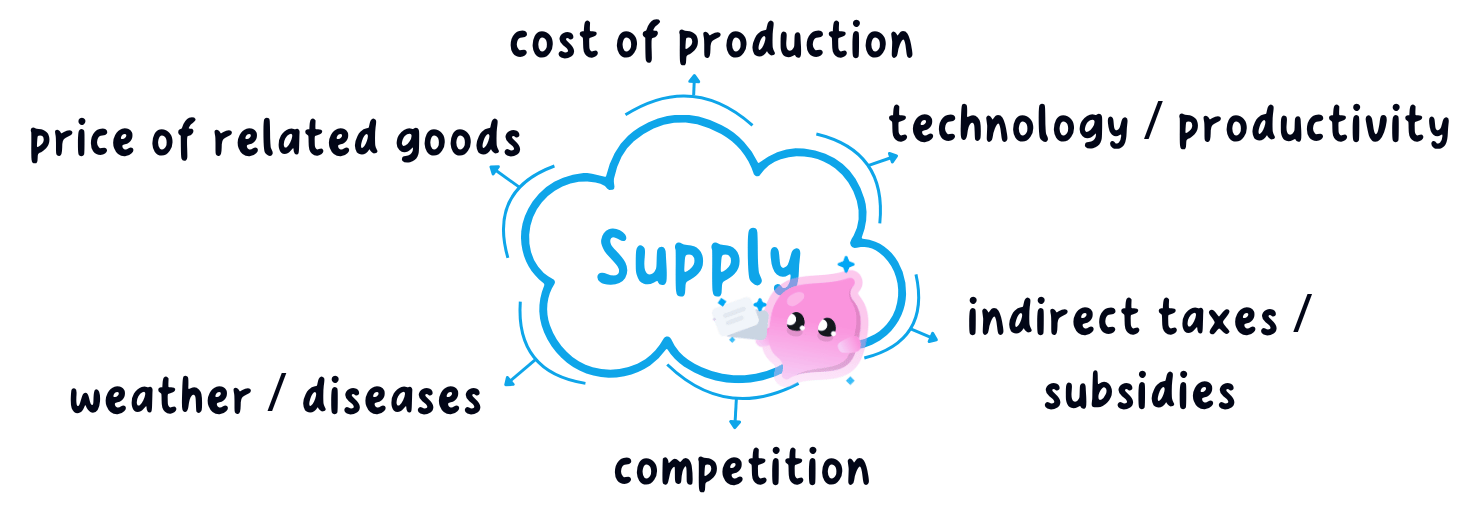
Costs of production are the main influence
- Costs of production include wages, raw materials, energy, rent and the interest paid on borrowing.
- Higher costs cut the profit on each unit, so firms offer less at every price and supply decreases.
- Wholesale gas prices rose sharply from 2021, and several UK steel, glass and fertiliser plants cut or paused production.
- Lower costs raise the profit on each unit, so firms offer more at every price and supply increases.
- A rise in the National Living Wage bites hardest where labour is the biggest cost, such as Greggs and other high street food chains.
Case study
- Nissan's Sunderland plant buys steel, aluminium, electronic components and electricity to build every car.
- When energy and component prices rose in 2021 and 2022, the cost of building each car rose with them.
- The plant will now build fewer cars at every price, which is a change in supply and not in what buyers want.
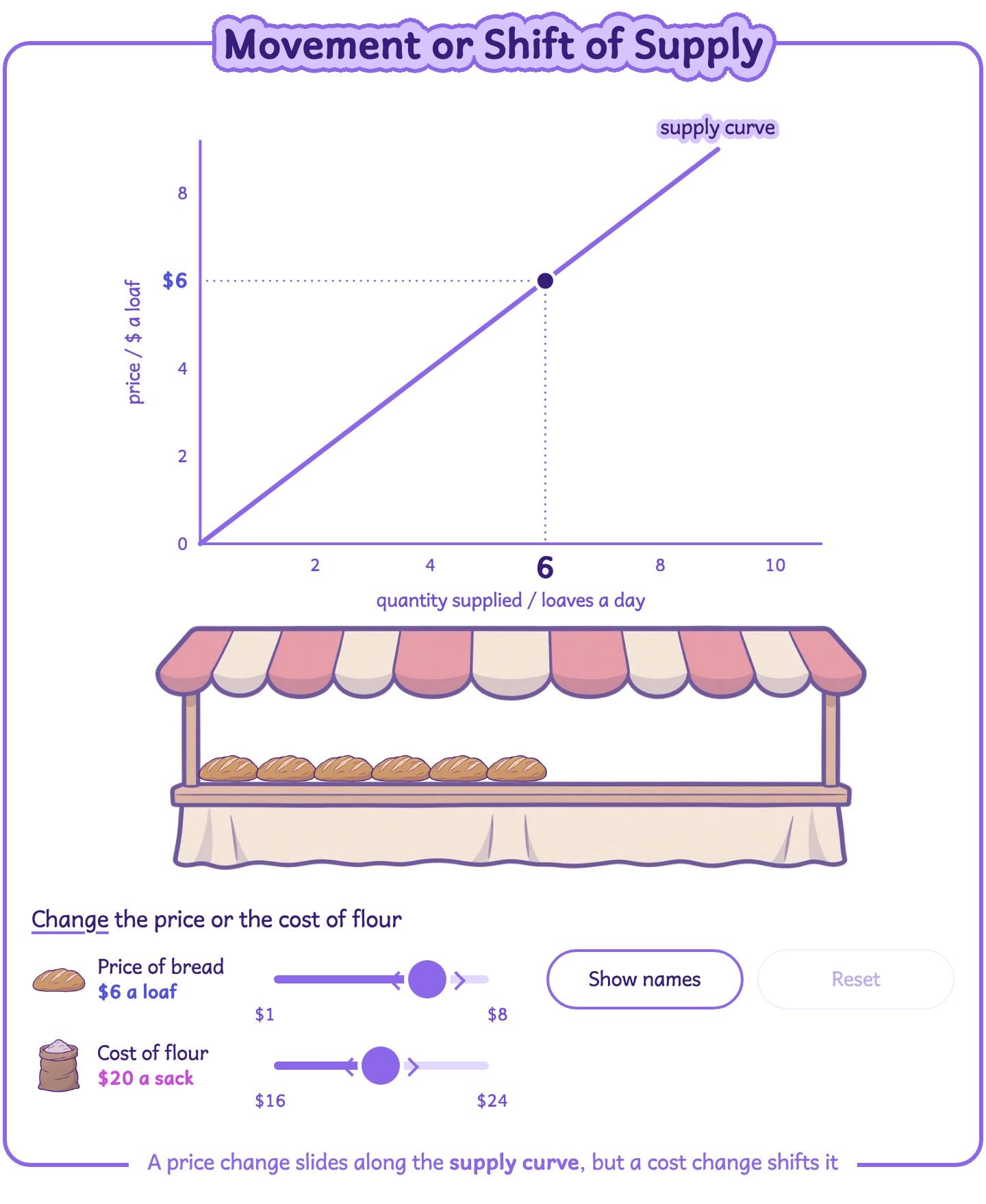
Raise or lower firms' costs and watch the supply curve shift left or right.
Technology and productivity raise supply
- Technology raises the output a firm gets from given inputs, which lowers the cost of each unit and increases supply.
- Ocado's automated warehouses pick grocery orders far faster than staff picking by hand, so one site can supply many more deliveries a day.
- Higher productivity does the same job, because more output per worker spreads the same costs over more units.
- Training and better capital equipment therefore increase supply over time, without touching the price of the good.
Indirect taxes and subsidies both shift supply
- An indirect tax is a tax on spending that the firm hands to the government, such as VAT, fuel duty or alcohol duty.
- The tax acts on the firm like an extra cost of production, so supply decreases and less is offered at every price.
- A subsidy is a government payment to producers, such as the support paid to UK renewable electricity generators.
- The subsidy lowers the cost of producing each unit, so supply increases and more is offered at every price.
- The size of the tax or subsidy matters as well as its direction, because a larger amount per unit moves supply further.
Common Mistake
- A subsidy is paid to producers, so it shifts supply and never demand.
- An indirect tax also shifts supply: do not move demand just because buyers pay more.
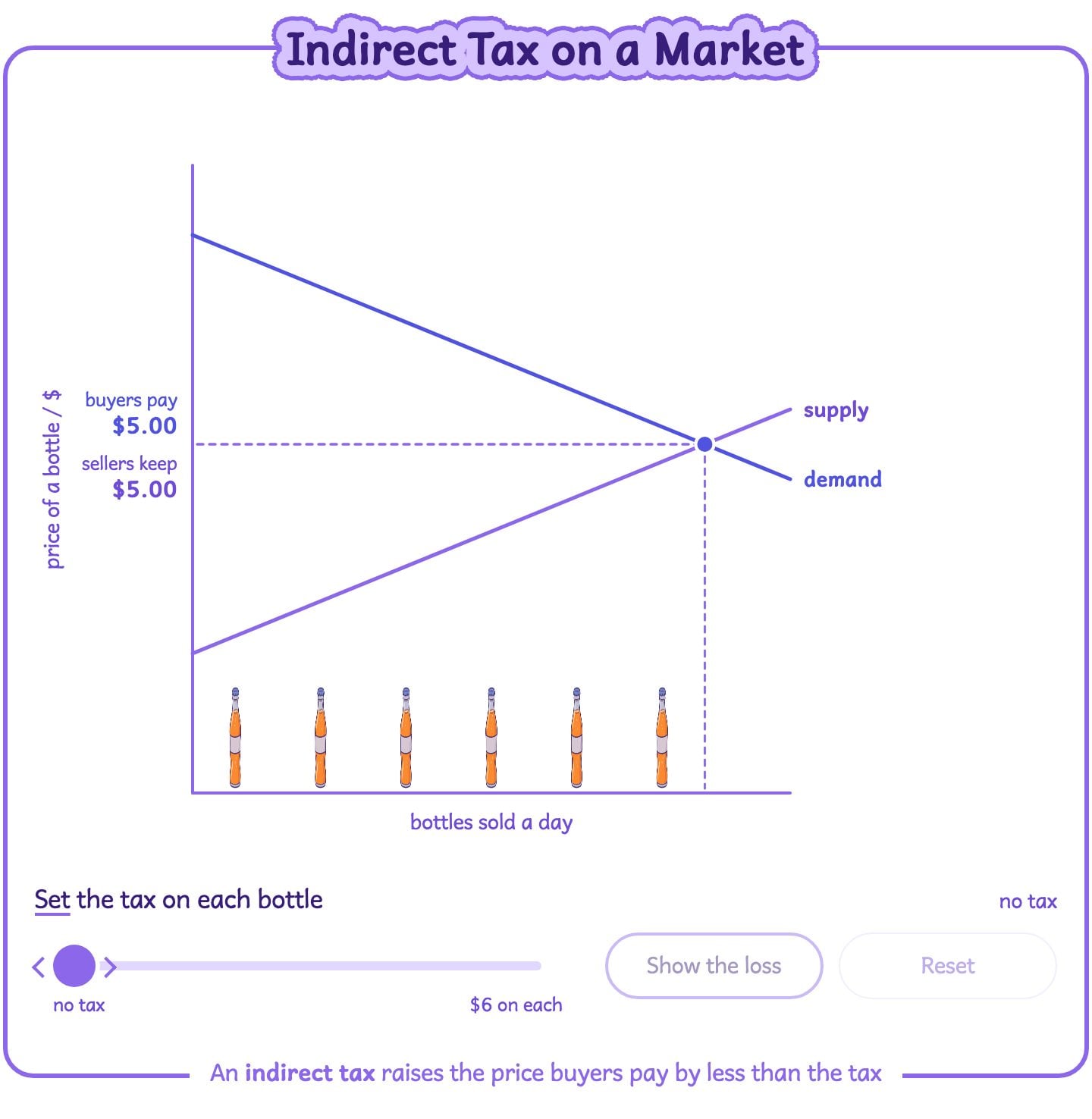
Raise the indirect tax and watch supply shift up, pushing the price buyers pay higher.
More firms mean more market supply
- More firms in a market increases supply, because the market total is every firm's selling plans added together.
- Firms leaving therefore decreases supply, because their selling plans drop out of that total.
- Around thirty small UK energy suppliers collapsed in 2021 after wholesale gas prices rose, and Ofgem moved their customers to the firms left standing.
Weather, disease and related goods shift supply
- The weather changes supply in farming, so a cold wet spring cuts the British wheat and potato harvest whatever price the crop is fetching.
- Disease works the same way, as bird flu outbreaks have repeatedly cut the UK supply of eggs and Christmas turkeys.
- The price of a related good matters when a producer can switch resources, so a rise in the oilseed rape price reduces the wheat supplied from the same farm.
- Not one factor in this article is the good's own price, which is what separates them all from a change in quantity supplied.
Self review
- Give the full definition of supply.
- How does supply differ from quantity supplied?
- Why does a rise in raw material prices decrease supply?
- Does a subsidy change supply or demand, and in which direction?
- Name two factors other than costs that can change supply.