Divide the buyers’ reaction by the price change
Percentage change=changeoriginal figure×100% \text{Percentage change}=\frac{\text{change}}{\text{original figure}}\times100\% Percentage change=original figurechange×100% PED=percentage change in quantity demandedpercentage change in price \text{PED}=\frac{\text{percentage change in quantity demanded}}{\text{percentage change in price}} PED=percentage change in pricepercentage change in quantity demanded- Calculate each percentage change from the original price or quantity, then divide the quantity-demanded change by the price change.
- PED is normally negative because price and quantity demanded move in opposite directions. Use its size when deciding whether demand is elastic or inelastic.
Common Mistake
- Do not invert the fraction.
- Use the original figures as the denominators.
The same three steps work every time
- Find the percentage change in quantity demanded. 2. Find the percentage change in price. 3. Divide the first by the second.
Example
- A loaf rises from £1.20 to £1.32 and weekly sales fall from 4,000 to 3,840.
- The size is 0.4, so demand is price inelastic over this range.
Read the coefficient against 1
- Ignore the negative sign and compare the size of PED with 1.
- 0 < PED < 1 means demand is inelastic: quantity demanded changes proportionally less than price.
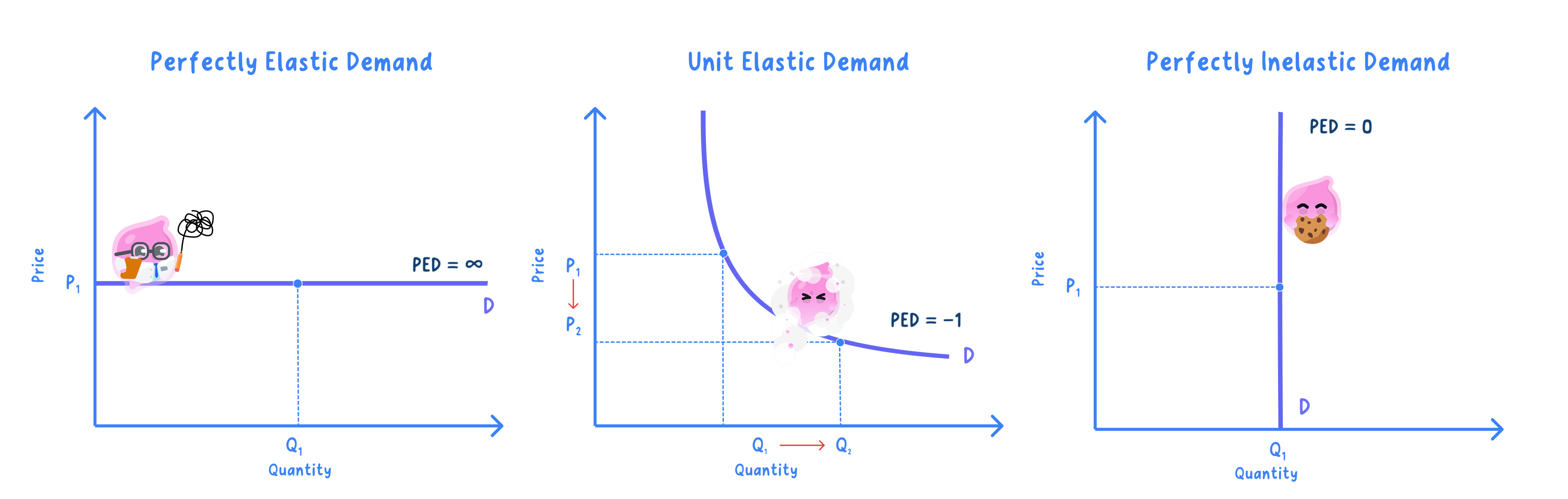
- PED = 1 means demand is unit elastic: the two percentage changes are equal.
- PED > 1 means demand is elastic: quantity demanded changes proportionally more than price.
- PED = 0 is perfectly inelastic; a vertical demand curve.
- Perfectly elastic demand is shown by a horizontal demand curve.
Elasticity decides whether a price rise raises revenue
- Total revenue = price × quantity sold.
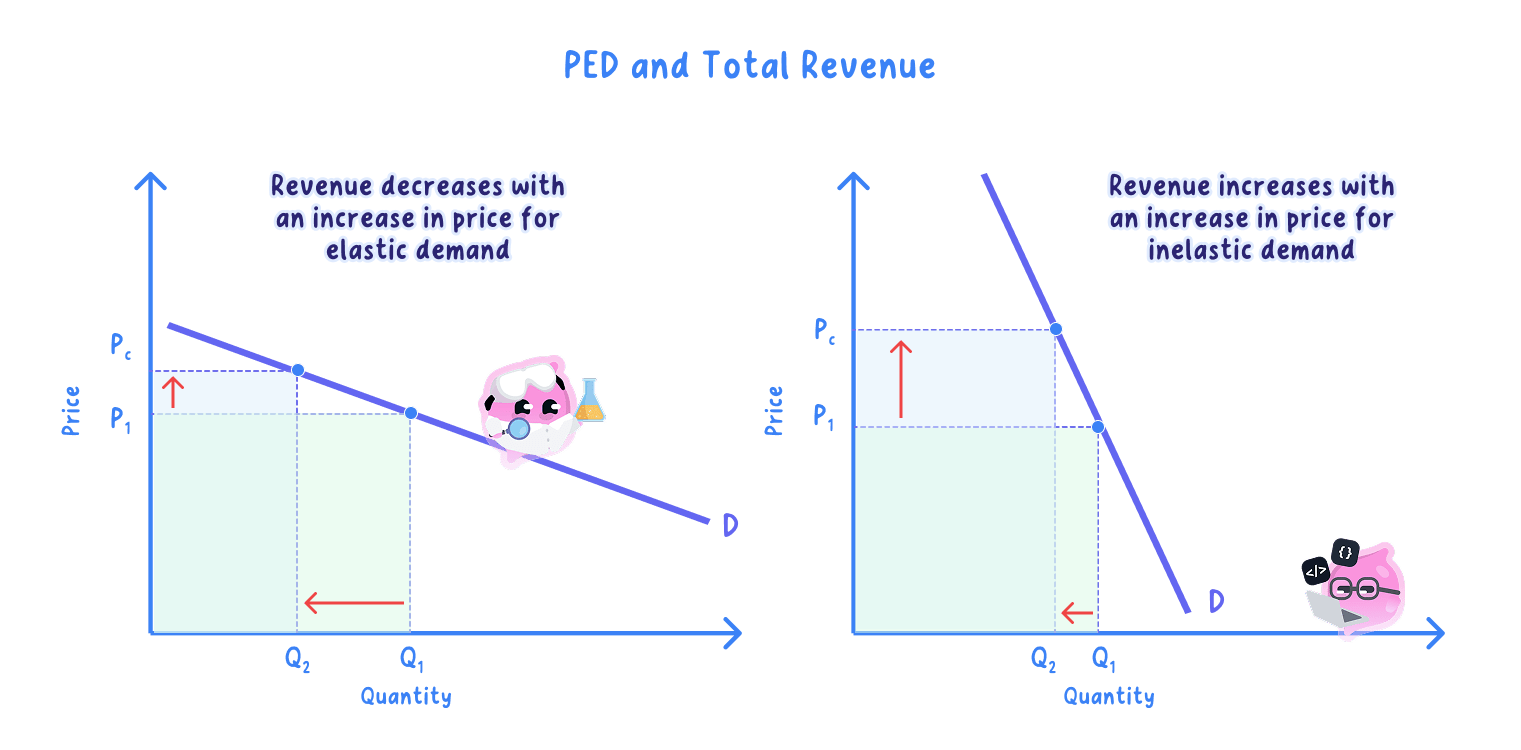
- If demand is inelastic, a price rise increases total revenue; if demand is elastic, it decreases total revenue. At unit elasticity, total revenue is unchanged.
- The opposite applies to a price cut.
Example
- A good sells 400 units at £2.00. With PED = 0.5, a 10% price rise cuts quantity demanded by 5% to 380.
- Revenue rises from £800 to £836 because demand is inelastic.
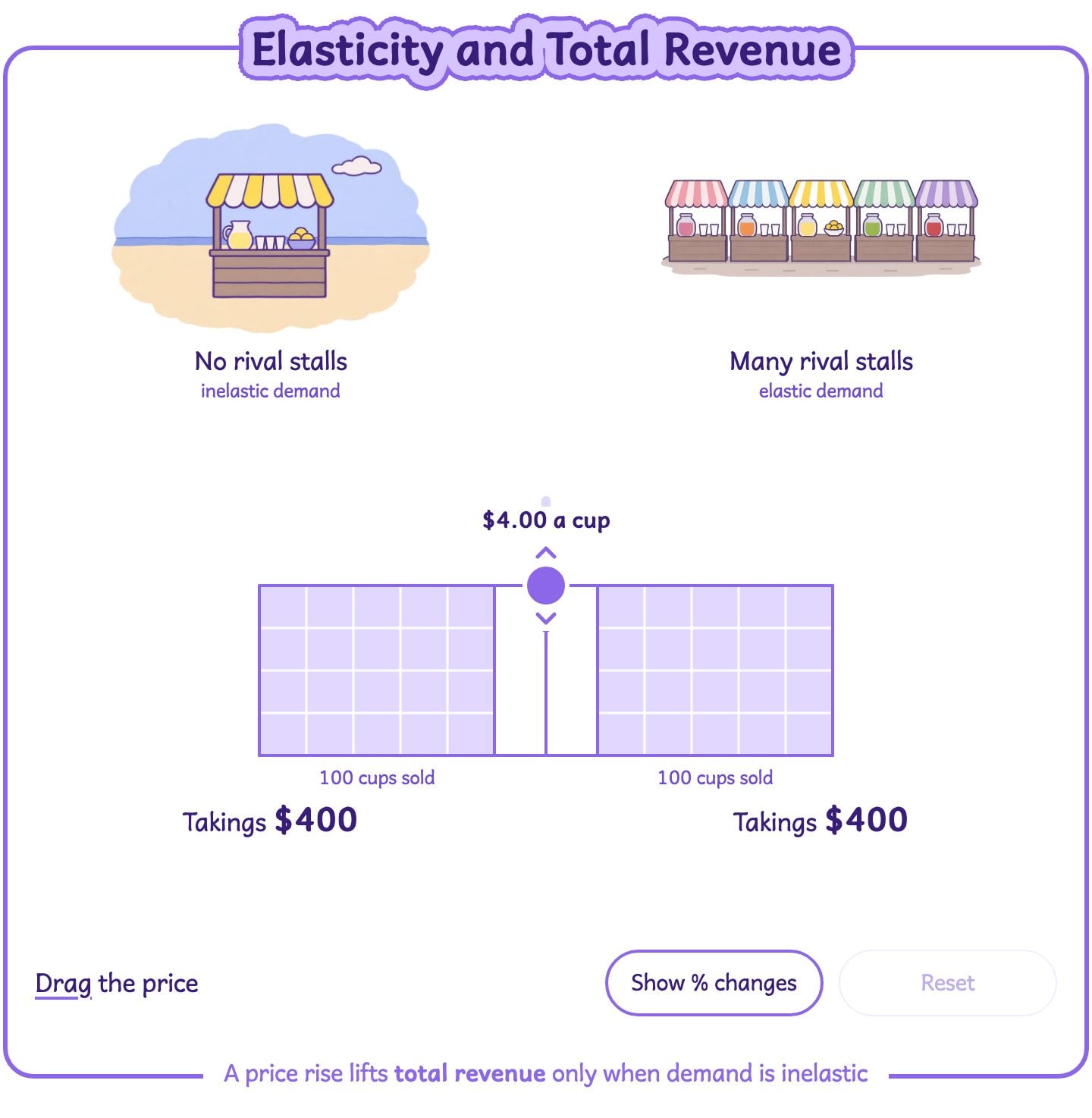
Raise the price and watch total revenue rise when demand is inelastic but fall when it is elastic.
Implications for consumers, producers and government
- With inelastic demand, consumers have fewer close substitutes, so a price rise reduces quantity demanded by relatively little.
- A producer may raise revenue by raising price only when demand is inelastic over the relevant price range; costs and competitors still matter for profit.
Taxing inelastic demand raises revenue but hits poorer households
- Taxes on goods with relatively inelastic demand can raise substantial revenue because sales fall by relatively little.
- However, demand is rarely perfectly inelastic, and a tax may affect lower-income households more heavily.
Exam technique
- Show both percentage changes using the original figures, then state the size of PED and the correct elastic/inelastic verdict.
- If revenue is asked for, confirm the direction by calculating price × quantity.
Self review
- State the PED formula in words.
- If price rises by 10% and quantity demanded falls by 4%, calculate PED and classify demand.
- What happens to total revenue after a price rise when demand is elastic?
- Why might a government tax a good with inelastic demand?
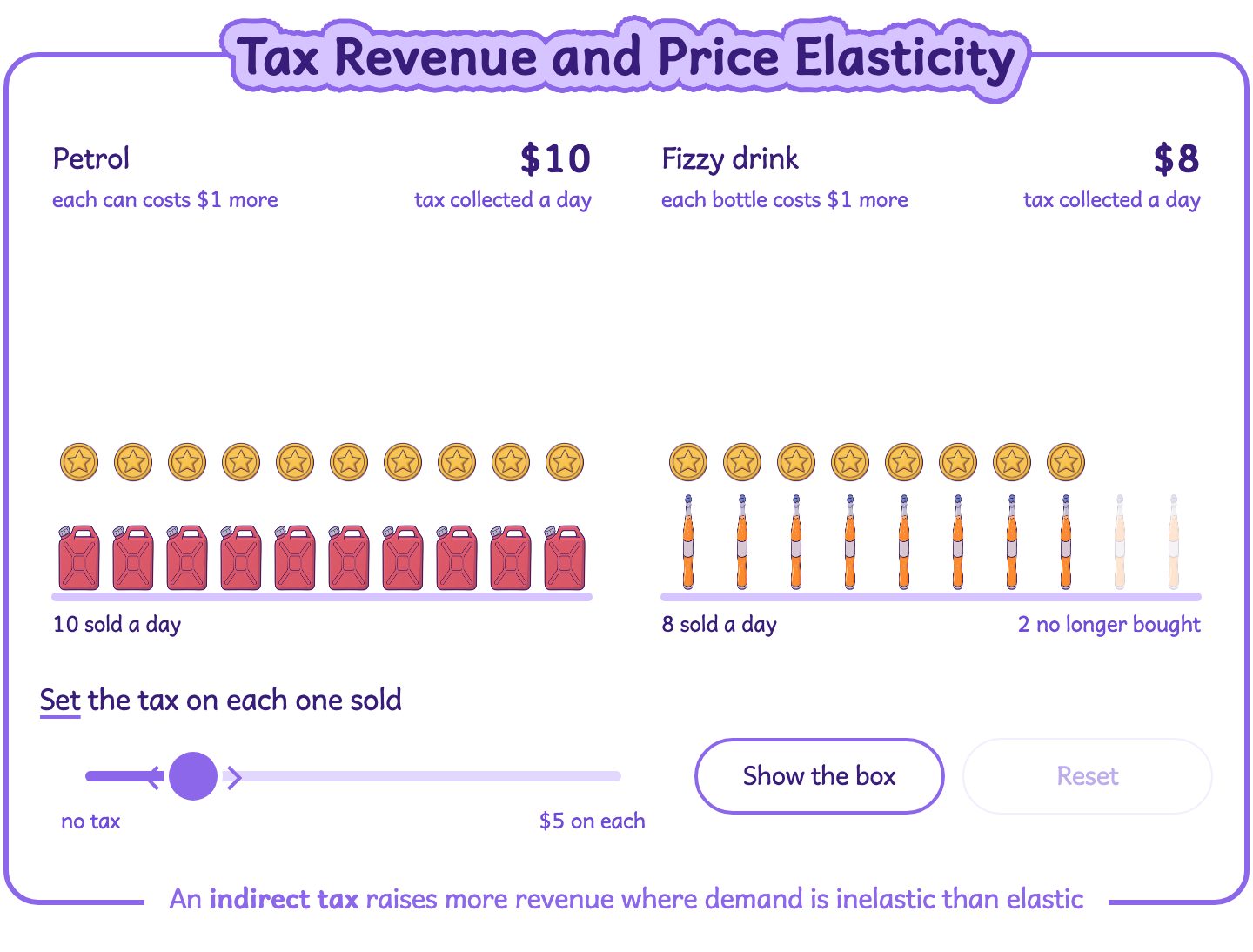
Compare an indirect tax on inelastic and elastic demand and notice which raises more revenue for the government.