A change arrives next door as a demand shift
- Every chain has the same four links: something changes in the first market, its equilibrium price moves, buyers' plans change in the related market, and that market settles at a new equilibrium.
- What arrives in the second market is a shift of demand, because it is the price of some other good that has changed, not the price of the good traded there.
- A movement along the second market's demand curve would leave its price exactly where it started.
- A rise in the price of one good shifts demand for its substitute to the right, so that market's equilibrium price and quantity both rise.
- A rise in the price of one good shifts demand for its complement to the left, so that market's equilibrium price and quantity both fall.
- The second market can pass the change on again to a third, which is how a shock reaches markets that look entirely unconnected to it.
Case study
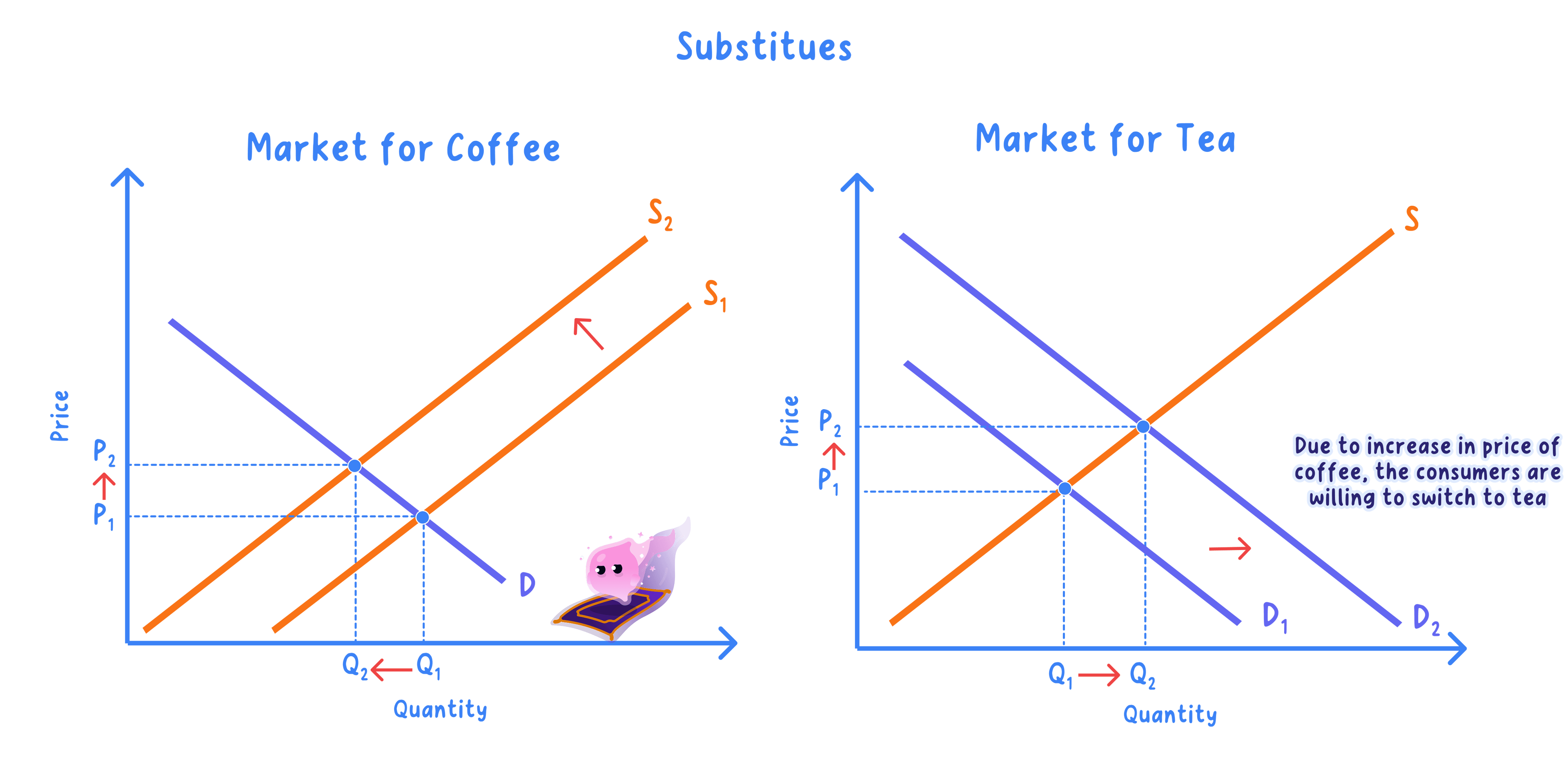
- Chain one, Brazilian coffee to a UK box of tea: a substitute link.
- Frost damages the Brazilian coffee crop, so the supply of coffee beans shifts left.
- The UK equilibrium price of a jar rises from about £4.00 to about £5.00 and fewer jars are sold.
- The tea is a substitute, so demand for Tea shifts right at every tea price level.
- The new equilibrium / crossing point sits further up that unchanged supply curve, so the equilibrium price of a box of tea rises and the quantity traded rises too.
- Tea became dearer and tea growers gained, which is what economists mean by interdependent markets.
The complement chain reverses the demand shift
Case study
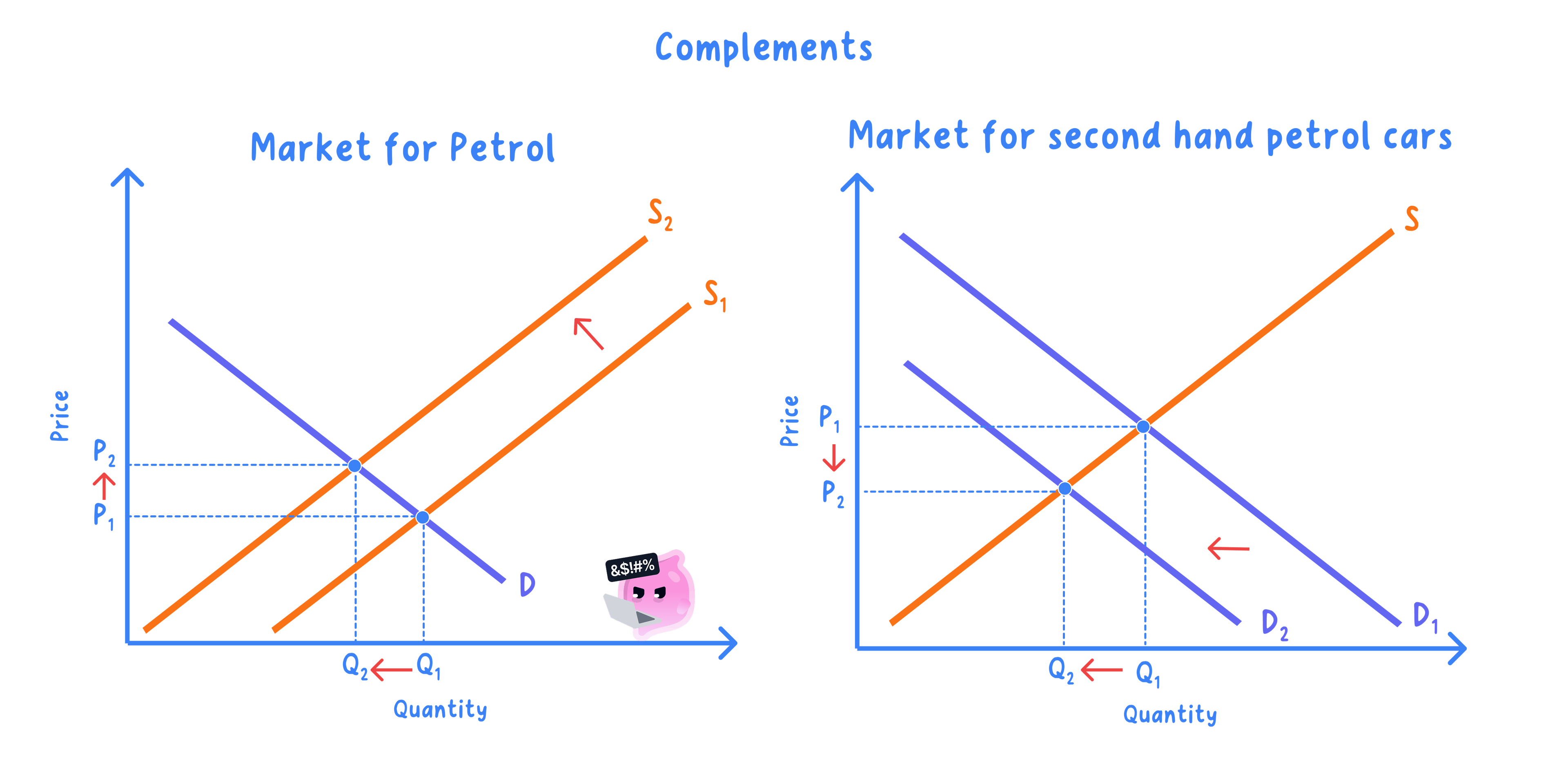
- Chain two, fuel duty to a second-hand petrol car: a complement link.
- The Chancellor raises fuel duty, which adds to the cost of putting petrol on a forecourt, so the supply of petrol shifts left.
- The equilibrium pump price rises from about £1.40 to about £1.55 a litre and the litres sold fall.
- Petrol and a large petrol car are complements, so running one has become dearer and demand for large second-hand petrol cars shifts left at every price.
- The new crossing point sits further down that unchanged supply curve, so the equilibrium price of these cars falls and the quantity traded falls too.
- A duty collected at the pump has cut the price of a used car without touching the car market directly at any point.
Two links work without buyers switching
Definition
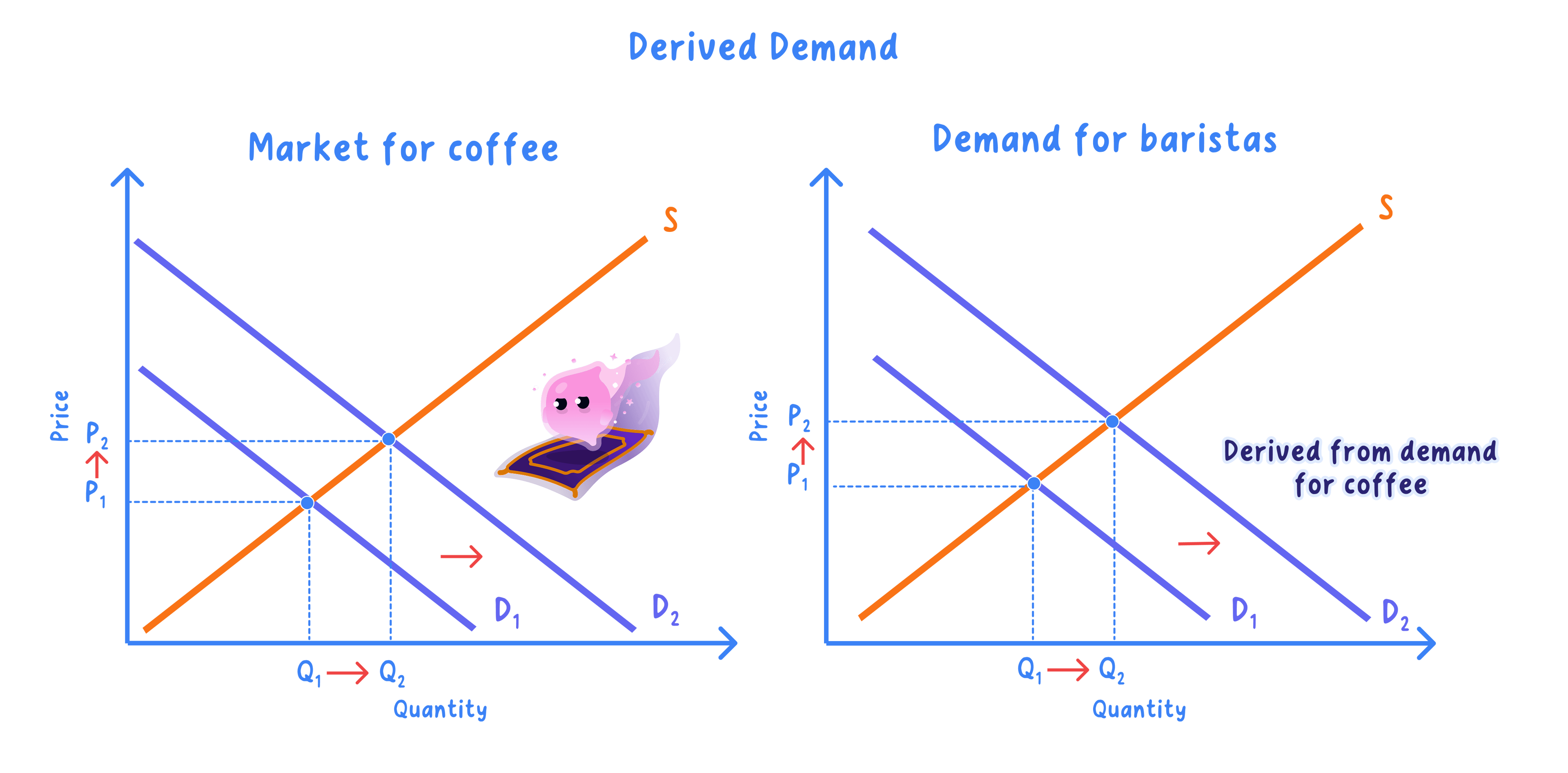
Derived demand: demand for a good, service or worker that exists only because there is demand for something else they help to produce.
- Derived demand runs down the production chain, so a change in the market for a finished product lands on the markets for everything used to build it.
- Nissan's Sunderland plant is the clearest UK case: fewer car orders there means fewer orders for steel, tyres, paint and assembly hours.
- The demand shift in the input market points the same way as the change in the final market, since the input is wanted for nothing except what it builds.
Common Mistake
- The second market's supply curve does not move: nothing has changed about the cost of supplying that good.
- It is a shift of demand, not a movement along it: the second good's own price has not changed.
- Check the direction before you draw: a dearer good pulls demand towards its substitutes and away from its complements.
Joint supply shifts the partner's supply
Definition
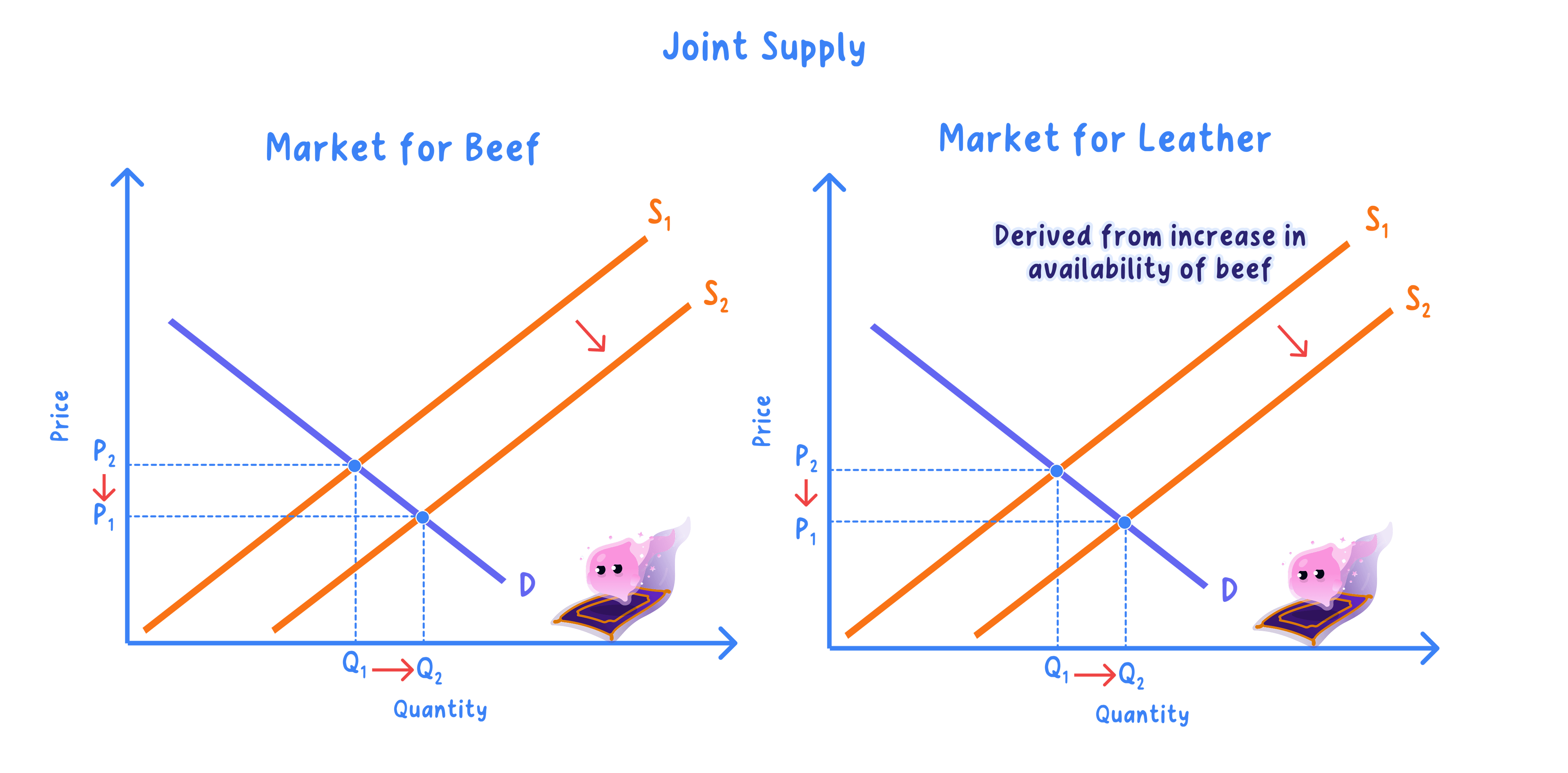
Joint supply: where producing one good automatically produces another, so a change in one of those markets moves the supply of the other.
- A rise in the price of one product brings more of its partner onto the market as an unavoidable by-product, so the partner's supply shifts right and its price falls.
- Beef and cowhide come from the same animal, so a higher beef price brings more hides to the tanneries and pushes the price of leather down.
- Refining crude oil yields petrol and bitumen together, so refining more for the forecourts also puts more bitumen on the market for resurfacing UK roads.
- Both of these links tie two markets together on the production side even when no buyer is choosing between the two goods at all.
Exam technique
- Name the link between the two markets first, because the direction of every later step depends on it.
- Set the chain out as numbered steps with one cause in each; the analysis marks are for the links.
- Finish in the second market with both the new price and the new quantity, not just the shift.
Self review
- If the price of coffee rises, what happens to the equilibrium price and quantity of tea?
- Which way does demand shift in the market for a complement when the first good's price rises?
- Why is the change in the second market a shift rather than a movement along the demand curve?
- What is derived demand?
- What happens to the price of leather when the price of beef rises?