Question 8
HFigure: Haber process equilibrium and operating conditions
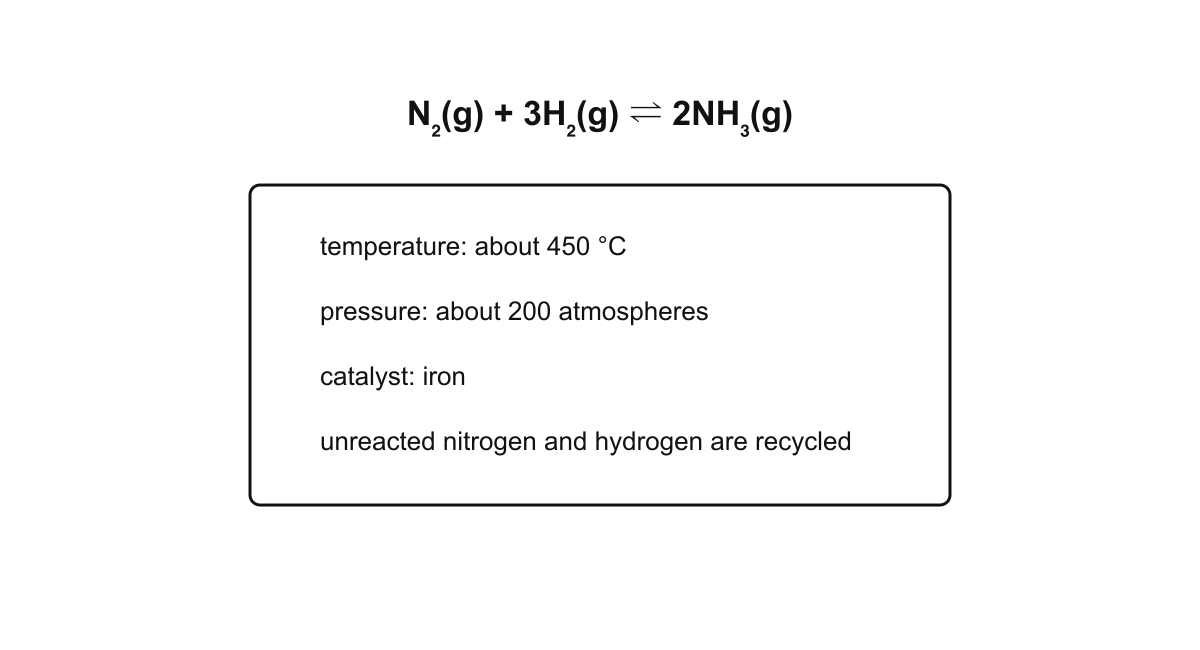
The Haber equilibrium is shown in the figure. Increasing pressure shifts the equilibrium towards ammonia because
the product side has more gas molecules
the product side has fewer gas molecules
the forward reaction is exothermic
higher pressure increases the rate of the reverse reaction
5.2 Reversible reactions and equilibria Questions
45 exam-style questions on Edexcel GCSE Chemistry 5.2 Reversible reactions and equilibria, covering 5.2.1 Reversible reactions and dynamic equilibrium, 5.2.2 The Haber process, and 5.2.3 Changing the position of a dynamic equilibrium. Each one has a worked solution and a mark scheme showing where the marks go.