Question 1
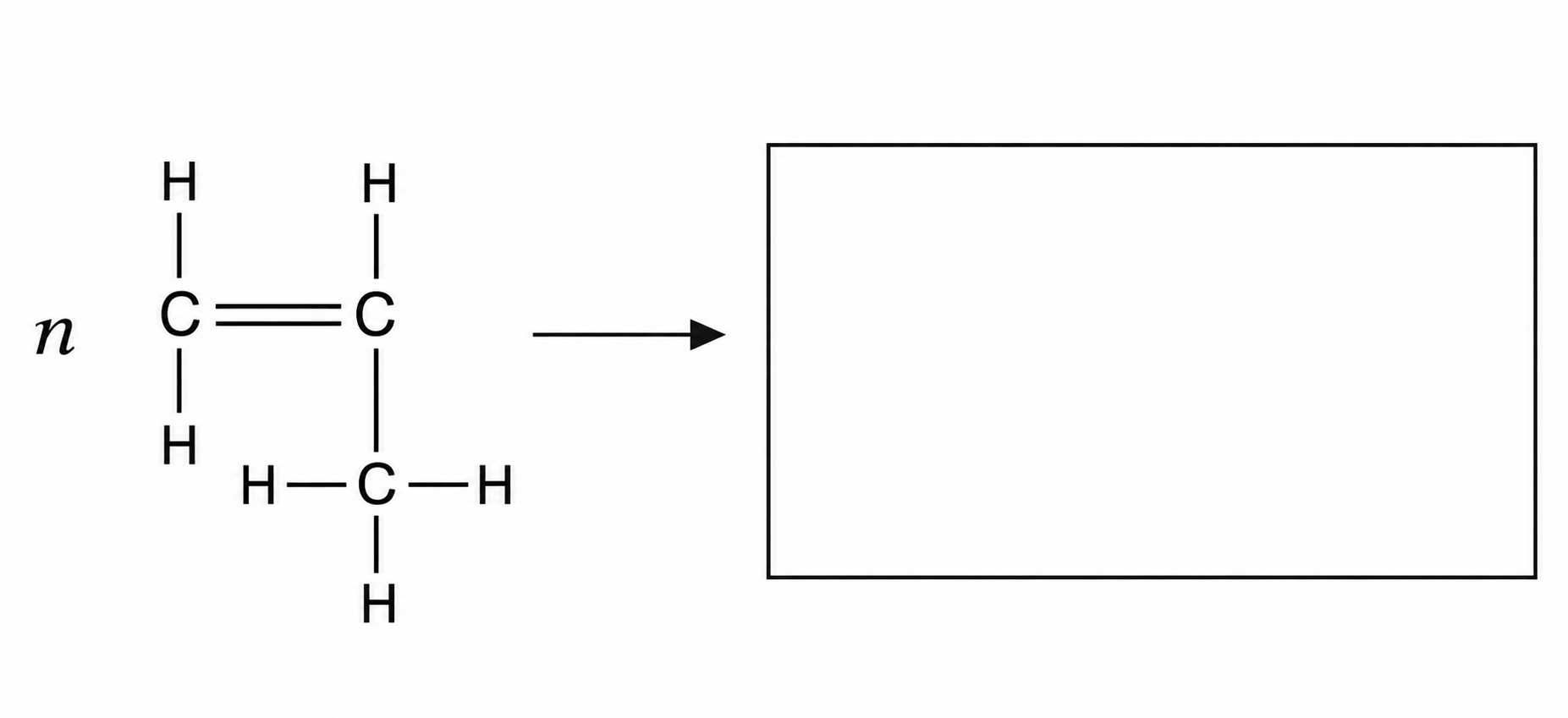
FPropene can be used to make poly(propene).
The figure shows the start of the equation for this reaction.
Figure: The equation for the formation of poly(propene) from propene, with the polymer left blank
a.[3]
Complete the equation in the figure to show the formation of poly(propene) from propene.
b.[1]
Give the number of carbon atoms in the repeating unit of poly(propene).
7.3 Synthetic and naturally occurring polymers Questions
40 exam-style questions on AQA GCSE Chemistry 7.3 Synthetic and naturally occurring polymers, covering 7.3.1 Addition polymerisation, 7.3.2 Condensation polymerisation, 7.3.3 Amino acids, and 7.3.4 DNA (deoxyribonucleic acid) and other naturally occurring polymers. Each one has a worked solution and a mark scheme showing where the marks go.