x

Revision notes for AQA GCSE Chemistry Properties and effects of atmospheric pollutants. Open the guide for explanations and worked examples. Written against the AQA GCSE Chemistry (8462) specification, so the content matches what's examinable rather than general Chemistry background.

Properties and effects of atmospheric pollutants

What you'll learn

  • What makes a substance an atmospheric pollutant.
  • Why carbon monoxide is dangerous even though you cannot see or smell it.
  • How sulfur dioxide and oxides of nitrogen cause breathing problems and acid rain.
  • How particulates affect human health and cause global dimming.

The big idea: pollutants are harmful substances in the air

The atmosphere is the layer of gases around Earth. Most dry air is nitrogen and oxygen, but air can also contain small amounts of harmful substances from burning fuels, industry, and natural sources.

Definition

Atmospheric pollutant

An atmospheric pollutant is a substance in the air that can harm living organisms, damage the environment, or damage materials such as buildings.

For this topic, the key pollutants are:

  • carbon monoxide, CO
  • sulfur dioxide, SO₂
  • oxides of nitrogen, often written as NOₓ
  • particulates, such as soot and tiny dust particles

A useful way to think about this topic is:

source → pollutant → property → effect

For example: a car engine can produce carbon monoxide; carbon monoxide is toxic and hard to detect; it can stop the blood transporting oxygen properly.

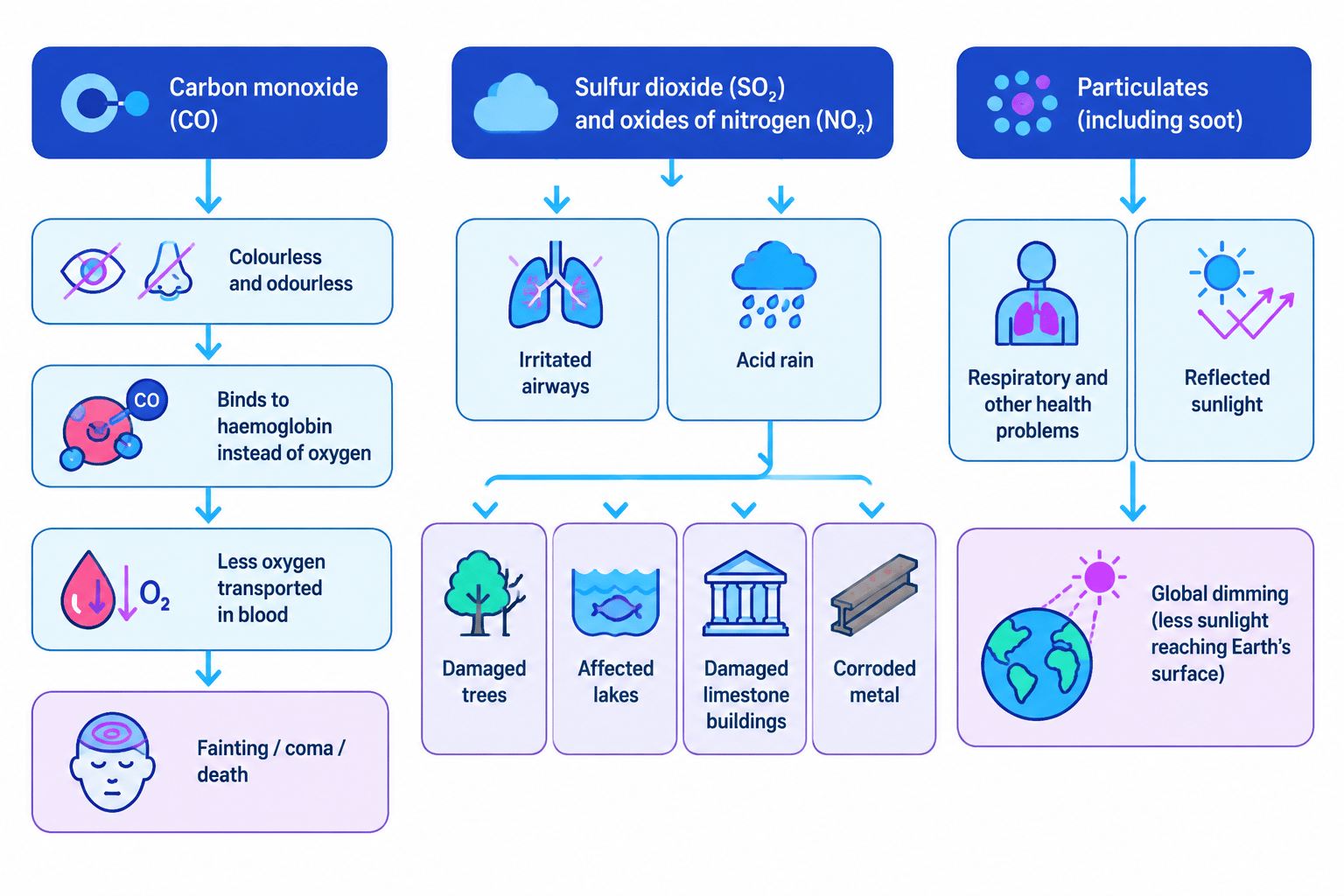
Flow diagram linking atmospheric pollutant sources, pollutants and effects

Definition

Concentration in air

The concentration of a pollutant means how much of that pollutant is present in a given volume of air. Increased amounts usually mean more exposure for people, plants, animals, buildings, or ecosystems.

Properties vs effects

A property is what a substance is like. For example, carbon monoxide is colourless and odourless.

An effect is the problem the substance causes. For example, carbon monoxide can reduce oxygen transport in the blood.

Key Idea

Describe and explain

In GCSE questions, describe usually means say what happens. Explain means link the pollutant’s property to the harm it causes.

Carbon monoxide: toxic and hard to detect

Carbon monoxide, CO, is a toxic gas. It is made when carbon-containing fuels burn without enough oxygen, which is called incomplete combustion.

Carbon monoxide is especially dangerous because it is:

  • colourless — you cannot see it
  • odourless — you cannot smell it
  • toxic — it can poison the body
Definition

Toxic

A toxic substance is poisonous: it can harm or kill living organisms if they are exposed to enough of it.

Carbon monoxide affects the blood. It combines with haemoglobin in red blood cells, reducing the blood’s ability to carry oxygen around the body. Body cells then receive less oxygen for respiration, so organs such as the brain and heart may not work properly.

Possible effects include headaches, dizziness, unconsciousness, and death.

Common Mistake

Colourless does not mean harmless

Do not write that carbon monoxide is safe because it cannot be seen. Its danger is partly because it is not easily detected without a carbon monoxide alarm.

Example

Explaining carbon monoxide poisoning

A car engine is left running in a closed garage. Explain why this is dangerous.

  1. The engine burns fuel, and if there is not enough oxygen, incomplete combustion can produce carbon monoxide.
  2. The garage is closed, so carbon monoxide can build up to a higher concentration in the air.
  3. Carbon monoxide is colourless and odourless, so a person may not realise they are breathing it in.
  4. Carbon monoxide reduces the blood’s ability to transport oxygen, so cells receive less oxygen for respiration. This can lead to unconsciousness or death.

Sulfur dioxide and oxides of nitrogen: breathing problems

Sulfur dioxide, SO₂, is produced when fuels containing sulfur impurities are burned. This can happen when coal or oil is burned in power stations or industrial processes.

Oxides of nitrogen, NOₓ, are gases made when nitrogen and oxygen from the air react at high temperatures, such as inside vehicle engines.

Definition

Respiratory problems

Respiratory problems are problems affecting breathing or the gas-exchange system, including the lungs and airways.

Sulfur dioxide and oxides of nitrogen can irritate the lungs and airways. This can make conditions such as asthma worse and can cause coughing, wheezing, or shortness of breath.

Key Idea

Pollutants and lungs

Sulfur dioxide and oxides of nitrogen are harmful because they can be breathed in and irritate the respiratory system.

Acid rain

Sulfur dioxide and oxides of nitrogen can also cause acid rain.

Definition

Acid rain

Acid rain is rainwater, snow, fog, or mist that is more acidic than normal because acidic gases have dissolved in water in the atmosphere.

In simple GCSE terms:

  1. sulfur dioxide and oxides of nitrogen are released into the air
  2. they dissolve in water in clouds
  3. they form acidic solutions
  4. the acidic water falls as acid rain

Acid rain can:

  • damage leaves and reduce plant growth
  • make lakes and rivers more acidic, harming fish and other aquatic life
  • damage limestone and marble buildings or statues
  • corrode some metals
Common Mistake

Carbon dioxide is not the main acid-rain answer

Carbon dioxide naturally dissolves in rainwater to make it slightly acidic, but GCSE acid rain questions usually expect sulfur dioxide and oxides of nitrogen as the main pollutants.

Example

Linking sulfur dioxide to acid rain damage

A power station burns coal containing sulfur impurities. Explain how this could damage nearby lakes.

  1. Burning the sulfur-containing coal produces sulfur dioxide gas.
  2. Sulfur dioxide enters the atmosphere and dissolves in water droplets in clouds, forming acidic rainwater.
  3. The acid rain falls into lakes, lowering the pH of the water.
  4. Many aquatic organisms are sensitive to pH changes, so fish and other organisms may be harmed or killed.

Particulates: tiny particles in the air

Particulates are tiny solid particles or liquid droplets suspended in the air. Examples include soot, dust, and tiny particles from diesel engines.

Definition

Particulates

Particulates are small particles in the air, such as soot or dust, that can be breathed in or can scatter sunlight.

Particulates cause two important types of problem:

  • health problems in humans
  • global dimming

Health problems from particulates

Small particulates can be breathed deep into the lungs. Some can irritate or damage lung tissue. Very small particles may enter the bloodstream and increase the risk of heart and lung problems.

Possible effects include:

  • asthma attacks becoming worse
  • bronchitis or breathing difficulties
  • increased risk of long-term lung disease
  • increased risk of heart problems, especially in vulnerable people

The smaller the particles, the deeper they can travel into the gas-exchange surfaces of the lungs.

Global dimming

Particulates can reflect or scatter sunlight before it reaches Earth’s surface. This means less sunlight reaches the ground.

Definition

Global dimming

Global dimming is the reduction in the amount of sunlight reaching Earth’s surface, caused by particles in the atmosphere reflecting or scattering light.

Global dimming can reduce light available for photosynthesis and may affect weather patterns. It is different from global warming: global warming is mainly linked to greenhouse gases trapping infrared radiation, while global dimming is about particles reducing incoming sunlight.

Common Mistake

Do not confuse global dimming and global warming

Particulates cause global dimming by reducing sunlight reaching the surface. Greenhouse gases cause global warming by reducing the amount of infrared radiation escaping to space.

Example

Explaining problems caused by increased particulates

A city has more diesel traffic, and the air contains more particulates. Explain two problems this could cause.

  1. More diesel traffic can release more soot and other small particles into the air.
  2. People inhale more particulates, and the particles can irritate or damage the lungs, causing or worsening respiratory problems.
  3. More particulates in the atmosphere can scatter or reflect more sunlight.
  4. Less sunlight reaches Earth’s surface, causing global dimming and potentially reducing light available for photosynthesis.

Quick pollutant-effect summary

PollutantKey propertyMain effects
Carbon monoxide, COToxic, colourless, odourless gasReduces oxygen transport in blood; can cause unconsciousness or death
Sulfur dioxide, SO₂Acidic gas that irritates airwaysRespiratory problems; acid rain
Oxides of nitrogen, NOₓIrritating gases formed at high temperaturesRespiratory problems; acid rain
ParticulatesTiny particles such as soot or dustLung and heart problems; global dimming
Tip

Memory link

Use the pairings: CO → blood oxygen, SO₂ and NOₓ → lungs and acid rain, particulates → lungs and global dimming.

Writing strong explanations

When a question says “describe and explain the problems caused by increased amounts of pollutants”, try to build a chain.

A strong answer usually includes:

  • the named pollutant
  • a relevant property of the pollutant
  • how humans or the environment are exposed
  • the effect caused

For example, instead of writing:

“Carbon monoxide is bad.”

Write:

“Carbon monoxide is toxic, colourless and odourless, so it is not easily detected. It reduces the blood’s ability to carry oxygen, which can cause unconsciousness or death.”

Exam technique

In the exam

  1. Name the pollutant clearly: carbon monoxide, sulfur dioxide, oxides of nitrogen, or particulates.
  2. Match the effect to the correct pollutant: CO affects oxygen transport; SO₂ and NOₓ cause respiratory problems and acid rain; particulates cause health problems and global dimming.
  3. Use a cause-and-effect chain when explaining increased amounts: more pollutant in the air means more inhaled, more dissolved in rainwater, or more sunlight scattered.
Self review

Check yourself

  • Why is carbon monoxide especially dangerous in a house, garage, or poorly ventilated room?
  • How do sulfur dioxide and oxides of nitrogen lead to acid rain?
  • Explain how particulates can cause both health problems and global dimming.

Common atmospheric pollutants and their sources

Guide 2 of 2

You've reached the end

Test yourself on this topic, or move on to the next guide.

Next guideUsing the Earth's resources and sustainable developmentStart

How was this guide?

Properties and effects of atmospheric pollutants Revision Guide

  1. GCSE
  2. /Chemistry
  3. /Properties and effects of atmospheric pollutants