Question 3
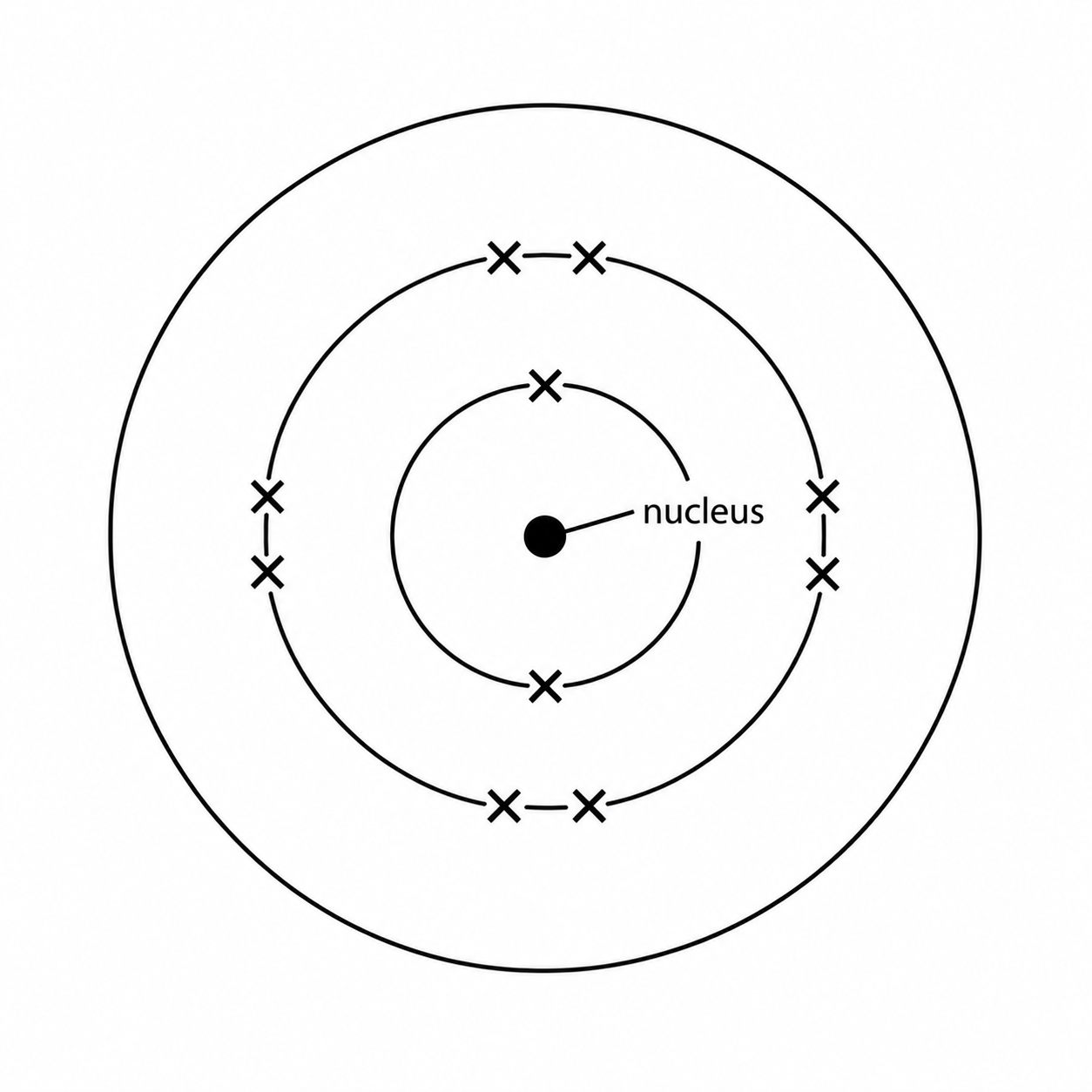
F80%An atom of chlorine contains 17 electrons. The figure shows an incomplete diagram of the electronic structure of an atom of chlorine.
Figure: Incomplete diagram of the electronic structure of an atom of chlorine
a.[1]
Complete the figure to show the electronic structure of an atom of chlorine.
b.[1]
Write the electronic structure of an atom of chlorine using numbers.
c.[1]
An atom of a different element has the electronic structure 2,8,22,8,22,8,2. Give the total number of electrons in this atom.
d.[1]
An atom of potassium contains 19 electrons. Write the electronic structure of an atom of potassium using numbers.
e.[1]
Name the element that has atoms with the electronic structure 2,8,82,8,82,8,8.
1.1 A simple model of the atom, symbols, relative atomic mass, electronic charge and isotopes Questions
40 exam-style questions on AQA GCSE Chemistry 1.1 A simple model of the atom, symbols, relative atomic mass, electronic charge and isotopes, covering 1.1.1a Atoms, elements and compounds, 1.1.1b Half equations and ionic equations, 1.1.2 Mixtures, 1.1.3 The development of the model of the atom (common content with physics), 1.1.4 Relative electrical charges of subatomic particles, 1.1.5 Size and mass of atoms, 1.1.6 Relative atomic mass, and 1.1.7 Electronic structure. Each one has a worked solution and a mark scheme showing where the marks go.