Aims and objectives
Definition
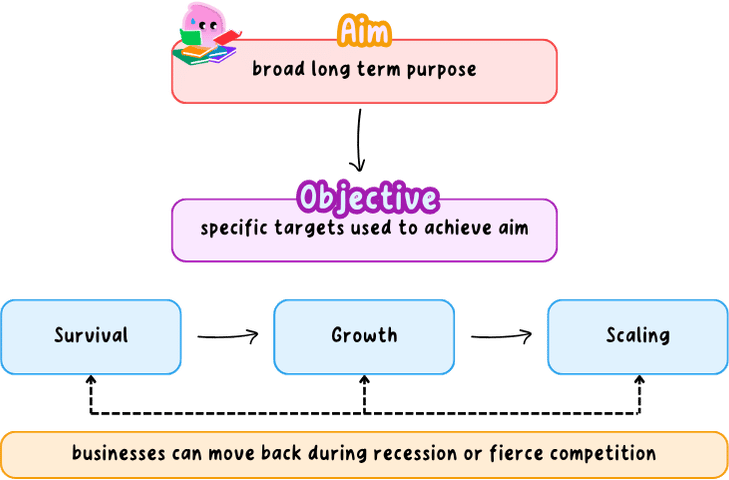
Aim: the long-term goal a business is working towards, stated in broad terms.
Objective: a specific target, with a figure and a deadline, set to move the business towards its aim.
- An aim is a destination. It says what the business wants to become or achieve over several years, without attaching a figure to it.
- Warburtons wanting to remain the UK's leading bakery brand is an aim, because it describes a position rather than a task.
- An objective is a task with a number on it. It names one thing to be achieved, states how much, and fixes a date by which it must be done.
- Increasing bread sales by 5 per cent by the end of the financial year is an objective, because on that date you could check whether it happened.
- The two are linked, not alternatives. The aim decides which objectives are worth setting, and the objectives are how the aim is reached.
Common Mistake
- Writing "to make a profit" as an objective is the most common slip, because it carries no figure and no deadline.
- It becomes an objective when it reads "to make £40,000 profit in the year to 31 March".
How objectives sit beneath an aim
- One aim, several objectives: a business normally holds a single aim and sets several objectives underneath it, each covering a different part of the job.
- Greggs has the aim of remaining the UK's leading food-on-the-go retailer.
- Opening around 150 new shops in a year, growing evening sales and shortening queues at the till are three separate objectives that all serve that one aim.
- The timescales differ. An aim may stretch over five or ten years, while an objective usually covers anything from three months to two years.
- Objectives pass down the business. A company target is split into a figure for each department, and often into a figure for each site or team.
- A national sales target becomes a weekly takings figure for each individual shop, so the staff there know their share of it.
Example
- A Tesco store manager is given a weekly sales figure that comes out of the company's annual target.
- The manager splits that figure between departments, so the bakery and the fresh produce aisle each hold their own weekly number.
- The company target and the aisle target are the same objective written at different levels of detail.
What makes an objective specific enough to use
- Name the exact thing to be achieved. "Do better" could mean sales, profit or service, so the objective has to say which one.
- Attach a figure. Without a number there is no way to tell afterwards whether the target was reached or missed.
- Fix a deadline. A date lets the business plan backwards from it and stops the target being pushed into next year whenever it is inconvenient.
- Keep it inside the resources the business actually has. A figure the cash, staff and equipment cannot deliver gets ignored rather than chased.
Example
- "Improve customer service" cannot be acted on, because nobody knows what would count as having done it.
- "Cut the average wait at the till from four minutes to two minutes by September" names the measure, the size of the change and the date.
- The second version also points the manager at where the problem sits, which is staffing at busy times.
The purpose of setting objectives
- They turn an aim into work. An aim cannot be handed to a member of staff as an instruction, but an objective can.
- They give a figure to compare real performance against. At the end of the period the owner puts the actual result next to the target and can see the size of any gap, which is the only way to say whether the year was good or poor.
- They tell staff what the business is trying to do. A written target reaches every employee in the same words, so nobody has to guess what the owner wants.
- They help owners choose between options. Faced with two ways of spending £50,000, the owner picks the one that moves the business closer to the objective.
Note
- How objectives are then used day to day, to guide decisions, coordinate departments and motivate staff, is covered in the article on the role of objectives in running a business.
- Why the objectives themselves differ between businesses and change over time is covered in the article on changing objectives.
Exam technique
- Explain the difference between an aim and an objective is the standard wording, and it wants one precise sentence on each plus a matched pair of examples taken from the same business.
- The mistake to avoid is writing an aim when an objective was asked for, which happens whenever your answer contains no number.
Self review
- What is the difference between an aim and an objective?
- Why can an aim on its own not tell you whether a business is on course?
- Name the three things an objective must contain to be specific enough to use.
- Rewrite "sell more sandwiches" as a usable objective.
- Give two reasons a business bothers to set objectives at all.
