STIs Spread Through Sexual Contact or Body Fluids
Sexually transmitted infection
An infection spread from person to person through sexual contact or the exchange of body fluids.
- A sexually transmitted infection is an infection passed mainly through sexual contact or exchange of infected body fluids.
- An infected person may have no symptoms and can still transmit the pathogen.
Prevention reduces contact with infected fluids, identifies infections early and treats them where treatment is available.
Chlamydia Is a Bacterial STI
- Chlamydia is caused by bacteria and is transmitted during unprotected sexual contact.
- It often causes no symptoms, but it may cause pain when urinating or unusual discharge.
- Untreated infection can spread through the reproductive system and cause pelvic inflammatory disease and infertility.
- Barrier contraception reduces transmission, while testing and antibiotics identify and treat infected people and their partners.
- Chlamydia infects cells lining the reproductive tract and may spread to the uterus and oviducts, where inflammation and scarring can block an oviduct.
testing matters because a person without symptoms can receive antibiotics before unknowingly passing chlamydia to a partner.
HIV Damages Immune Defence
HIV
Human immunodeficiency virus: a virus that infects and destroys white blood cells, weakening the immune system. If untreated it can lead to AIDS.
AIDS
Acquired immune deficiency syndrome: the late stage of HIV infection, when the immune system is so badly damaged that the body can no longer fight off other infections and cancers.
- HIV is present in blood, semen, vaginal fluids and breast milk.
- It can spread through unprotected sex, shared needles, infected blood, and from mother to baby during pregnancy, birth or breastfeeding.
- HIV infects and destroys white blood cells, weakening the immune system.
- AIDS is the late stage of untreated HIV infection, when severe immune damage allows opportunistic infections and some cancers to develop.
- HIV transmission requires infected fluid to reach another person's bloodstream or vulnerable tissue.
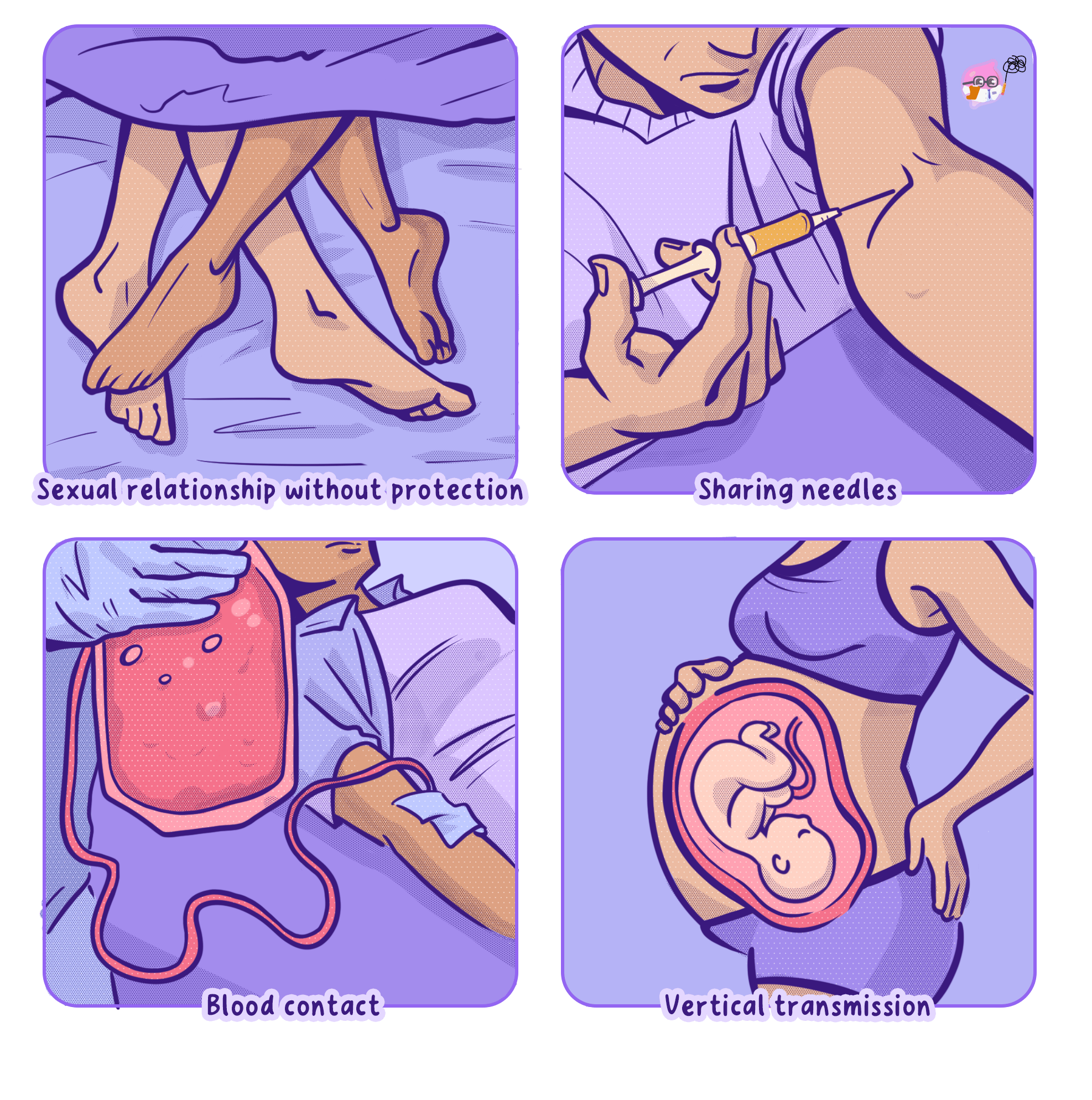
HIV is the virus, while AIDS is the condition that can develop after long-term immune-system damage.
Several Measures Reduce HIV Transmission
Antiretroviral drug
A medicine that controls HIV by stopping the virus reproducing, slowing or preventing the onset of AIDS.
- Condoms reduce exchange of infected sexual fluids.
- Sterile needles prevent transfer of infected blood.
- Screening donated blood prevents infected blood products being used.
- Testing allows infected people to begin treatment and take steps to avoid transmission.
- Antiretroviral drugs reduce viral replication, protecting white blood cells and lowering the amount of virus in the blood.
- Treatment during pregnancy and birth greatly reduces transmission from mother to baby.
- Antiretroviral therapy uses combinations of drugs to inhibit stages of viral replication, reducing viral load and protecting white blood cells.
- A lower viral load reduces transmission risk, but treatment does not remove the virus from the body.
- Condoms reduce exchange of sexual fluids, sterile needles prevent blood-to-blood transfer and screened donations prevent infected transfusions.
- Link each measure to the route it blocks: condoms block sexual-fluid exchange, sterile needles block blood-to-blood transfer, and screening blocks infected transfusions.
- Do not state that antibiotics treat HIV because antibiotics act on bacteria, not viruses.
Prevention Does Not Depend on Symptoms
- Regular testing is necessary because chlamydia and early HIV infection may be asymptomatic.
- Partner notification allows exposed people to be tested and treated.
- A person with asymptomatic chlamydia can transmit bacteria without knowing, which is why screening and partner notification are needed.
- How is chlamydia transmitted and treated?
- Why can untreated chlamydia cause infertility?
- Give three routes of HIV transmission.
- How do antiretroviral drugs reduce HIV transmission?
