Plant Surfaces Block Pathogen Entry
Definition
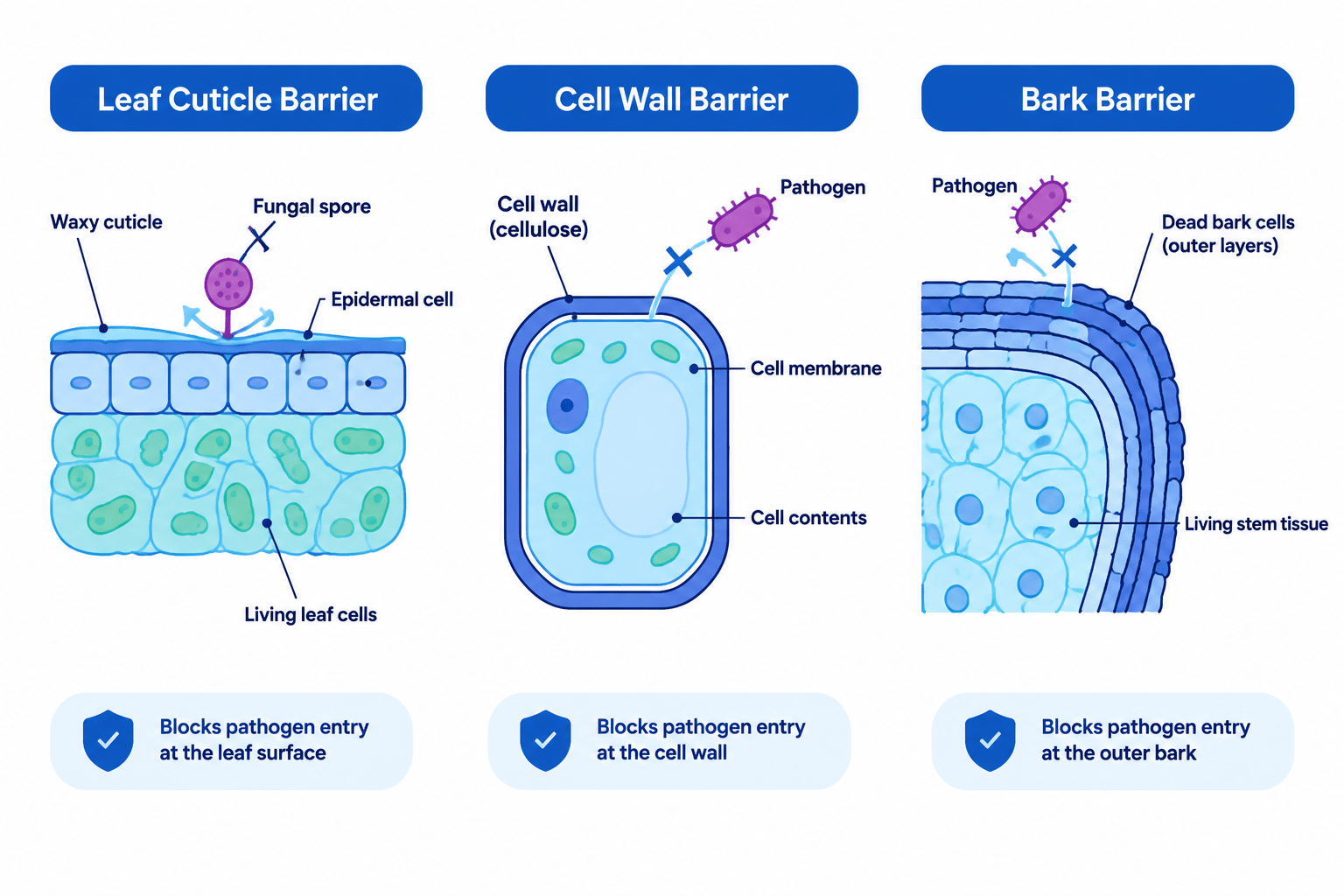
Waxy cuticle
A waterproof waxy layer on the surface of a leaf that acts as a barrier to stop pathogens getting in.
- The cellulose cell wall surrounds each plant cell and resists penetration by pathogens.
- Bark contains layers of dead cells that form a tough barrier around older stems.
- Cellulose microfibrils give cell walls tensile strength, resisting penetration and limiting the spread of pathogens between cells.
- Bark is formed from layers of dead cells and contains waterproof substances, creating a thick barrier that is difficult for pathogens to cross.
- The waxy cuticle forms a waterproof physical barrier over the epidermis, making it difficult for pathogens to enter leaf cells.
Key Idea
Physical defences work before a pathogen enters living tissue.
Damage Weakens Physical Defences
- Cuts, insect feeding and damaged roots create openings through which pathogens can enter.
- A plant may seal damaged tissue by depositing extra material around the wound.
- The waxy cuticle is continuous over most of the leaf surface, so a pathogen must pass through a stomatal opening or damaged tissue to reach living cells.
- If a pest breaks a barrier while feeding, the wound exposes living tissue and provides moisture and nutrients that support pathogen growth.
Example
a fungal spore on an intact waxy leaf cannot easily reach living cells, but the same spore may enter through tissue damaged by an insect.
Match Structure to Function
- The cuticle covers the leaf surface, the cell wall surrounds each cell, and bark protects older stems.
- Each structure reduces contact between pathogens and living cell contents.
Exam technique
- Name the barrier, state where it is found and explain how it prevents entry.
- Do not write only that a barrier protects the plant because the entry mechanism earns the explanation mark.
Separate Barriers From Chemicals
- A physical barrier blocks entry through its structure, while a chemical defence kills pathogens or deters pests.
- The two types can act together, but they should not be confused in an answer.
Self review
- How does the waxy cuticle reduce infection?
- How does a cell wall defend a plant cell?
- Why can tissue damage increase infection risk?