How cells become specialised
Specialised cell
A cell whose structure is adapted so that it carries out one particular function.
- Every cell in a multicellular organism carries the same genes, because they all came from one fertilised egg.
- A cell becomes specialised by differentiation, switching on only the genes it needs and switching the rest off.
- Different genes being used produces different proteins, and different proteins give the cell a different shape and different contents.
- An adaptation is a feature that helps a cell carry out its particular job well.
- Because structure follows function, you can usually work out what an unfamiliar cell does from its shape and contents alone.
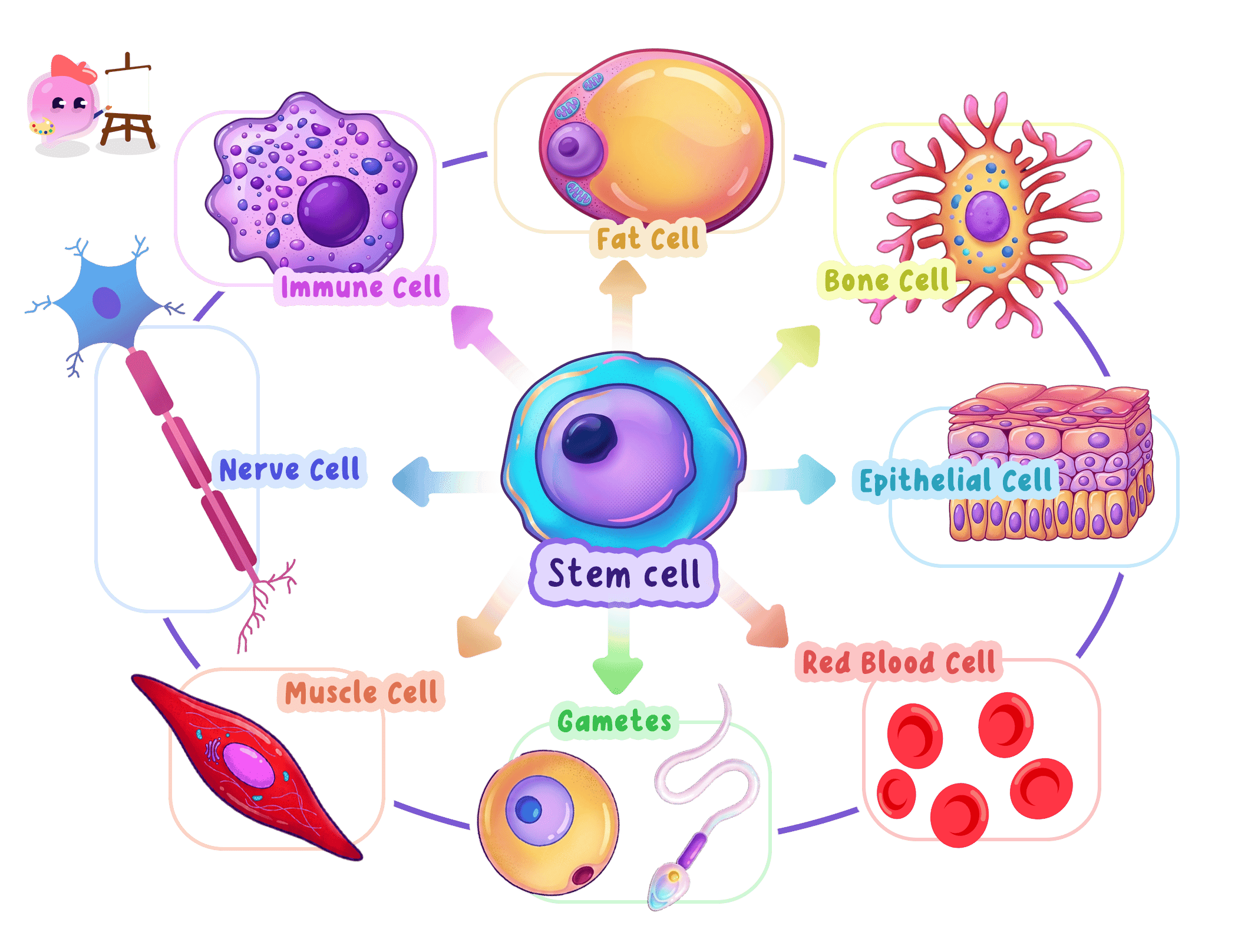
Edexcel names three specialised cells in this part of the specification, sperm cells, egg cells and ciliated epithelial cells, and expects each adaptation to be linked to the function it serves.
Sperm cells
Acrosome
The vesicle at the tip of a sperm cell that contains enzymes to digest the outer layers of an egg cell.
- A sperm cell is the male gamete, and its job is to reach an egg cell and fuse with it.
- The acrosome at the tip stores digestive enzymes.
- The enzymes break down the outer layers of the egg cell so the sperm can push through and reach the egg membrane.
- The haploid nucleus holds one set of chromosomes, which is 232323 in a human rather than the usual 464646.
- Fusing a haploid sperm nucleus with a haploid egg nucleus restores the full number of chromosomes in the fertilised egg.
- Many mitochondria are packed into the middle section of the sperm.
- They release energy by aerobic respiration, and that energy drives the tail.
- The tail beats from side to side so the sperm can swim towards the egg.
A sperm cell carries almost no cytoplasm, which keeps it light and makes swimming easier.
Egg cells
- An egg cell is the female gamete, and its job is to be fertilised and then supply the early embryo with what it needs.
- The cytoplasm is large and packed with nutrients.
- These nutrients feed the embryo while it divides and travels down the oviduct, before it implants and gains a blood supply.
- The haploid nucleus holds one set of chromosomes, matching the single set brought by the sperm.
- As soon as one sperm has entered, the cell membrane changes so that it becomes impossible for any other sperm to get in.
- This keeps the chromosome number correct, because a second sperm would give the zygote too many chromosomes and it would not develop.
The membrane change happens straight after fertilisation, not before it, so describing the egg as blocking sperm from the start loses the mark.
Ciliated epithelial cells
Ciliated epithelial cell
A lining cell covered in tiny hair-like cilia that beat together to sweep mucus and trapped particles along a tube such as an airway.
- Ciliated epithelial cells line the trachea and bronchi, and also the oviducts.
- The surface facing into the tube is covered with cilia, tiny hair-like projections that beat together in a wave.
- In the airways, goblet cells release mucus that traps dust, pollen and bacteria in the air you breathe in.
- The cilia then sweep that mucus up towards the throat, where it is swallowed, so the trapped microorganisms never reach the lungs.
- In the oviduct the same beating action moves an egg cell along towards the uterus.
- The cells contain many mitochondria, because beating cilia continuously needs a steady supply of energy from respiration.
Cigarette smoke paralyses and destroys cilia, so mucus and the microorganisms in it collect in the airways instead of being cleared, which is why smokers cough and catch chest infections more easily.
- Other specialised cells you should know include neurones, root hair cells, xylem, phloem and red blood cells.
- Neurones are covered in detail with the nervous system in Topic 2.
- Root hair cells, xylem and phloem are covered in detail with plant transport in Topic 6.
- Red blood cells are covered in detail with the circulatory system in Topic 8.
- What is differentiation?
- Give the function of the acrosome and say why a sperm cell needs it.
- Why do both gametes have a haploid nucleus?
- What happens to the egg cell membrane after fertilisation, and why?
- Explain how ciliated epithelial cells help keep the lungs free of bacteria.
