Selective breeding concentrates chosen alleles
Definition
Selective breeding
Choosing organisms with a desired characteristic and breeding them together over many generations so the characteristic becomes stronger in the offspring. Also called artificial selection.
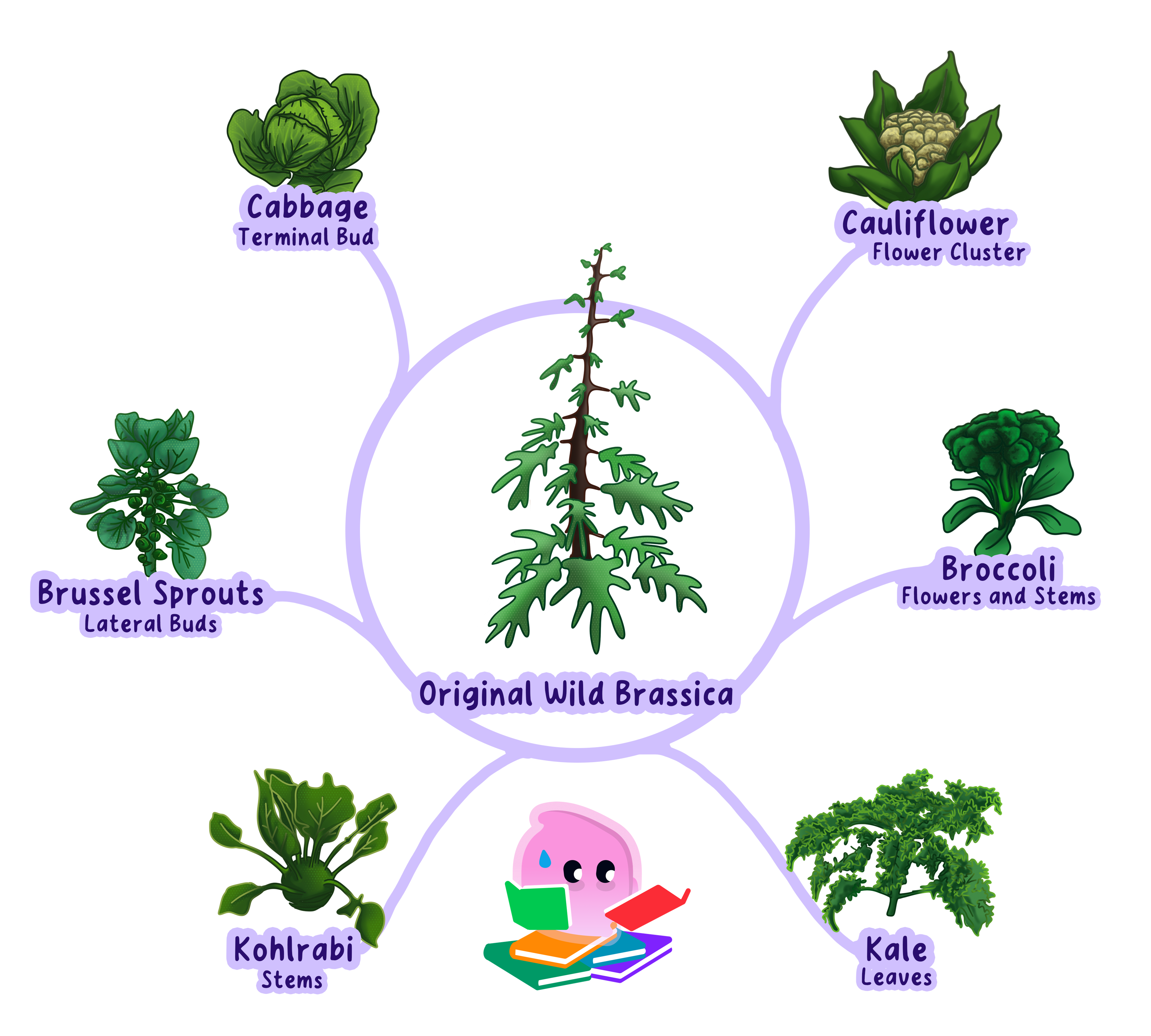
- Selective breeding is the repeated breeding of organisms chosen for an inherited characteristic so that alleles for that characteristic become more common.
- Choose parents that show the desired phenotype, such as high milk yield, disease resistance or large fruit.
- Breed the selected parents and assess the offspring under the same conditions.
- Select offspring that show the characteristic most strongly and breed them together.
- Repeat the process over many generations until the characteristic is common and stable in the population.
- Selective breeding uses existing variation and sexual reproduction, so it is slower and less precise than transferring a known gene.
Exam technique
A full process answer must include choosing parents, breeding them, selecting the best offspring and repeating over many generations.
Benefits can reduce genetic diversity
- Food plants can be bred for higher yield, improved nutritional value, resistance to disease, uniform ripening or tolerance of drought.
- Domesticated animals can be bred for greater meat, milk or egg production, a calm temperament or resistance to disease.
- Repeatedly using closely related individuals narrows the gene pool and increases inbreeding.
- A smaller gene pool raises the chance that harmful recessive alleles meet in offspring and reduces the population's ability to respond to a new disease or environmental change.
Common Mistake
Do not describe selective breeding as genetic engineering; selective breeding chooses whole organisms, while genetic engineering directly changes DNA.
Self review
- What is selective breeding?
- What four stages are repeated?
- Give one useful plant characteristic and one useful animal characteristic.
- Why can selective breeding increase inherited disorders?
