Genetic evidence reshaped classification
Definition
Classification
Sorting living organisms into groups based on their similarities and differences, from large groups such as kingdoms down to individual species.
- Classification is the organisation of living organisms into groups using shared features and evolutionary relationships.
- Older systems relied mainly on visible structures and cell features, which placed all prokaryotes together in one kingdom.
- Scientists can now compare DNA base sequences and the sequences of proteins made from genes.
- More similar sequences suggest a more recent common ancestor, while larger differences suggest an older split.
- Genetic analysis showed that two major prokaryote groups differ greatly from each other, despite both lacking a nucleus.
Key Idea
Classification changes when new evidence gives a better account of evolutionary relationships.
Three domains replace one prokaryote group
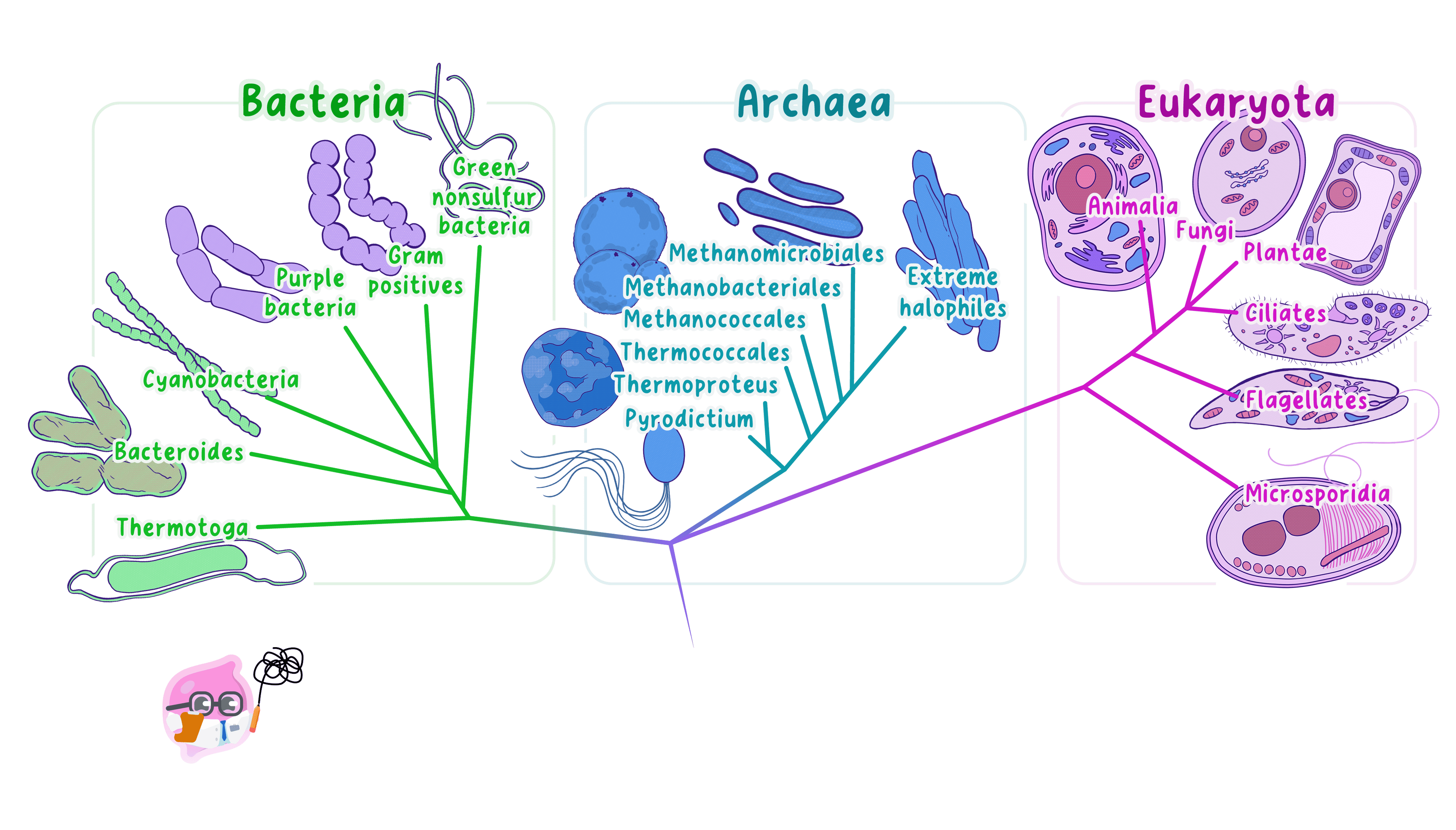
- The three-domain model groups organisms into Bacteria, Archaea and Eukaryota.
- Bacteria and Archaea are prokaryotic, but their genetic sequences and cell chemistry show separate evolutionary lineages.
- Eukaryota contains organisms whose cells have a nucleus, including animals, plants, fungi and protists.
- A phylogenetic tree shows hypotheses about common ancestry through branching lines rather than ranking living groups as more or less advanced.
- As more genomes are sequenced, branch positions can be tested and revised.
Exam technique
Explain the change by stating the new genetic evidence, the unexpected difference between prokaryote groups, and the resulting three-domain model.
Scientific names identify one species
Definition
Binomial name
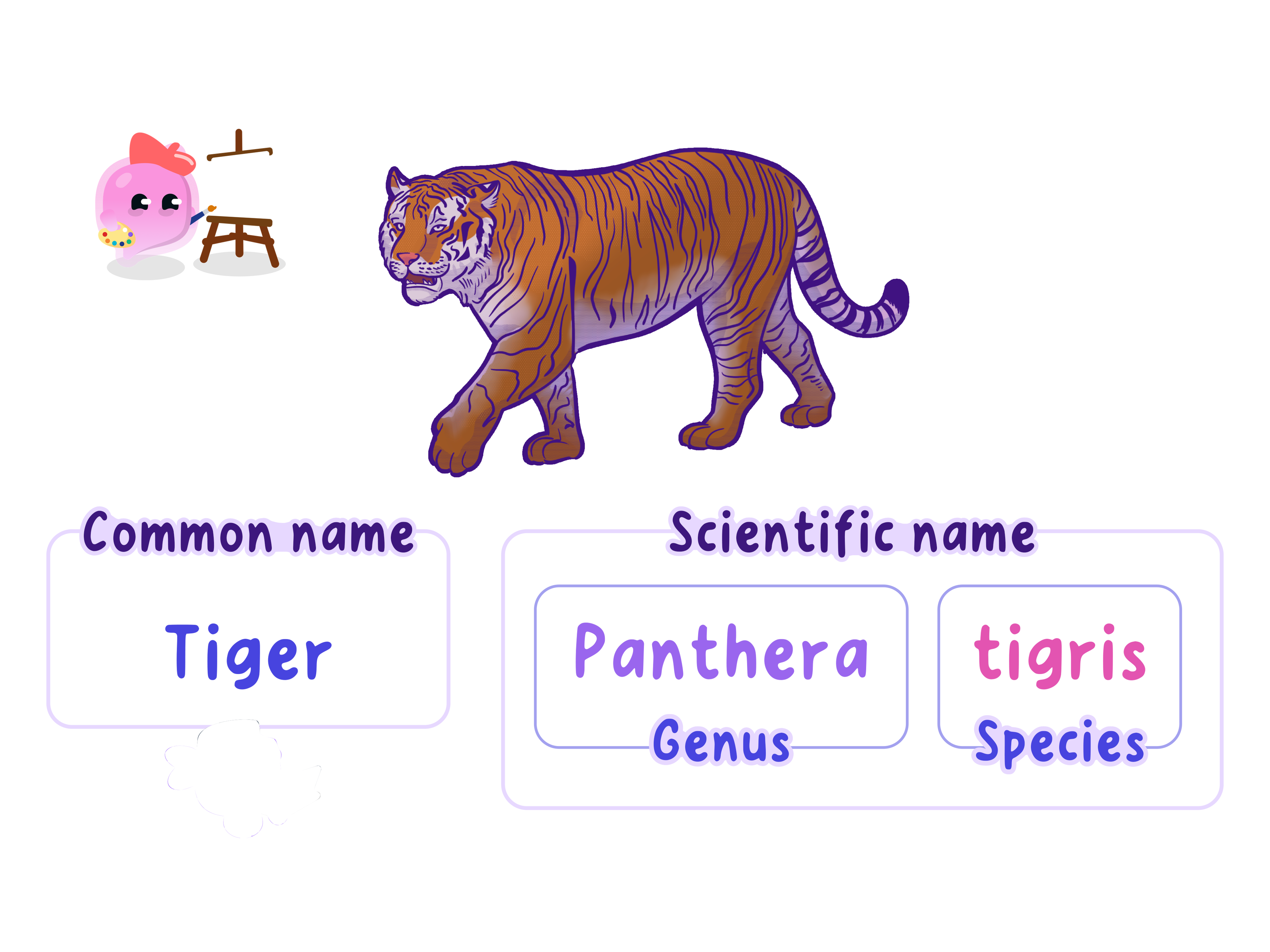
The two-part Latin name given to every species, made of its genus followed by its species name, for example Homo sapiens.
- A binomial name gives each species a two-part scientific name made from its genus and species.
- The genus begins with a capital letter, the species begins with a lower-case letter, and both words are written in italics.
- A universal name avoids confusion caused by different common names in different countries.
Example
The binomial name for humans is Homo sapiens, with Homo as the genus and sapiens as the species.
Self review
- Why can DNA sequences improve classification?
- Name the three domains.
- How did genetic evidence split the old prokaryote group?
- How is a binomial name written?
