During a strenuous training session, an athlete's skeletal muscle cells undergo high rates of aerobic respiration. This results in the release of carbon dioxide into the blood, causing a shift from Curve X to Curve Y in the oxygen dissociation curve of haemoglobin, as shown in the diagram below:
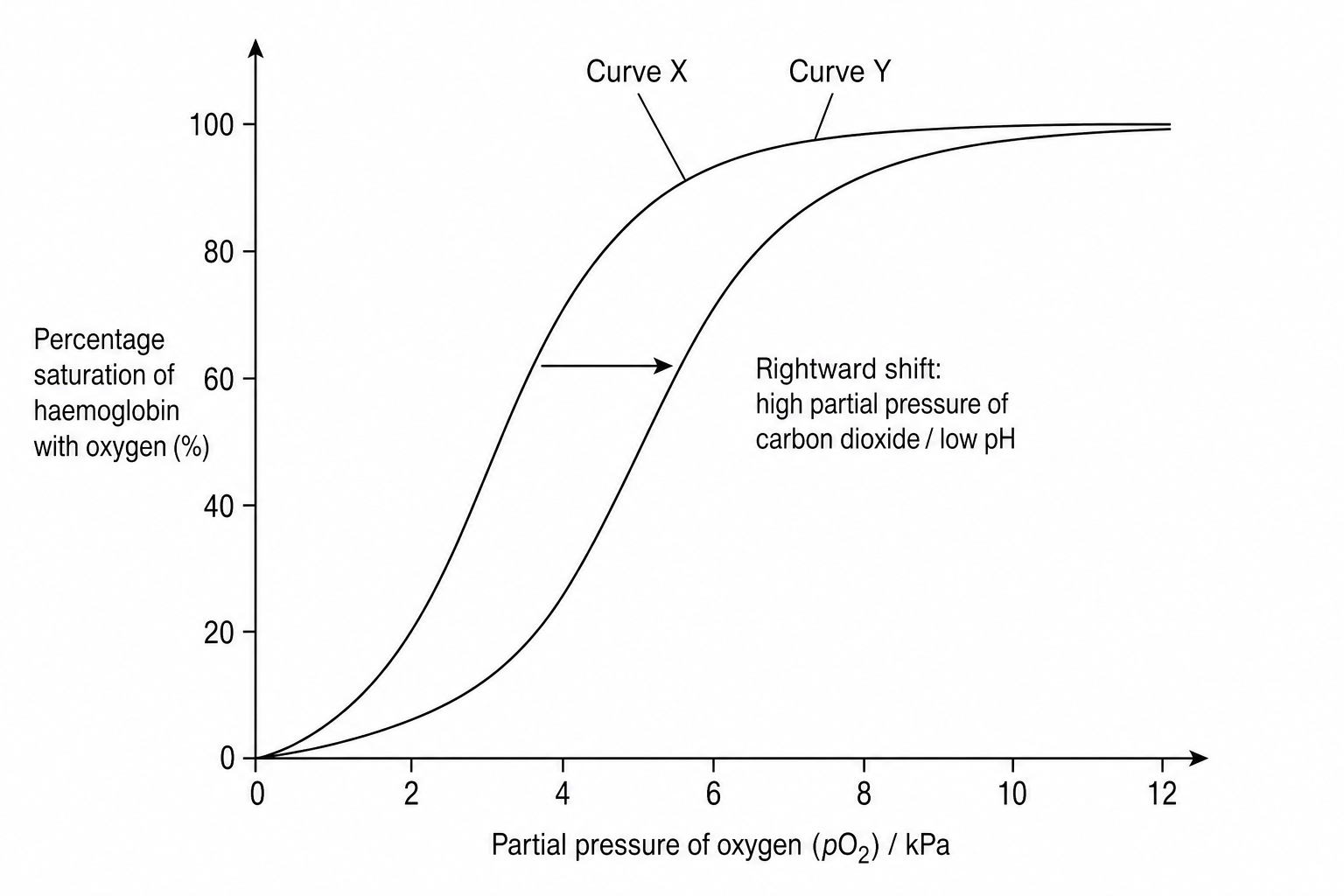
Biochemical origin: Decarboxylation reactions in the link reaction and the Krebs cycle; Physiological advantage: Decreased affinity of haemoglobin for oxygen, facilitating easier unloading of oxygen to respiring tissues.
Biochemical origin: Decarboxylation reactions in glycolysis and the link reaction; Physiological advantage: Increased affinity of haemoglobin for oxygen, facilitating easier loading of oxygen at respiring tissues.
Biochemical origin: Oxidation of reduced coenzymes in oxidative phosphorylation; Physiological advantage: Decreased affinity of haemoglobin for oxygen, preventing premature release of oxygen before reaching the lungs.
Biochemical origin: Decarboxylation reactions in the link reaction and the Krebs cycle; Physiological advantage: Increased affinity of haemoglobin for oxygen, allowing more oxygen to remain bound to haemoglobin in active muscles.