Blood, the heart, circulation and respiration

EasyMediumHard
12345
Question 1
Hard

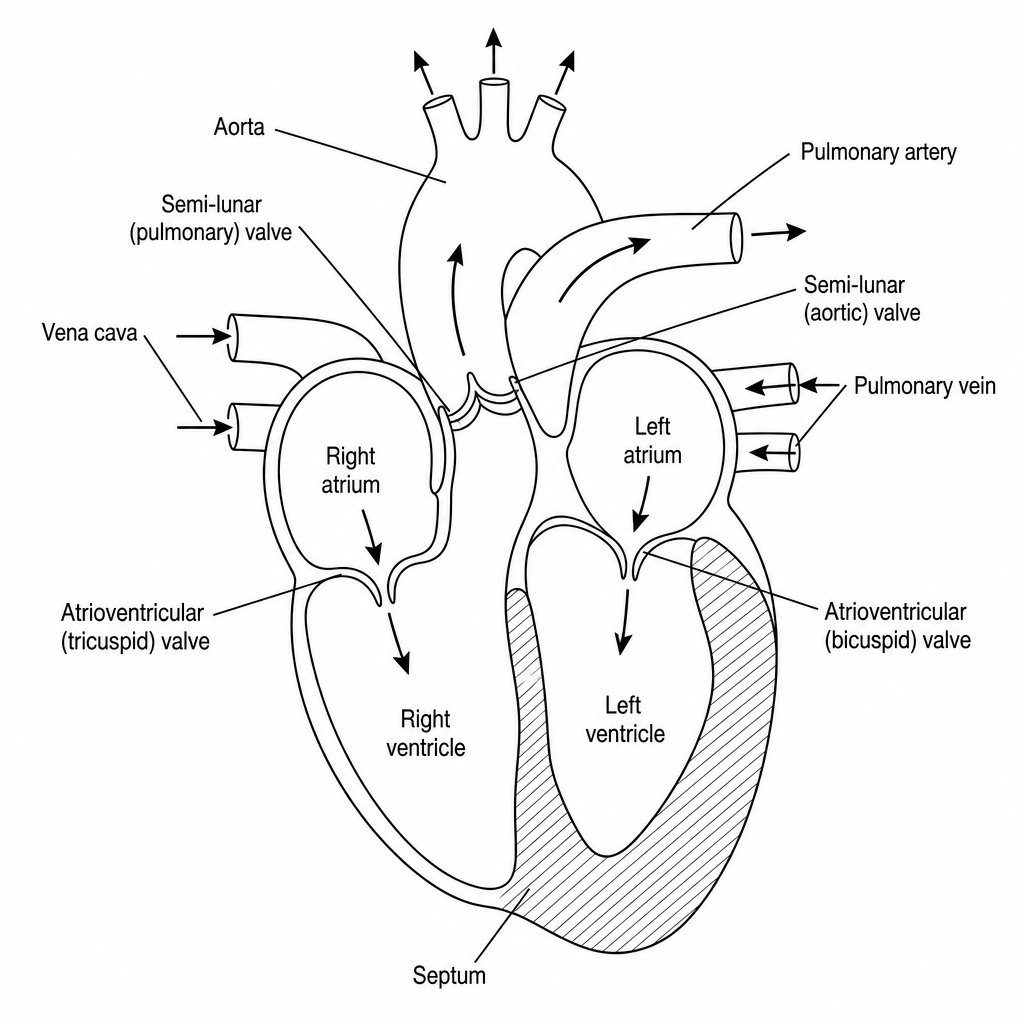
Figure 1 shows a simplified cross-section diagram of the human heart.

A cross-sectional diagram of the human heart showing four chambers: left atrium, right atrium, left ventricle, and right ventricle. The muscular wall of the left ventricle is significantly thicker than the wall of the right ventricle. Arrows show the direction of blood flow: deoxygenated blood enters the right atrium from the vena cava, passes through atrioventricular (tricuspid) valves into the right ventricle, and is pumped out through the pulmonary artery. Oxygenated blood enters the left atrium via the pulmonary vein, passes through atrioventricular (bicuspid) valves into the left ventricle, and is pumped out through the aorta. Semi-lunar valves are positioned at the bases of the pulmonary artery and aorta. A thick muscular central wall, the septum, completely separates the left and right sides of the heart.

Explain how the structural features of the human heart are adapted to its function of pumping blood efficiently around the dual circulatory system.
[6]

Blood, the heart, circulation and respiration Questions

  1. GCSE
  2. /Biology
  3. /Blood, the heart, circulation and respiration