Amino acid order and protein shape
Definition
Gene
A short section of DNA that codes for a particular protein and controls a characteristic.
- The order of bases in a gene sets the order of amino acids in the protein.
- The chain of amino acids folds up into a particular three-dimensional shape.
- This shape decides what the protein can do, so its shape determines its function.
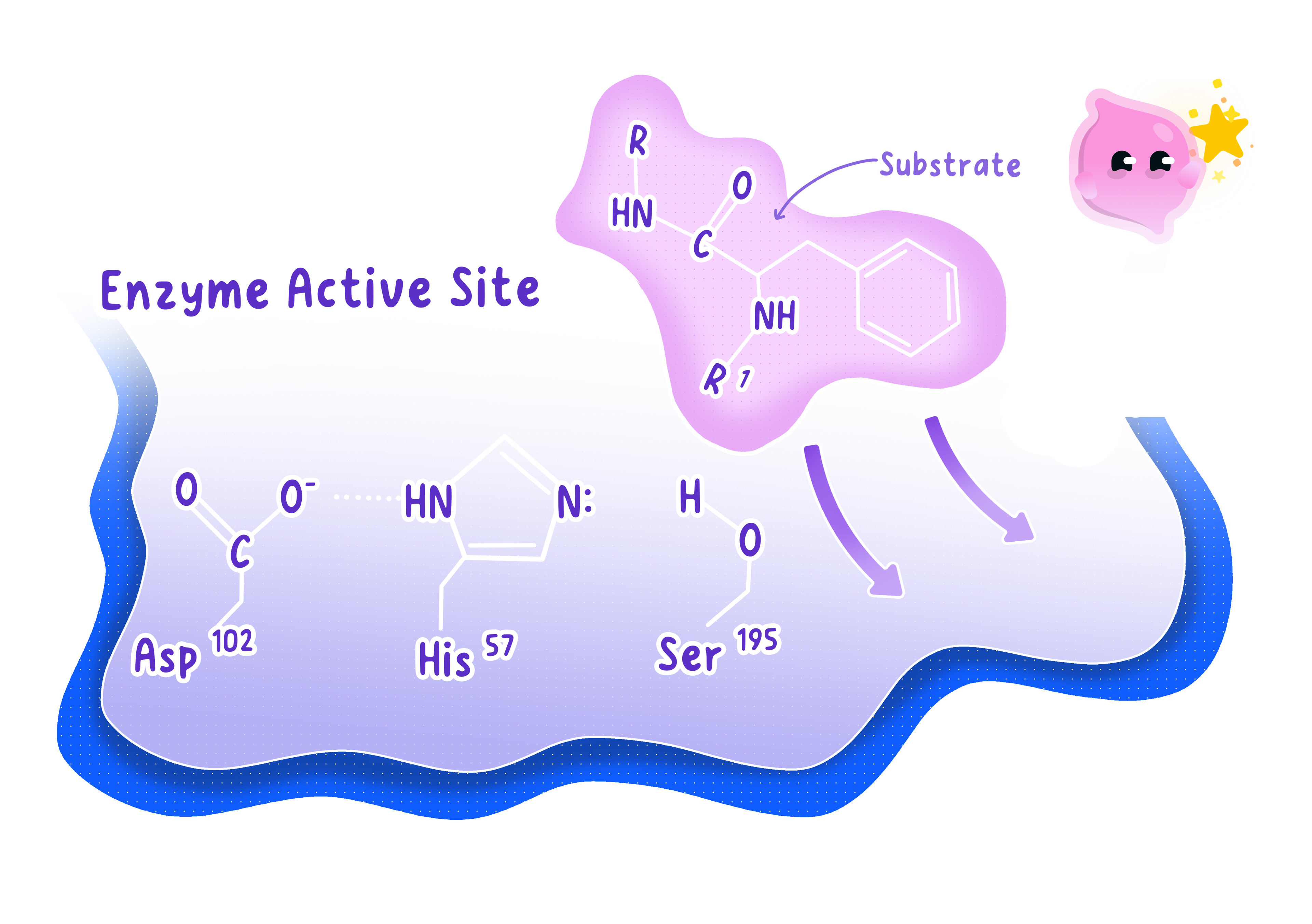
- For example, an enzyme's active site has a shape that fits its substrate, and a structural protein such as collagen has a shape suited to its role.
Example
The active site of an enzyme has a shape that fits only its substrate, which is why the enzyme speeds up one particular reaction.
Note
A protein only works if it folds into the right shape, and that shape comes straight from the order of amino acids.
How base changes affect proteins
- A change in the order of bases can change one or more amino acids in the protein.
- A different amino acid can make the protein fold into a different shape.
- A changed shape can weaken or stop the protein's function.
- For example, a change to an enzyme's active site can mean the substrate no longer fits.
- If the protein is changed, the characteristic it controls can also change.
Common Mistake
Do not think every change to the bases changes the protein: many have little or no effect, and only some alter it enough to matter.
Key Idea
Bases set the amino acid order, the amino acids set the shape, and the shape sets the function, so a change in bases can run right through to the characteristic.
Self review
- What sets the order of amino acids in a protein?
- Why does a protein's shape matter for its function?
- Give an example of a protein whose shape is important for its job.
- How can a change in the base order lead to a change in a characteristic?
