A Vaccine Puts a Harmless Form of a Pathogen Into the Body
Vaccine
A substance containing small quantities of a dead or inactive form of a pathogen, or its antigens, that is put into the body to make a person immune to a disease.
- A vaccine contains small quantities of a dead or inactive form of a pathogen, or its antigens.
- It is harmless, so it cannot give you the disease.
- The antigens it carries are the same shape as those on the live pathogen.
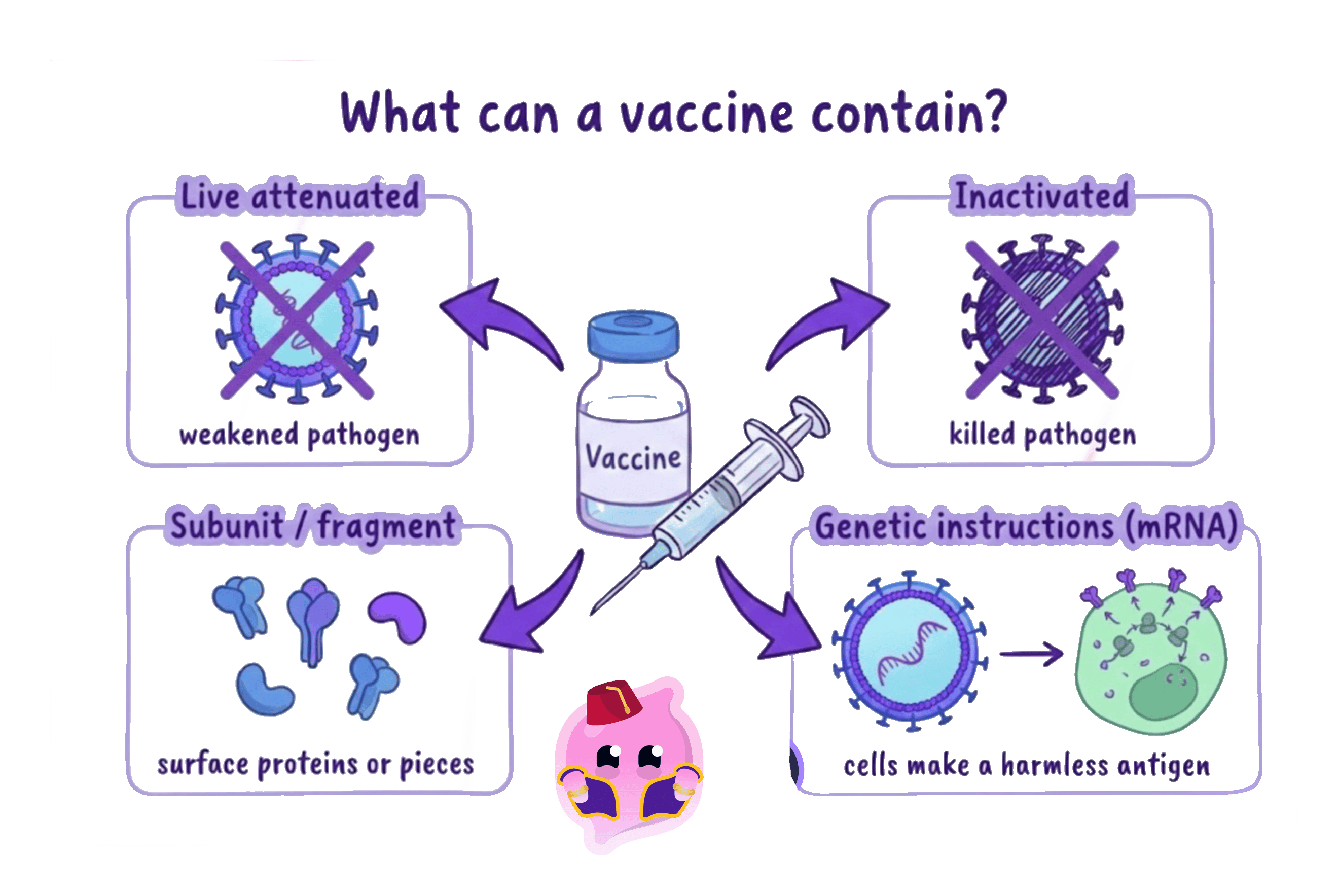
Vaccination protects you by teaching your immune system to fight a pathogen before you ever meet the real one.
White Blood Cells Respond and Make Antibodies
Antigen
A molecule, usually on the surface of a pathogen, that the immune system recognises as foreign and makes a specific antibody against.
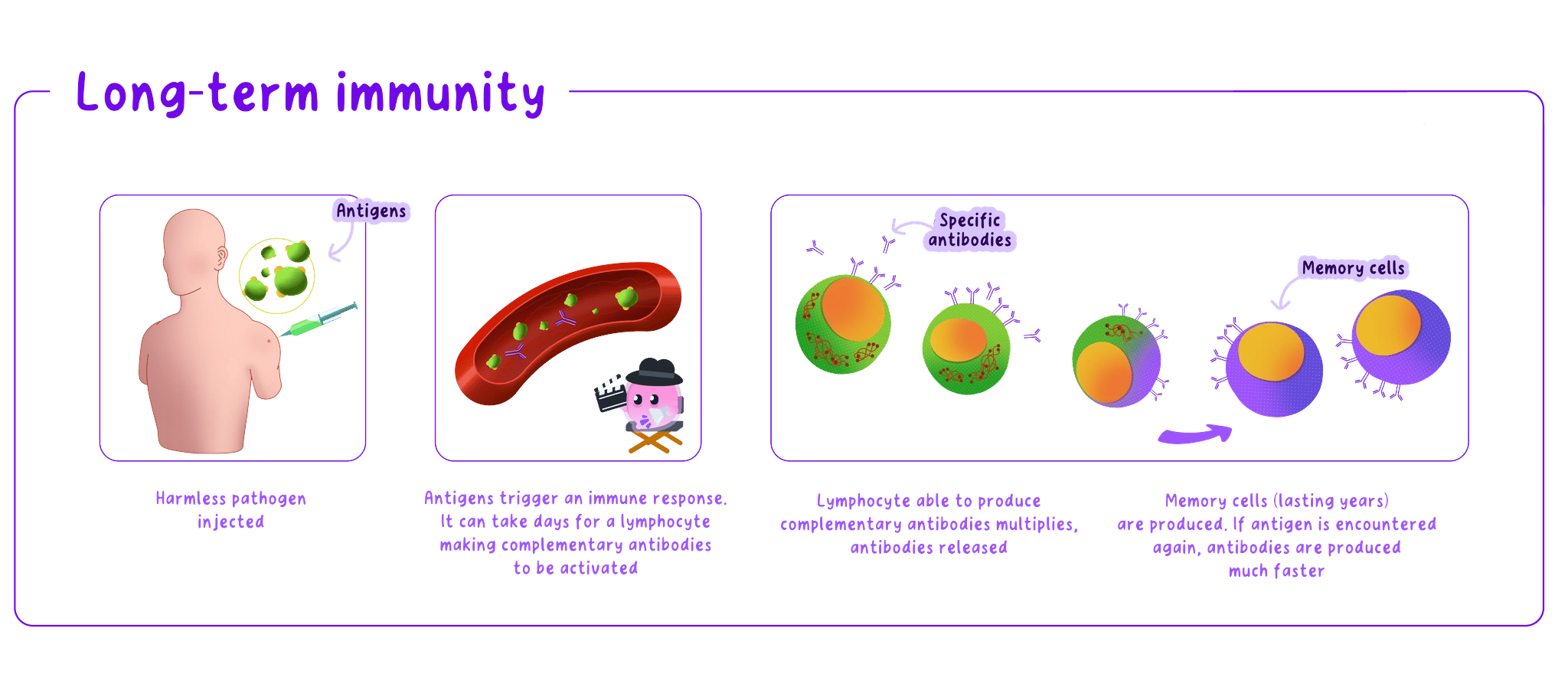
- The white blood cells (lymphocytes) recognise the antigens as foreign.
- They respond by producing antibodies that are the correct shape for those antigens.
- This first response is slow, taking a few days, because the matching cells must be found and must multiply.
The vaccine gives your body a safe practice run at making the correct antibodies.
Memory Cells Give a Fast, Strong Second Response
Memory cell
A white blood cell that stays in the body after infection or vaccination, so the body can respond faster and more strongly if the same pathogen returns.
- Some of these white blood cells stay in the body as memory cells.
- If the live pathogen enters the body later, the memory cells recognise its antigens straight away.
- They make the correct antibodies quickly and in large numbers, destroying the pathogen before it makes you ill.
After the measles vaccine, memory cells stay in the blood, so a later exposure to measles is dealt with before it can make you ill.
Vaccinating Most of a Population Gives Herd Immunity
Herd immunity
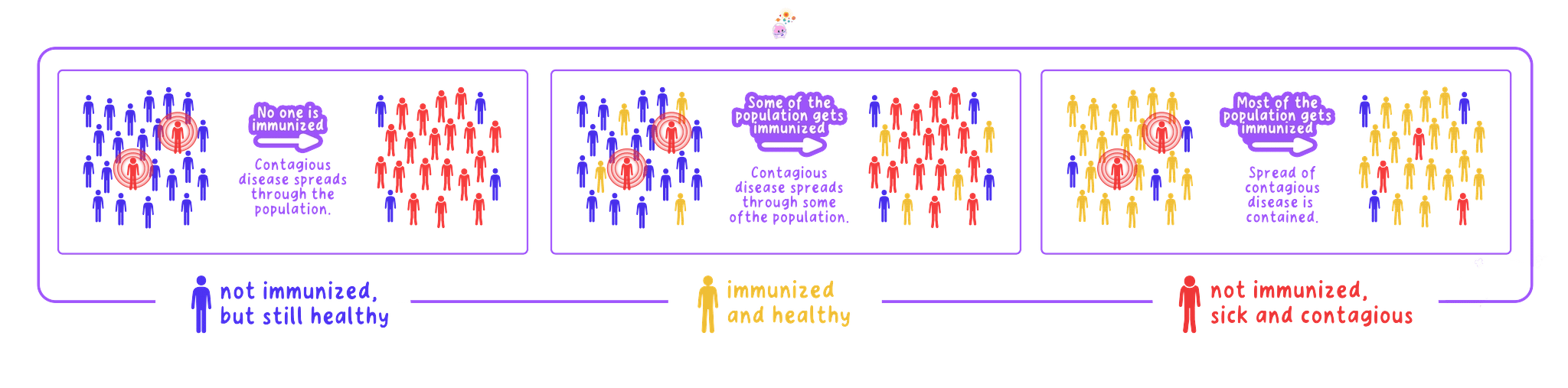
When a large enough proportion of a population is immune to a disease that it can no longer spread easily, which also protects those who are not immune.
- A vaccinated person is immune, so the pathogen cannot reproduce and spread from them to others.
- If a large proportion of the population is vaccinated, the pathogen has few people to infect and cannot spread easily.
- This is herd immunity, and it protects people who cannot be vaccinated, such as very young babies or people who are already ill.
- If too few people are vaccinated, herd immunity is lost and outbreaks can return. Widespread vaccination has made once-common diseases such as polio and measles rare, and smallpox has been wiped out worldwide.
- What does a vaccine contain, and why can it not give you the disease?
- How do white blood cells respond to the antigens in a vaccine?
- Why is the response to a second exposure faster and stronger than the first?
- What is herd immunity and who does it protect?
- Give an example of a disease that has been reduced or removed by vaccination.
