Painkillers Treat the Symptoms, Not the Cause
Painkiller
A medicine that relieves the symptoms of an illness, such as pain or fever, but does not kill the pathogen causing it.
- Painkillers such as paracetamol, aspirin and ibuprofen relieve symptoms like pain, fever and inflammation.
- They do not kill the pathogen causing the illness.
- So a painkiller makes you feel better but does not cure the disease or make you recover any faster.
- You still have to wait for your immune system to overcome the pathogen.
Some medicines only ease symptoms, while others, such as antibiotics, actually cure the disease by killing the pathogen.
Antibiotics Cure Bacterial Diseases
Antibiotic
A medicine that kills bacteria, or stops them growing, inside the body to cure a bacterial disease; antibiotics have no effect on viruses.
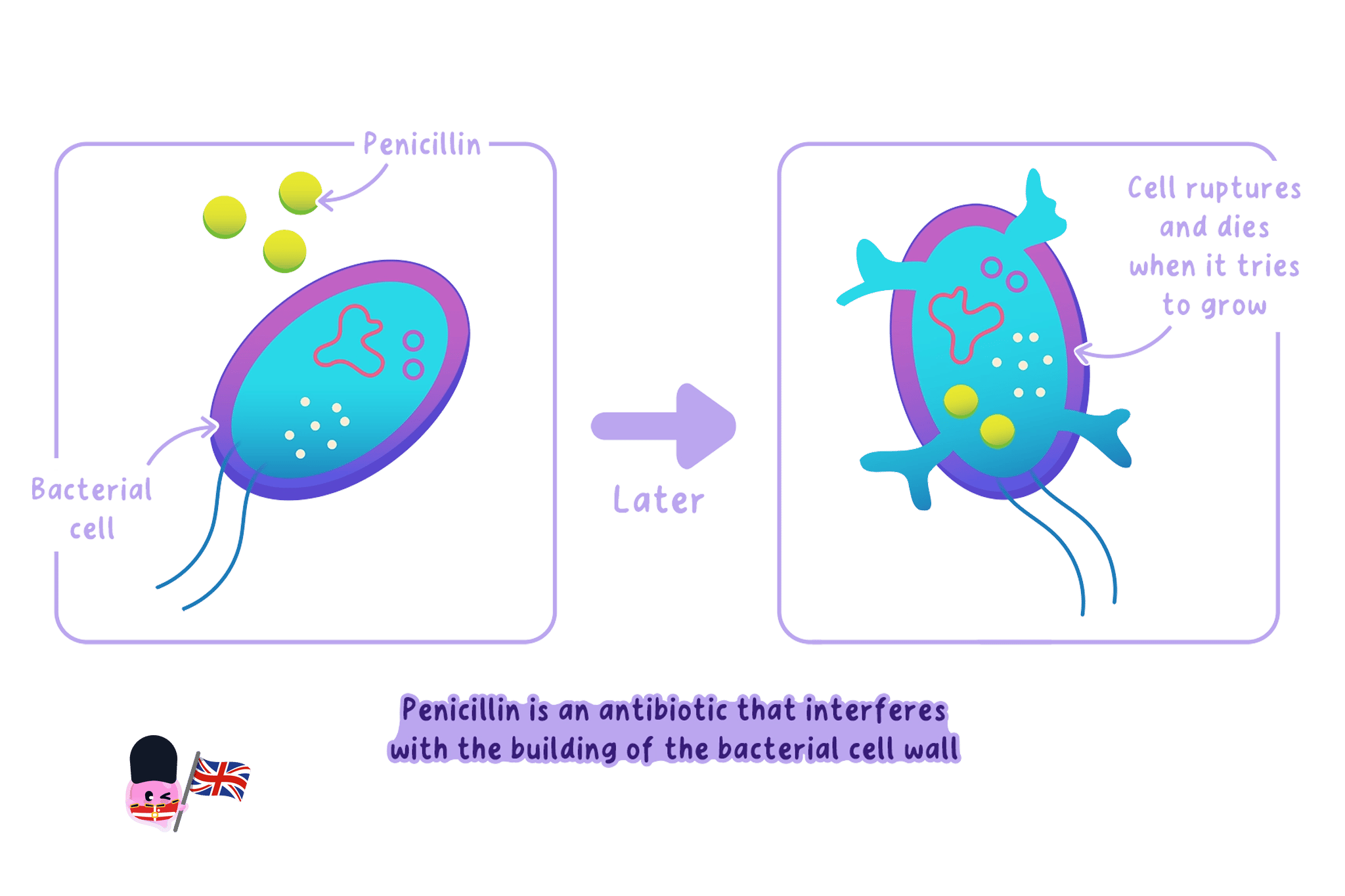
- Antibiotics, such as penicillin, kill bacteria inside the body, curing bacterial diseases by removing their cause.
- They damage processes found only in bacteria, such as building the cell wall, so they harm the bacteria without harming your own cells.
- A specific antibiotic must be used to treat a specific type of bacteria that it works against.
- Antibiotics have greatly reduced deaths from bacterial diseases since they became widely used in the mid-20th century.
A doctor may take a sample to identify the bacterium first, so that the correct antibiotic is prescribed.
Antibiotics Cannot Kill Viruses
- Antibiotics have no effect on viruses.
- Viruses reproduce inside your body's cells, so a drug that killed the virus would usually damage the cell around it as well.
- This makes it difficult to develop antiviral drugs that destroy the virus without harming the body's tissues.
- So viral illnesses are cleared by your immune system, while painkillers ease the symptoms.
Do not take antibiotics for a cold or flu; these are caused by viruses, which antibiotics cannot kill.
Resistant Bacteria Are a Growing Concern
Antibiotic resistance
When a strain of bacteria is no longer killed by an antibiotic that once worked against it, making the infection harder to treat.
- Overusing antibiotics has led to strains of bacteria that are no longer killed by them, called antibiotic resistance.
- MRSA is a well-known resistant strain that is very hard to treat.
- The emergence of resistant strains is of great concern, because infections we can now cure could become deadly again.
- To slow it, doctors prescribe antibiotics only when needed, avoid using them for viral infections, and ask patients to finish the whole course.
- What is the difference between what a painkiller does and what an antibiotic does?
- How do antibiotics kill bacteria without harming your own cells?
- Why do antibiotics have no effect on viruses?
- Why is it difficult to develop drugs that kill viruses?
- Give two ways the spread of antibiotic resistance can be slowed.
