The Body's Non-Specific Defences Keep Pathogens Out
Pathogen
A microorganism that causes an infectious disease, which may be a virus, a bacterium, a protist or a fungus.
- The body has defences that keep pathogens out before they can cause disease.
- These are called non-specific defences because they work against all pathogens.
- The main non-specific defences are the skin, the nose, the trachea and bronchi, and the stomach.
The skin, nose, trachea, bronchi and stomach form a first line of defence that stops most pathogens getting into the body.
Skin, Nose, Airways and Stomach
- Skin:
- It acts as a barrier that stops pathogens reaching the tissues beneath.
- If it is cut, the blood clots to form a scab that seals the wound.
- It also makes antimicrobial secretions that kill pathogens.
- Nose:
- Hairs and sticky mucus trap particles and pathogens in the air you breathe in.
- Trachea and bronchi:
- They secrete mucus that traps pathogens from the air.
- Cilia on the lining cells waft the mucus up to the throat, where it is swallowed.
- Stomach:
- It produces hydrochloric acid that kills pathogens in swallowed mucus and in food and drink.
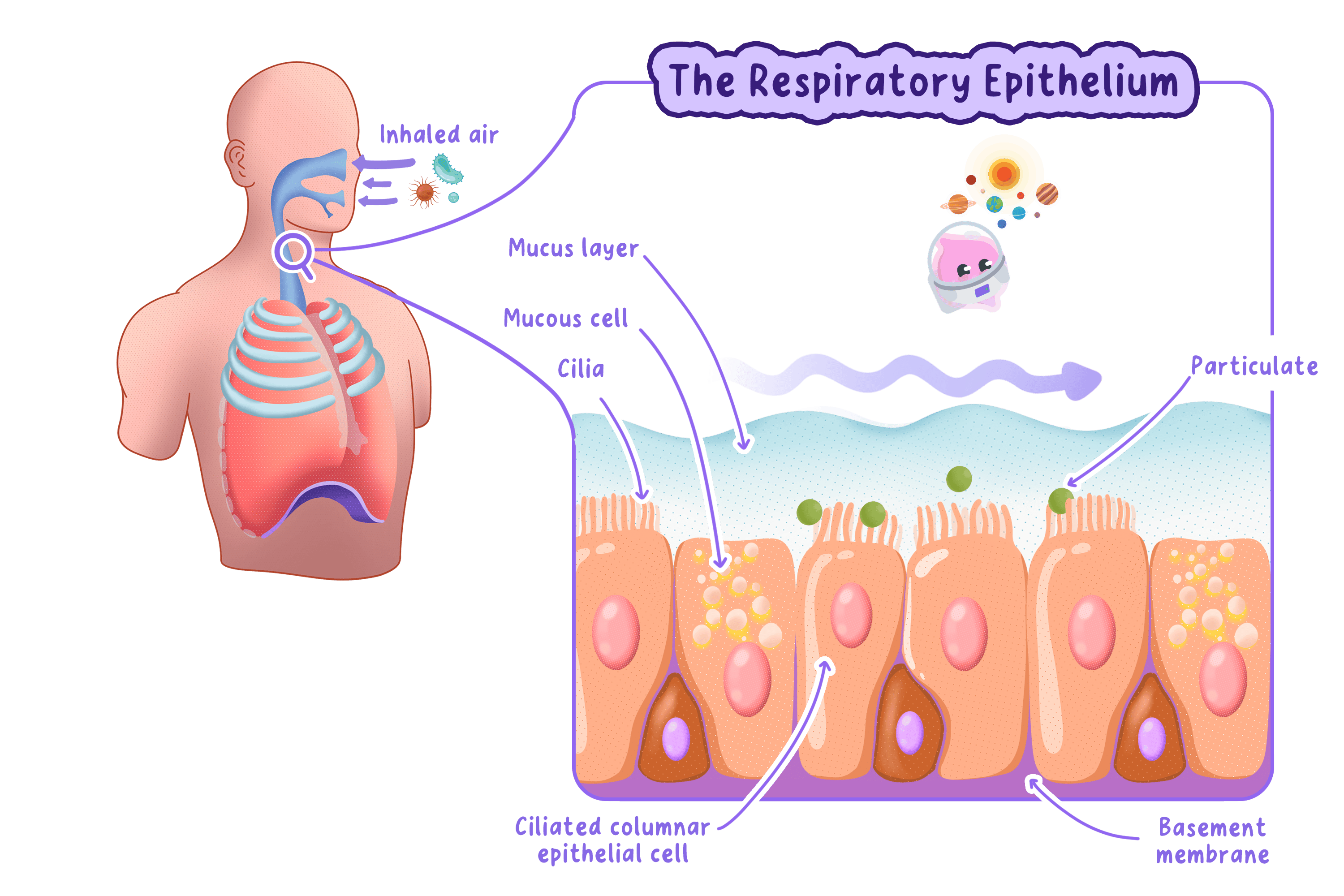
The cilia and mucus in your airways act like a conveyor belt, carrying trapped pathogens up and away from the lungs.
White Blood Cells and Phagocytosis
Phagocytosis
The process in which a white blood cell engulfs and digests a pathogen to destroy it.
- If a pathogen gets past the barriers, the immune system tries to destroy it.
- White blood cells are the key part of the immune system.
- In phagocytosis, a white blood cell engulfs a pathogen and digests it.
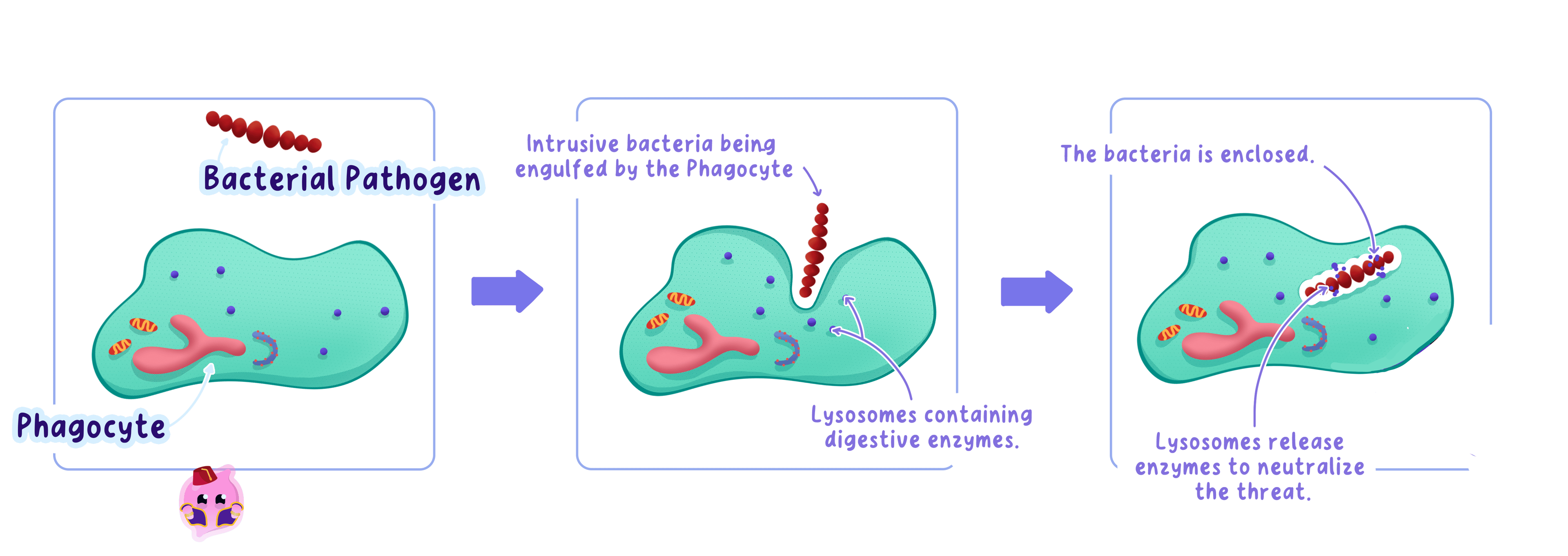
Phagocytosis works against many different pathogens, not just one type.
Producing Antibodies
Antibody
A protein made by a white blood cell that locks onto a particular pathogen and helps to destroy it.
- Some white blood cells produce antibodies.
- Each antibody locks onto a specific antigen, a marker on the surface of a particular pathogen.
- This targets the pathogen so it can be destroyed.
- Once these antibodies have been made, they can be produced quickly if the same pathogen returns.
This faster second response is why you usually do not catch the same disease twice.
Producing Antitoxins
Antitoxin
A protein made by a white blood cell that counteracts a toxin released by a pathogen.
- Some white blood cells produce antitoxins.
- An antitoxin counteracts a toxin released by a pathogen, cancelling out its harmful effect.
- Together, phagocytosis, antibodies and antitoxins let white blood cells defend the body against disease.
- Name the four non-specific defences of the human body.
- Give two ways the skin defends against pathogens.
- How do the trachea and bronchi trap and remove pathogens?
- What are the three ways white blood cells defend against pathogens?
- Why do you usually not catch the same disease twice?
