Monoclonal Antibodies Bind to One Specific Target
Monoclonal antibody
An antibody produced from a single clone of identical cells, so every antibody molecule is the same and binds to one specific antigen.
- A monoclonal antibody binds to one binding site on one antigen.
- That antigen may be on a specific type of cell, or it may be a specific chemical such as a hormone.
- Because they are so specific, they can find, measure or treat one target without affecting other cells.
- A marker, such as a fluorescent dye or a radioactive label, can be attached so the antibody can be tracked.
Because each monoclonal antibody targets just one antigen, it can pick out a single chemical or cell type from everything else in the body.
Pregnancy Tests Detect a Hormone in Urine
- A pregnancy test uses monoclonal antibodies that bind to the hormone HCG (human chorionic gonadotropin), which is made in early pregnancy and passed out in the urine.
- If HCG is present, the antibodies bind to it and produce a colour change, giving a positive result.
- If HCG is absent, the antibodies have nothing to bind to and no line appears.
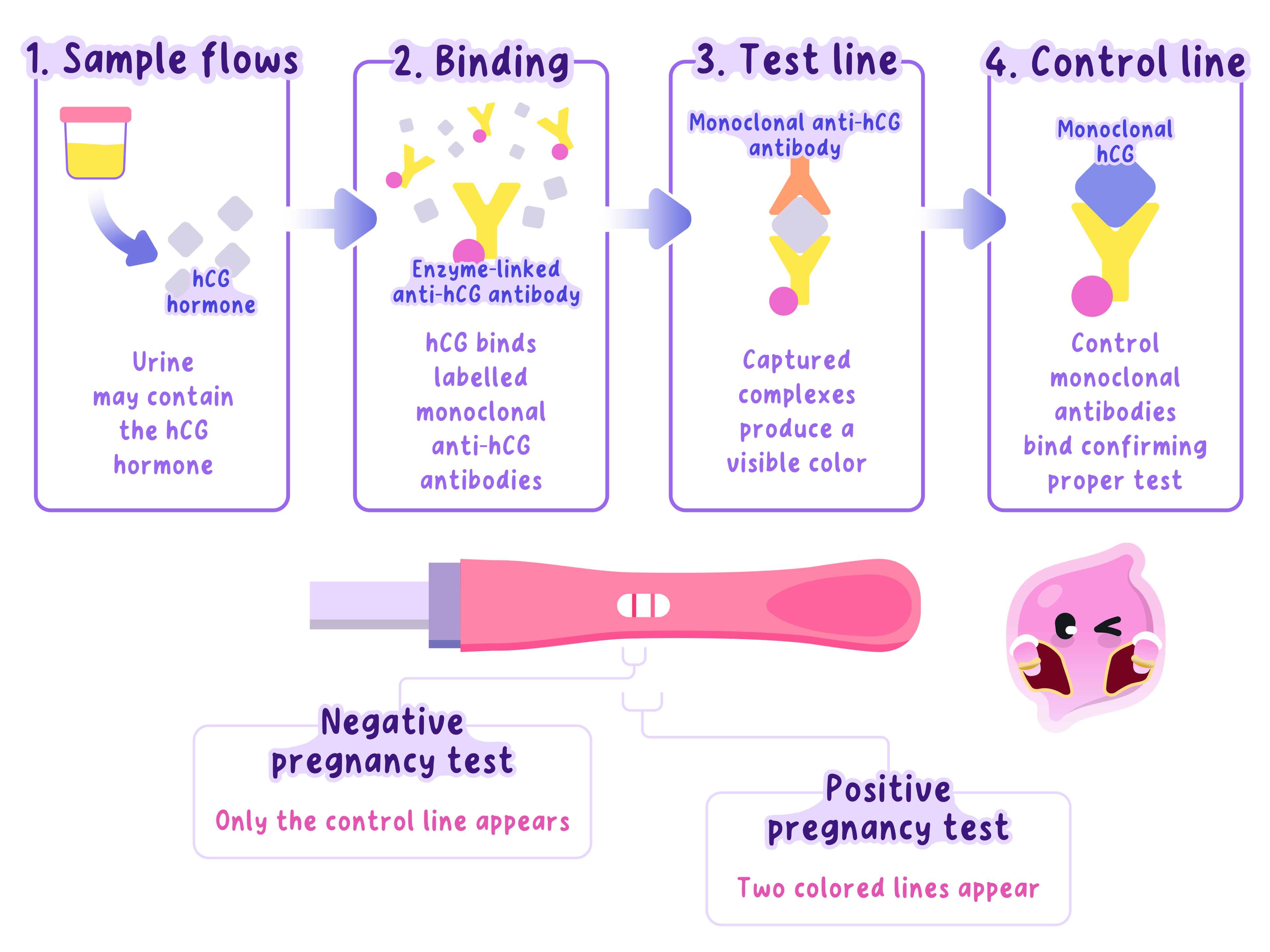
Monoclonal antibodies are Higher tier only.
Diagnosis, Measuring and Research
Antibody
A protein made by lymphocytes with a shape complementary to a specific antigen, so it binds only to that antigen.
- Diagnosis
- Antibodies are made to bind to antigens on pathogens, blood clots or cancer cells; a marker shows doctors where they build up, so problems can be found early, as in the blood test for prostate cancer.
- Measuring and monitoring
- In laboratories they measure the level of a hormone or other chemical in the blood, or detect a pathogen, such as screening donated blood for HIV.
- Research
- Antibodies attached to a fluorescent dye bind to specific molecules in a cell or tissue, so scientists can see where those molecules are.
You are not expected to recall specific tests; you should be able to explain a use you are given and evaluate it.
Treating Cancer With a Targeted Antibody
Antigen
A molecule, usually on the surface of a pathogen, that the immune system recognises as foreign and makes a specific antibody against.
- Monoclonal antibodies can be made to bind to antigens on cancer cells.
- The antibody can carry a radioactive substance, a toxic drug, or a chemical that stops cells growing and dividing.
- Because it binds only to the cancer cells, it delivers the substance straight to them without harming healthy cells.
- A monoclonal antibody can also block receptors on a cancer cell so it stops growing, or trigger the immune system to attack it.
Unlike radiotherapy or ordinary chemotherapy, which also damage healthy cells, a targeted antibody carries the treatment mostly to the cancer.
Weighing Up Monoclonal Antibodies
- Advantages
- They are very specific, so they treat or detect one target without affecting healthy cells.
- They can be produced against a huge range of antigens, so they could be used to treat many different conditions.
- Disadvantages
- They created more side effects than expected, partly because early ones used mouse cells that triggered an immune response in humans.
- They are expensive and difficult to produce, so they are not yet as widely used as everyone first hoped.
- Why can a monoclonal antibody target one specific thing in the body?
- How do monoclonal antibodies produce a positive pregnancy test?
- Give one use of monoclonal antibodies in diagnosis or research.
- How can a monoclonal antibody deliver a cancer drug without harming healthy cells?
- Give one advantage and one disadvantage of monoclonal antibodies.
