Glucose Is the Starting Point for Everything a Plant Builds
Glucose
A simple, soluble sugar made in photosynthesis that is used in respiration or converted into other molecules the plant needs.
- The glucose made in photosynthesis is soluble and is used straight away or converted into other molecules.
- Glucose is used for respiration, or converted into starch, fats and oils, cellulose, or amino acids.
A plant turns the glucose from photosynthesis into energy, stores, structure and new tissues, so glucose is the raw material for the whole plant.
Respiration Releases Energy From Glucose
- Plant and algal cells respire all the time to release energy.
- Some of the glucose made in photosynthesis is broken down in respiration to transfer this energy for the cell to use.
Plants respire 24 hours a day; they only photosynthesise when there is light.
Glucose Is Stored as Insoluble Starch
Starch
An insoluble carbohydrate made from many glucose molecules that plants use to store energy.
- A lot of the glucose is converted into insoluble starch and stored in the leaves, stems and roots.
- Starch is stored rather than glucose because it is insoluble, so it does not affect the movement of water into and out of cells by osmosis.
- The stored starch provides an energy store for when it is dark or light levels are low, and is also kept in tubers and bulbs.
Testing a Leaf for Starch
- Aim: to test a leaf for starch to show whether photosynthesis has taken place.
- Boil the leaf in water to kill it, then boil it in ethanol to remove the chlorophyll.
- Rinse the leaf in water to soften it, then add iodine solution.
- Iodine solution turns blue-black where starch is present, showing photosynthesis happened there.
- Safety: ethanol is flammable, so heat it in a hot water bath, not over a naked flame.
Fats and Oils for Energy Storage
- Glucose is used to make fats and oils (lipids) for storage.
- These make a concentrated energy store, especially in seeds, which the new plant respires as it germinates.
Sunflower and rapeseed seeds are so rich in stored oil that we press them to make cooking oil.
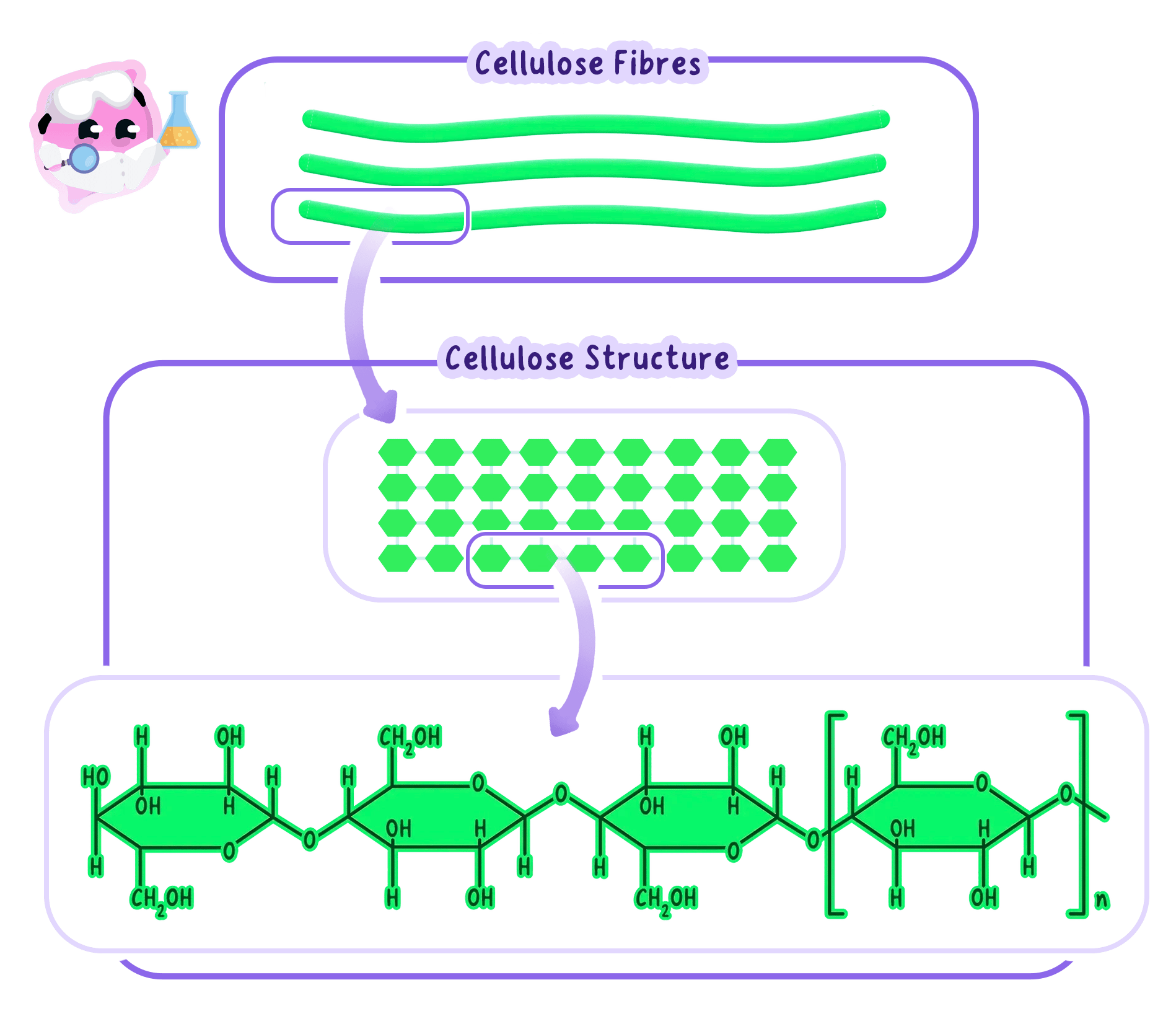
Cellulose Strengthens Cell Walls
Cellulose
A strong carbohydrate made from glucose that plants use to build and strengthen their cell walls.
- Glucose is built up into cellulose, a strong carbohydrate.
- Cellulose is used to make and strengthen plant cell walls, which helps support the plant.
Amino Acids and Proteins Need Nitrate Ions
Nitrate ions
Ions absorbed from the soil that provide the nitrogen a plant needs to turn glucose into amino acids and proteins.
- Glucose is combined with nitrate ions to make amino acids.
- The amino acids are joined together to make proteins, which the plant uses for growth and as enzymes.
- Plants absorb nitrate ions from the soil, while algae take them from the water; a plant short of nitrate cannot make enough protein and grows poorly.
- Name three ways a plant uses the glucose made in photosynthesis.
- Why is glucose converted to starch for storage rather than stored as glucose?
- What is cellulose used for in a plant?
- Which ions must a plant absorb to make amino acids, and where from?
- How would you test a leaf to show that photosynthesis has taken place?
