What a Stem Cell Is
Stem cell
An undifferentiated cell that can keep dividing and can differentiate into different types of specialised cell.
- A stem cell is an undifferentiated cell that has not yet become specialised.
- A stem cell can keep dividing to produce many more cells like itself.
- It can also differentiate into different types of specialised cell.
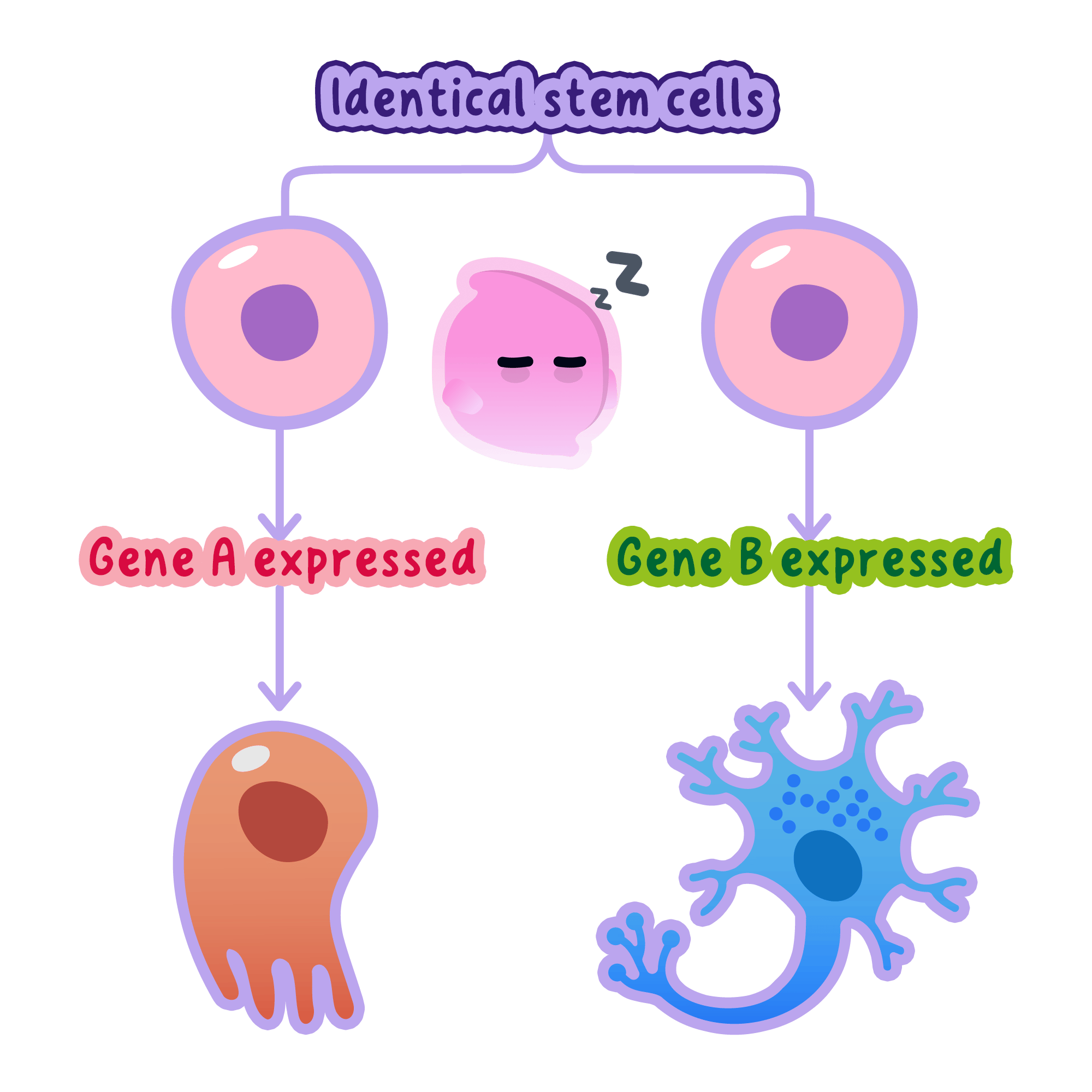
A stem cell is like a blank key that can still be cut to fit many different locks.
Where Stem Cells Are Found
Meristem
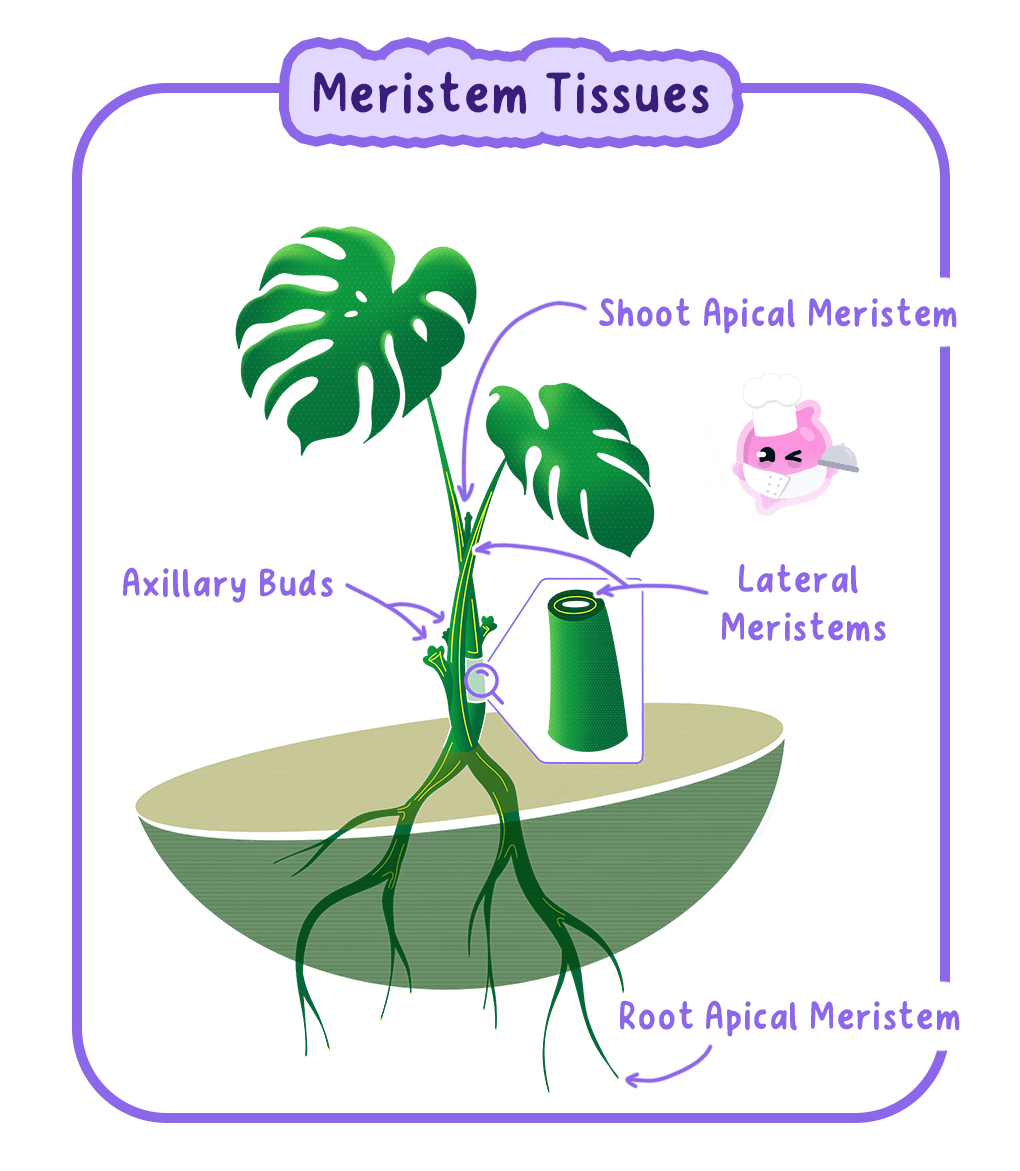
Plant tissue at the tips of roots and shoots, made of cells that can divide and differentiate throughout the plant's life.
- Embryonic stem cells are found in early embryos and can differentiate into almost any type of cell.
- Adult stem cells are found in some tissues, such as bone marrow, and can form only a limited range of cells, mainly blood cells.
- In plants, stem cells are found in the meristems at the tips of roots and shoots.
- Plant meristem cells can differentiate into any type of plant cell throughout the plant's life.
Adult stem cells in bone marrow make red blood cells and white blood cells.
Using Stem Cells to Treat Disease
Therapeutic cloning
Producing an embryo with the same genes as a patient, so that stem cells taken from it are not rejected when used to treat the patient.
- Stem cells can be grown and made to differentiate into the specialised cells a patient needs.
- They could make insulin-producing cells to treat diabetes.
- They could make nerve cells to help treat paralysis.
- Bone marrow transplants already use stem cells to replace a patient's faulty blood cells.
- In therapeutic cloning, an embryo is made with the same genes as the patient, so the new cells are not rejected.
Because the cells match the patient's own genes, there is no need for drugs that suppress the immune system.
The Benefits and Risks of Using Stem Cells
- Stem cells could treat a wide range of conditions and replace tissues that cannot otherwise be repaired.
- Using a patient's own cells lowers the chance that the new cells are rejected.
- There is a risk that cultured stem cells become infected with a virus that is then passed to the patient.
- There is also a risk that the cells divide out of control and form a tumour.
- Some people have ethical or religious objections, because embryonic stem cells are taken from embryos that are then destroyed.
In an evaluate question, give a benefit, then a risk or objection, and finish with a clear conclusion.
Cloning Plants From Meristems
- Plant stem cells are easy to obtain from meristems, and there are no ethical objections to using them.
- Meristem cells can be used to produce many clones of a plant quickly and cheaply.
- Rare plants at risk of extinction can be cloned to protect them and help keep up biodiversity.
- Crop plants with useful features, such as disease resistance, can be cloned to give farmers large numbers of identical plants.
- A drawback is that the clones are genetically identical, so the population has very little genetic variation.
- What is a stem cell, and what two things can it do?
- Give one difference between embryonic and adult stem cells.
- Where are stem cells found in a plant, and what can they become?
- Why are stem cells made by therapeutic cloning not rejected by the patient?
- Give one benefit and one risk of using stem cells in medicine.
