How resistance evolves
Definition
Antibiotic resistance
The ability of a bacterium to survive an antibiotic that would normally kill it, caused by a chance mutation and spread through the population by natural selection.
- Bacteria divide very often, sometimes as often as every twenty minutes, so a population can change noticeably in just a few days.
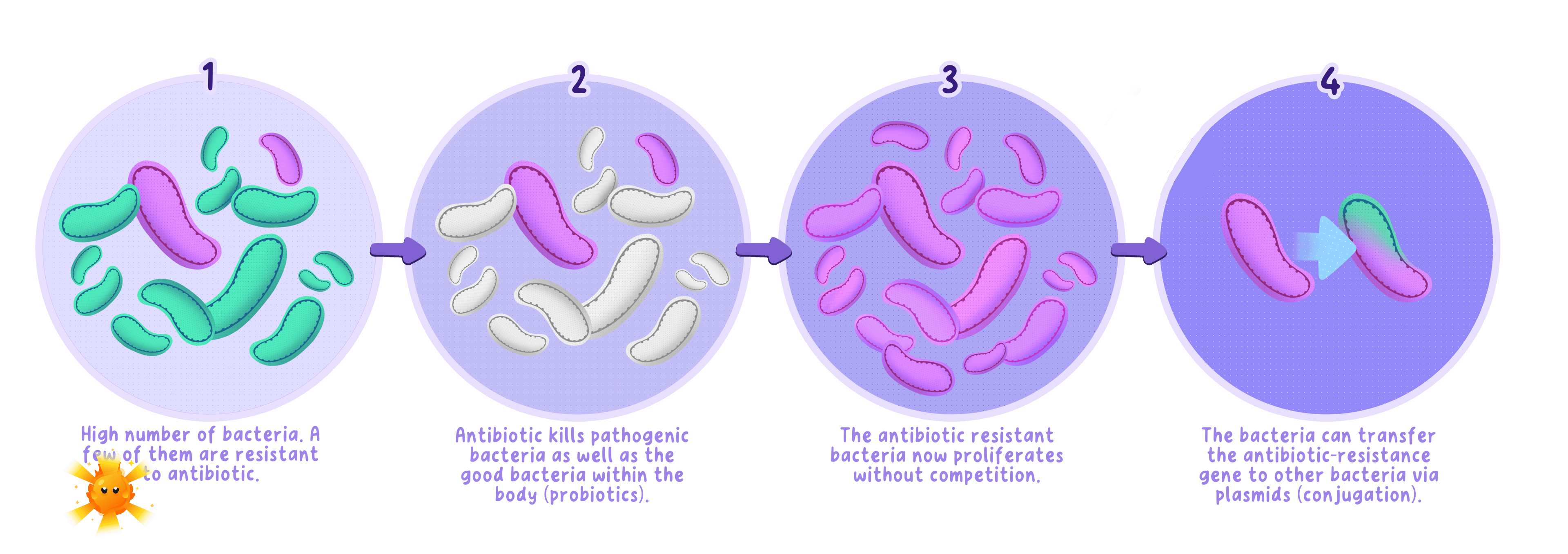
- Every so often a random mutation in a bacterium's DNA happens to let it survive a particular antibiotic, creating a new strain.
- When that antibiotic is taken, it clears out the ordinary bacteria but leaves the resistant ones alive.
- With their competitors gone, the survivors multiply freely and pass the resistance allele on to all their offspring.
- Before long most of the population carries the resistance, so a whole resistant strain has built up.
- Such a strain spreads easily, because hardly anyone has built up immunity to it and the usual antibiotics no longer work against it.
Example
MRSA is a well-known resistant strain that is hard to clear in hospitals, where many already-ill patients are close together.
Common Mistake
The antibiotic does not create the resistance; the mutation turns up by chance first, and the antibiotic simply lets the bacteria that already have it win out.
Slowing the spread of resistance
- Doctors now hand out antibiotics only when they are truly needed, and never for a cold or other illness caused by a virus, which antibiotics cannot kill anyway.
- If you are given a course, you should take every dose even once you feel better, so that no stragglers are left alive to breed a resistant strain.
- Farmers are also being asked to cut back how much antibiotic they give to healthy livestock.
- Making a brand-new antibiotic takes many years and a great deal of money, so new drugs cannot be relied on to appear as quickly as new resistant strains do.
Note
Every unnecessary dose gives resistant bacteria another chance to be the ones that survive, which is why cutting overall use matters so much.
Self review
- How does a bacterium first become resistant to an antibiotic?
- Why do resistant bacteria survive and spread when an antibiotic is used?
- What is MRSA?
- Give two ways the spread of antibiotic resistance can be slowed.
- Why can new antibiotics not solve the problem on their own?
