The Linnaean system
Classification
Sorting living organisms into groups based on their similarities and differences, from large groups such as kingdoms down to individual species.
- Classification means sorting living things into groups according to the features they share and the ways they differ.
- The traditional system, developed by Carl Linnaeus, groups organisms by their structure and characteristics.
- Organisms are placed in a hierarchy of ever-smaller groups: kingdom, phylum, class, order, family, genus and species.
- Organisms in the same small group share more features, and are more closely related, than those grouped only at a higher level.
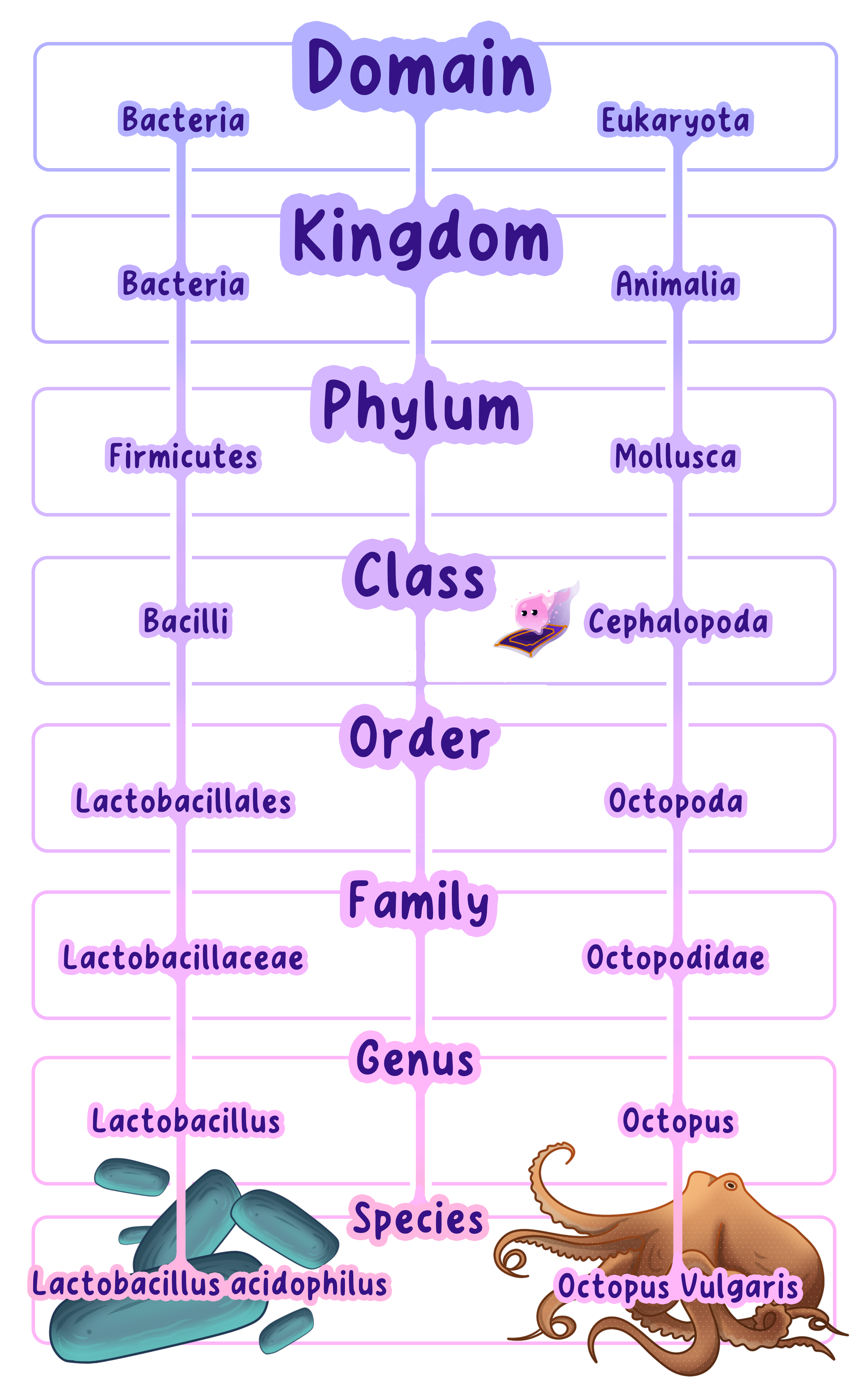
A mnemonic such as King Prawn Curry Or Fat Greasy Sausages helps you recall kingdom, phylum, class, order, family, genus, species.
Binomial names
Binomial name
The two-part Latin name given to every species, made of its genus followed by its species name, for example Homo sapiens.
- In the binomial system, each species is given a two-part name in Latin.
- The first part is the genus, written with a capital letter; the second is the species, written in lower case.
- The whole name is written in italics, or underlined when handwritten, for example Homo sapiens.
- Common names vary between languages and regions, so a binomial name gives every species one name recognised by scientists worldwide.
- Because the name includes the genus, it also shows which species are closely related.
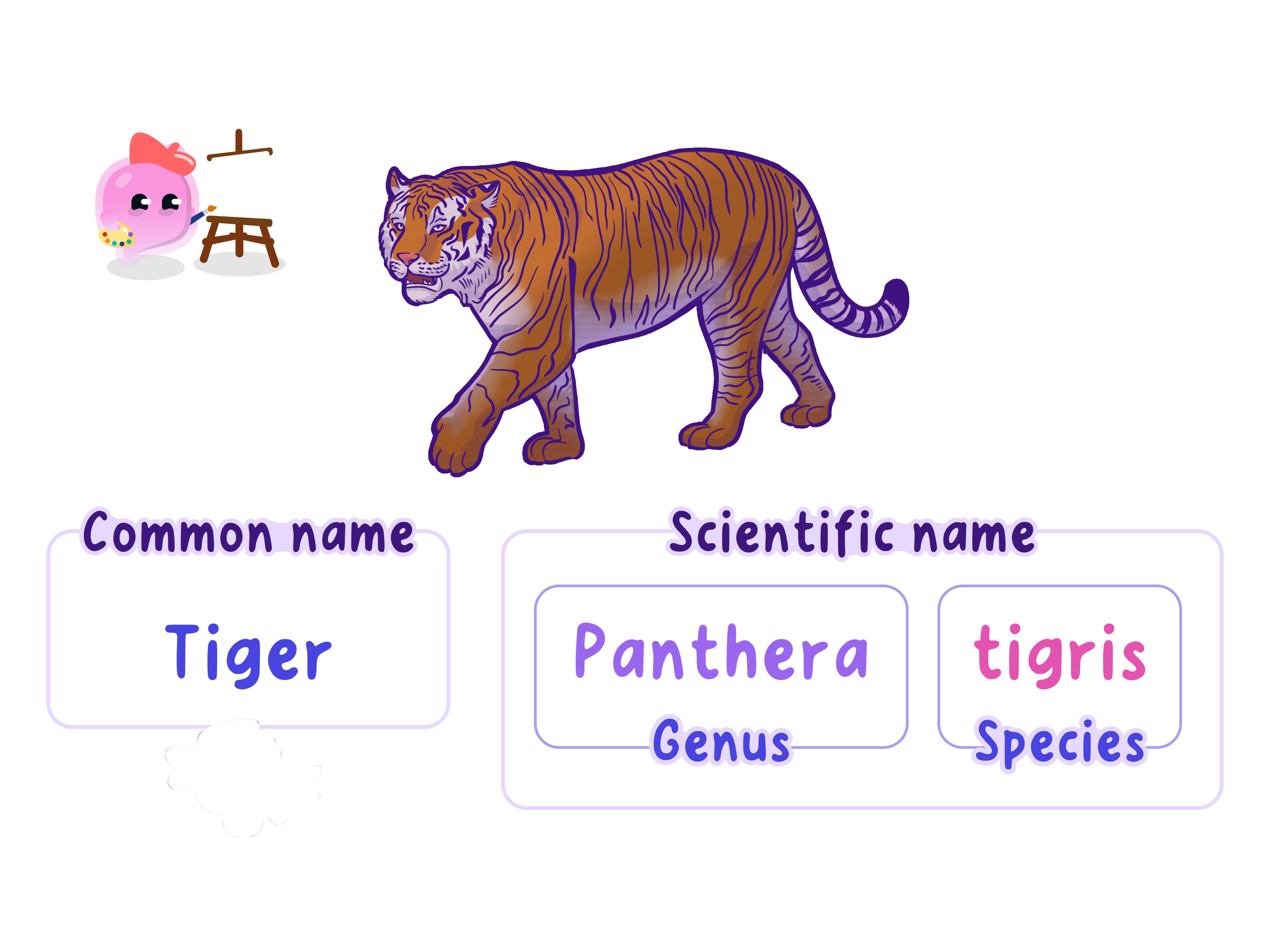
Do not capitalise the species part or drop the italics; Homo sapiens is correct.
New evidence and the three domains
- As microscopes and chemical methods improved, scientists could compare the internal structures and molecules of organisms.
- This evidence showed that some organisms grouped together by appearance were not closely related, so classification was revised.
- Using evidence from chemical analysis, Carl Woese proposed the three-domain system.
- The three domains are archaea (ancient bacteria-like microbes, many living in very harsh habitats), bacteria (the familiar true bacteria) and eukaryota (organisms with complex cells, including protists, fungi, plants and animals).
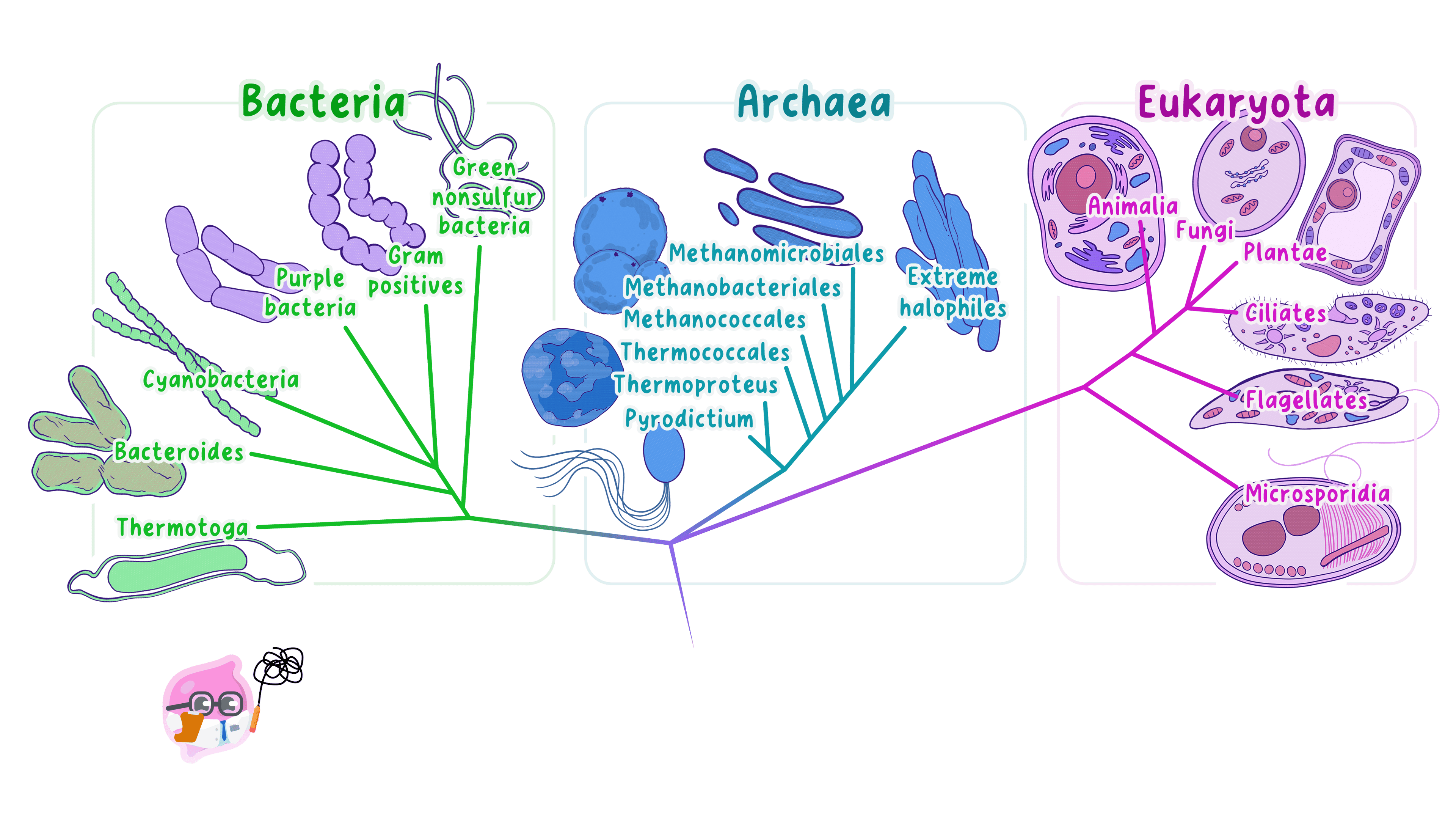
Classification is not fixed; it changes as new evidence, especially from DNA, becomes available.
Evolutionary trees
Evolutionary tree
A branching diagram that shows how scientists believe different organisms are related through evolution.
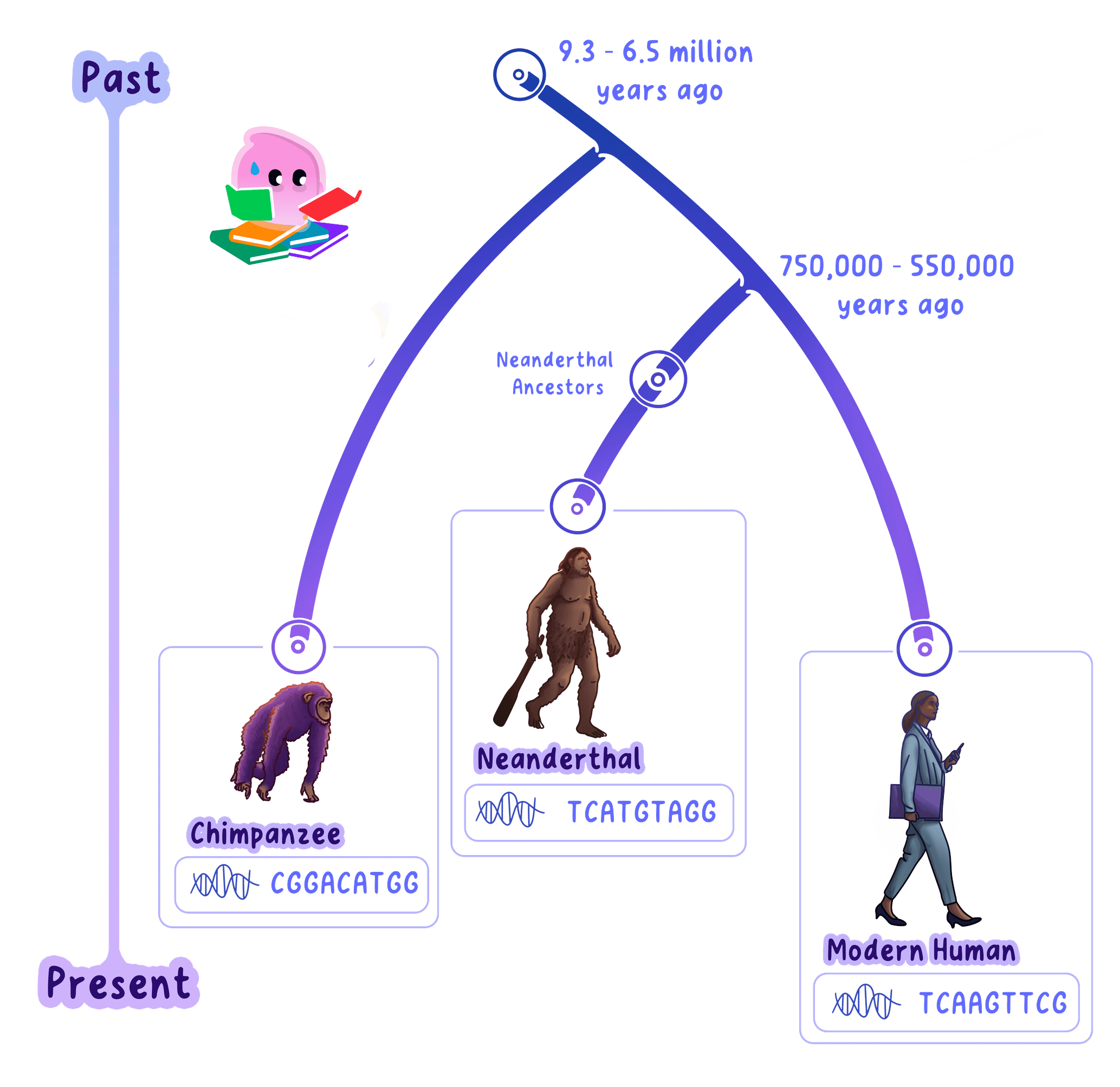
- An evolutionary tree is a diagram that sets out how scientists think different organisms are linked through their ancestry.
- To build the tree for species that are still alive, they draw on today's classification data.
- For species that have died out, the branches are worked out from fossil data instead.
- Branches that split more recently show organisms that are more closely related.
Group organisms by shared features, arrange them from kingdom down to species, and revise the model as better evidence appears.
- List the groups of the Linnaean hierarchy in order.
- What are the two parts of a binomial name, and how is each written?
- Why did classification change to the three-domain system?
- Name the three domains.
- What data is used to build an evolutionary tree for living and for extinct organisms?
