Living Things Are Organised From Cells Up to the Whole Organism
Definition
Tissue
A group of similar cells that work together to carry out a particular function.
- Cells are the basic building blocks of all living organisms.
- A unicellular organism is made of a single cell, while a multicellular organism is made of many cells.
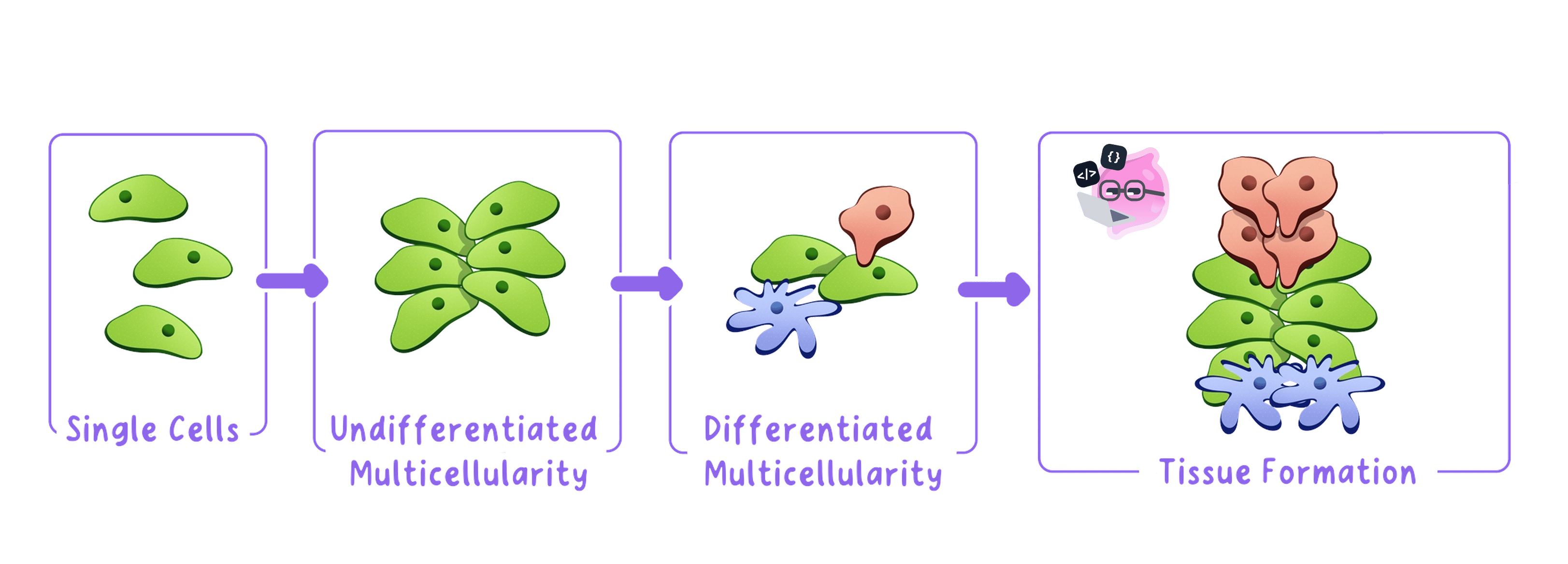
- As a multicellular organism develops, its cells differentiate and become specialised for particular jobs.
- Similar specialised cells group together to form a tissue, different tissues form an organ, and organs form an organ system.
- Several organ systems working together make up the whole organism.
Key Idea
The levels of organisation, from smallest to largest, are: cell, then tissue, then organ, then organ system, then organism.
Tissues Are Groups of Similar Cells
- A tissue is a group of cells with a similar structure and function working together.
- Muscular tissue:
- Contracts to bring about movement.
- Glandular tissue:
- Contains secretory cells that make and release substances such as enzymes and hormones.
- Epithelial tissue:
- Covers the outside of the body and lines the internal organs.
Example
Muscular tissue in the wall of the stomach contracts to churn food and mix it with digestive juices.
Organs Are Made of Several Tissues
Definition
Organ
A group of different tissues that work together to perform a particular function, such as the stomach.
- An organ is a group of different tissues that work together to perform a particular function.
- The stomach is an organ that digests food, and it contains three tissues.
- Muscular tissue churns the food and mixes it with digestive juices.
- Glandular tissue makes the digestive juices that break down food.
- Epithelial tissue covers the inside and the outside of the organ.
- The pancreas is another organ, making hormones to control blood sugar and enzymes that digest food.
Common Mistake
An organ contains several different tissues, not just one type of cell.
Organ Systems Work Together in Humans
Definition
Organ system
A group of organs that work together to carry out a particular function, such as the digestive system.
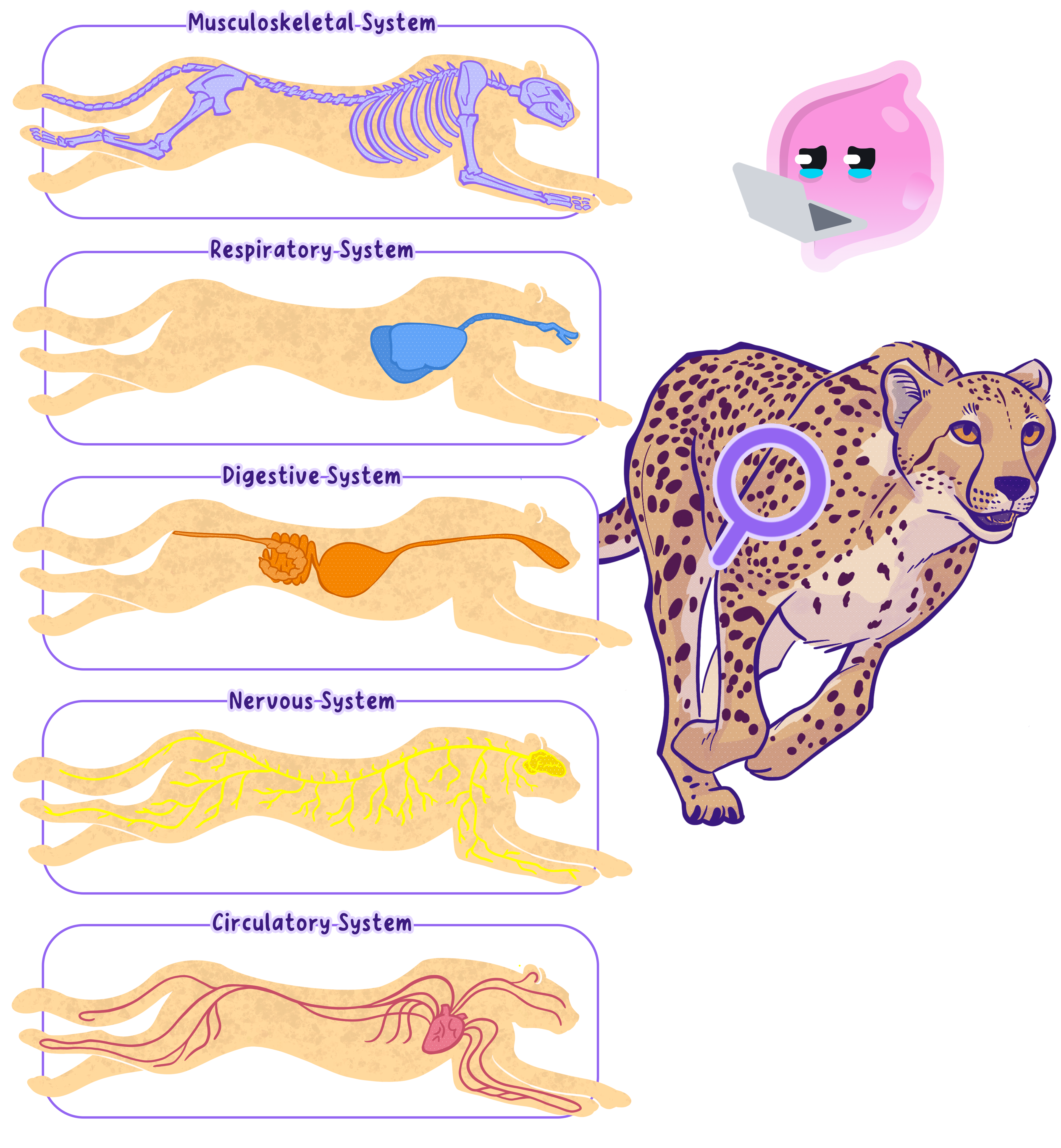
- An organ system is a group of organs that work together, and several organ systems keep a human alive.
- The digestive system provides the body with nutrients from the food it breaks down.
- The respiratory system provides the body with oxygen and removes carbon dioxide.
- The circulatory system carries these dissolved materials quickly around the body in the blood.
- The way one organ works often depends on the other organs in its system.
Example
The stomach and small intestine are organs that work together in the digestive system.
Plants Are Organised in the Same Way
- Plants are organised in the same stages, from cells up to the whole plant.
- A palisade cell is one type of specialised plant cell.
- Many similar palisade cells together form palisade tissue.
- Several tissues, including palisade mesophyll, spongy mesophyll, xylem and phloem, make up a leaf, which is an organ.
- Leaves, stems and roots are the organs that together make up the whole plant.
Self review
- Put these in order of size: organ, cell, organism, tissue, organ system.
- Name the three tissues found in the stomach and give the job of each.
- What is the difference between a tissue and an organ?
- What does the digestive system provide, and which system transports it around the body?
- Give an example of a plant organ and name two tissues it contains.
