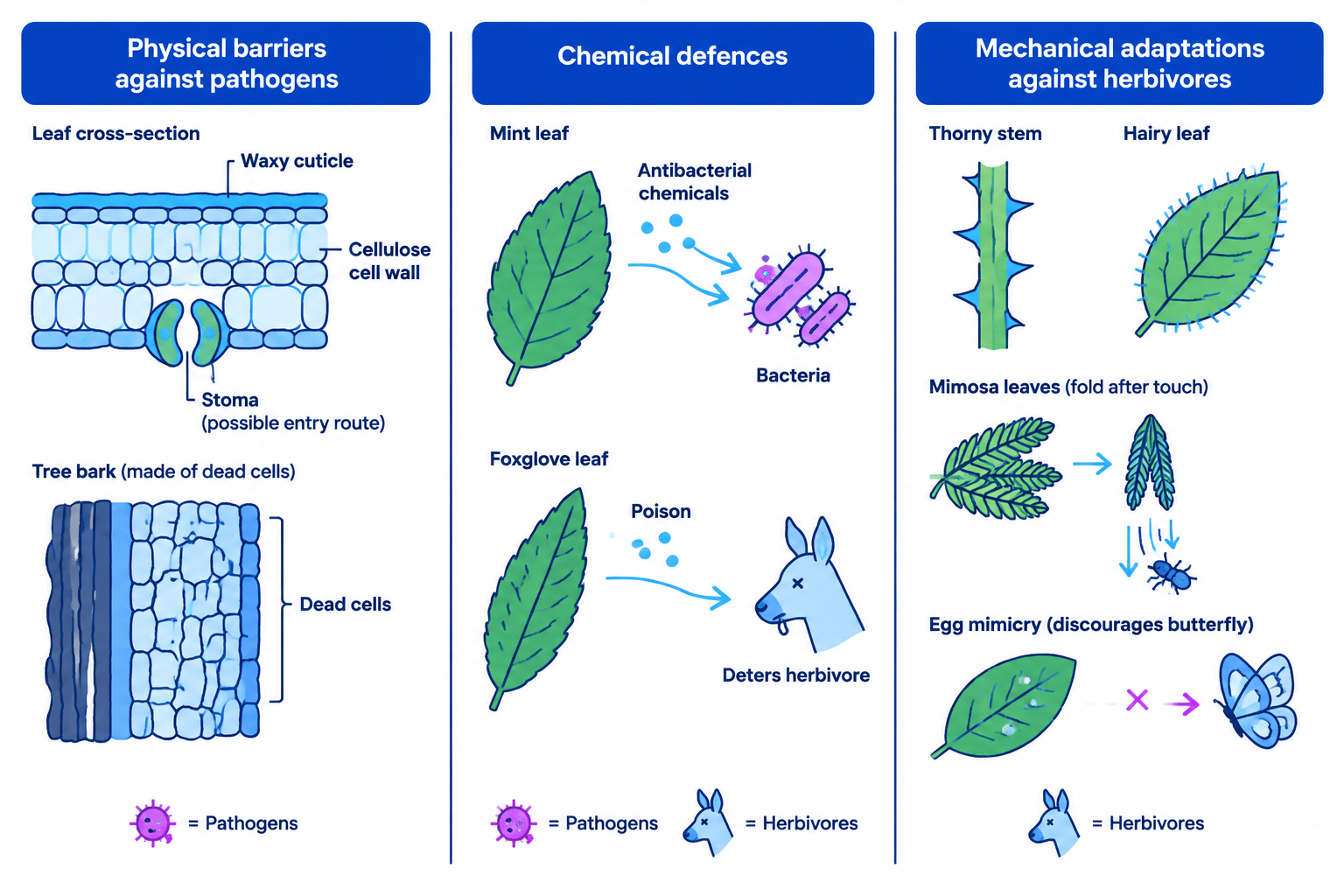
Plants Have Physical, Chemical and Mechanical Defences
Definition
Pathogen
A microorganism that causes disease. Plant pathogens include viruses, bacteria and fungi.
- Plants cannot run away, so they have evolved defences against both pathogens and animals that want to eat them.
- These defences fall into three groups: physical, chemical and mechanical.
Key Idea
Physical barriers keep microorganisms out, chemical defences attack pathogens or poison herbivores, and mechanical adaptations put animals off eating the plant.
Physical Barriers Resist Invading Microorganisms
Definition
Waxy cuticle
A tough, waterproof, waxy layer covering a leaf that acts as a physical barrier, so most pathogens can only get in through the stomata.
- Cellulose cell walls around every cell make it hard for microorganisms to get inside.
- A tough waxy cuticle on the leaves is a barrier, so pathogens can usually only get in through the stomata.
- Layers of dead cells around stems, such as bark on trees, are hard to penetrate and fall off, carrying pathogens away with them.
- Leaf fall in deciduous trees removes infected leaves, so a disease such as rose black spot drops off with them.
Note
These barriers work like skin does in animals, forming a first line of defence that keeps pathogens out.
Chemical Defences Attack Pathogens and Poison Herbivores
- Many plants make antibacterial chemicals that kill or stop the growth of invading bacteria.
- Plants also make poisons to deter herbivores from eating them.
- An animal that eats a poisonous plant feels unwell, so it learns to avoid that plant in future.
Example
- Mint and witch hazel make antibacterial chemicals and are used as mild antiseptics, and scientists are studying such chemicals as possible new antibiotics.
- Foxgloves, deadly nightshade and yew all make poisons that deter animals from eating them.
Mechanical Adaptations Against Herbivores
Definition
Herbivore
An animal that eats plants.
- Thorns and hairs on stems and leaves make a plant painful or unpleasant to eat, deterring animals from feeding on it or laying eggs on it.
- Some plants have leaves that droop or curl when touched, dislodging insects and startling larger animals.
- Other plants use mimicry, looking like an unhealthy or poisonous plant so animals leave them alone.
- Some even mimic butterfly eggs on their leaves, so butterflies do not lay their eggs there and the plant avoids being eaten by caterpillars.
Example
The sensitive plant Mimosa pudica folds its leaves shut within seconds of being touched, throwing off feeding insects.
Physical, Chemical or Mechanical?
- Physical defences are barriers that keep microorganisms out: cellulose cell walls, the waxy cuticle and layers of dead cells such as bark.
- Chemical defences are substances the plant makes: antibacterial chemicals against microorganisms and poisons against herbivores.
- Mechanical adaptations are physical features against animals: thorns and hairs, leaves that droop or curl, and mimicry.
Self review
- Give three physical barriers that resist invading microorganisms.
- Name the two types of chemical defence a plant can use.
- Why is the waxy cuticle an effective barrier, and where can pathogens still get in?
- Give two mechanical adaptations that deter herbivores.
- What is mimicry, and how does it protect a plant?