5.3.3a Maintaining water and nitrogen balance in the body
Why the Body Balances Water and Waste
Osmosis
The net movement of water molecules across a partially permeable membrane from a dilute solution to a more concentrated solution.
- The body must keep the water and ion content of its fluids steady.
- If cells lose or gain too much water by osmosis, they do not work efficiently.
- Waste products, along with excess water and ions, must be removed from the body.
Balancing water, ions and waste keeps the conditions around the cells steady, which is homeostasis.
Losing Water, Ions and Urea
Urea
A waste product made in the liver from excess amino acids, and removed from the body by the kidneys in the urine.
- Water is lost from the lungs whenever you breathe out.
- Water, ions and urea are lost through the skin in sweat.
- There is no control over the water, ions or urea lost from the lungs or skin.
- Excess water, ions and urea are removed from the blood by the kidneys and leave the body in the urine.
The body cannot control losses from the lungs or skin, so the kidneys carry out the controlled part of the job.
How the Kidneys Make Urine
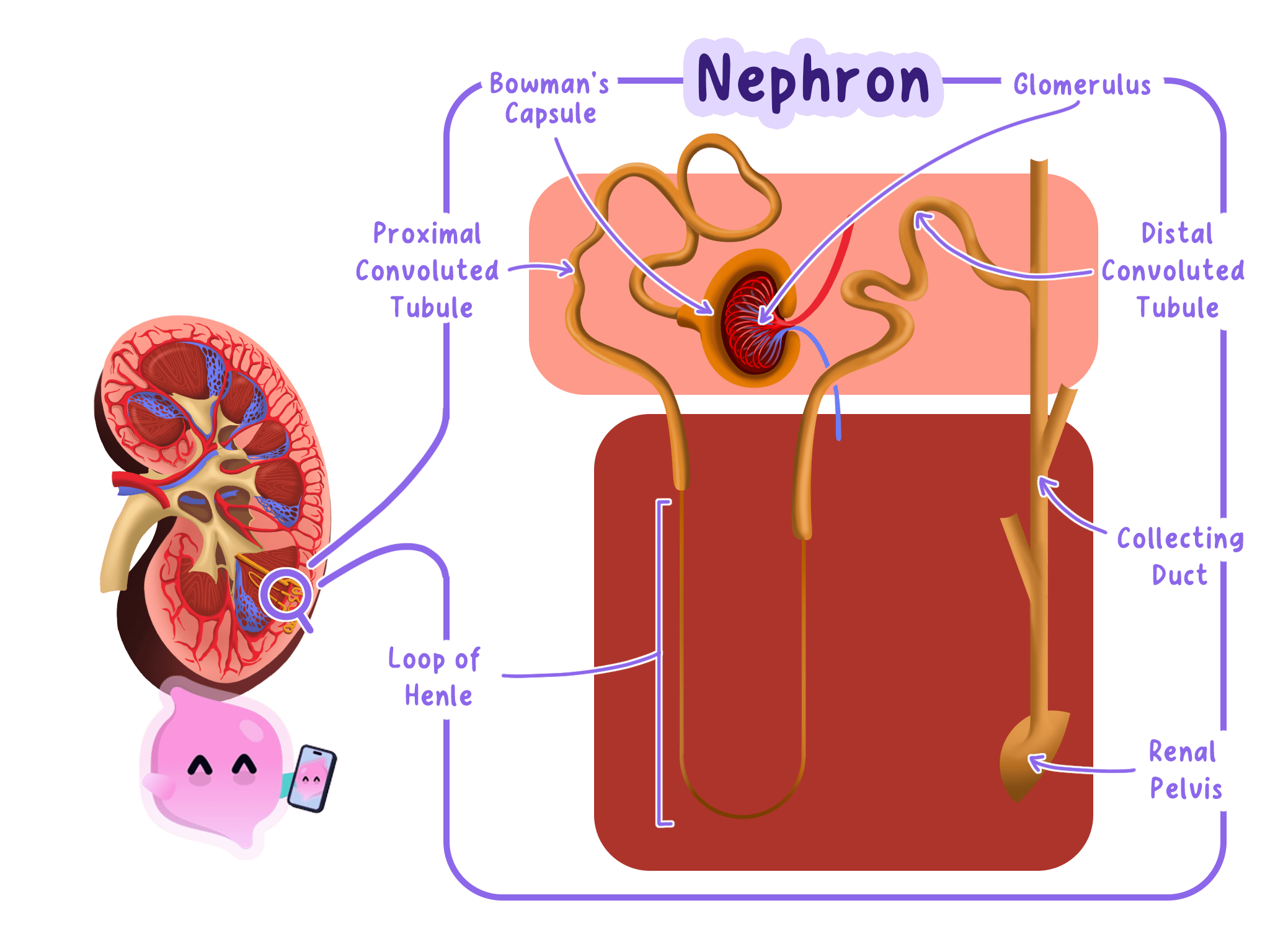
- The kidneys make urine by filtering the blood.
- Filtration removes water, glucose, ions and urea from the blood into the kidney tubules.
- Useful substances are then taken back into the blood by selective reabsorption.
- All of the glucose, some ions, and as much water as the body needs are reabsorbed.
- Urea, excess ions and excess water are left behind and leave the body as urine.
- In a table of filtration data, glucose appears in the blood but not in the urine, because all of it has been reabsorbed.
- Why is it a problem if cells lose or gain too much water by osmosis?
- Give two ways water is lost from the body that the body cannot control.
- Which organ removes excess water, ions and urea in a controlled way?
- What are the two main stages by which the kidneys make urine?
- Why is there normally no glucose in the urine?
5.3.3b Maintaining water and nitrogen balance in the body (Higher tier)
Making Urea from Excess Amino Acids
Deamination
The breakdown of excess amino acids in the liver, which produces ammonia that is then converted into urea.
- Digesting protein gives excess amino acids, which the body cannot store.
- In the liver, the excess amino acids are deaminated.
- Deamination produces ammonia, which is very toxic.
- The ammonia is immediately converted into urea, which is much safer to excrete.
- The urea passes into the blood and is removed by the kidneys in the urine.
Ammonia is turned into urea straight away because it is far too toxic to be allowed to build up in the body.
Controlling Water Balance with ADH
ADH
A hormone from the pituitary gland that makes the kidney tubules reabsorb more water back into the blood when the blood is too concentrated.
- The water level in the body is controlled by the hormone ADH.
- ADH is released by the pituitary gland when the blood is too concentrated.
- It makes the kidney tubules reabsorb more water back into the blood.
- This is controlled by negative feedback.
- When the blood becomes too dilute, less ADH is released, so less water is reabsorbed and more is lost in the urine.
More ADH means more water reabsorbed and less, more concentrated urine; less ADH means the opposite.
Treating Kidney Failure
Dialysis
A treatment for kidney failure in which a machine filters the blood to remove urea and restore the right balance of ions and water.
- In kidney failure, the kidneys can no longer remove urea or balance water and ions.
- One treatment is a kidney transplant, giving the patient a healthy kidney from a donor.
- Another is dialysis, in which a machine does the kidney's job.
- In dialysis, the patient's blood flows through the machine, which removes urea and restores the correct balance of ions and water.
- Dialysis must be repeated regularly, while a transplant is a long-term solution but needs a donor.
- What happens to excess amino acids in the liver?
- Why is the ammonia converted into urea?
- When is ADH released, and what effect does it have on the kidney tubules?
- How does the body respond by negative feedback when the blood is too dilute?
- Give two ways kidney failure can be treated.
