5.3.2a Control of blood glucose concentration
The Pancreas Controls Blood Glucose
- Cells need a steady supply of glucose for respiration.
- The pancreas monitors and controls the blood glucose concentration.
- Keeping blood glucose steady is an example of homeostasis.
The pancreas keeps blood glucose within narrow limits, which is an example of homeostasis.
Insulin Lowers Blood Glucose
Insulin
A hormone released by the pancreas when blood glucose is too high; it makes body cells take in glucose and the liver store it as glycogen.
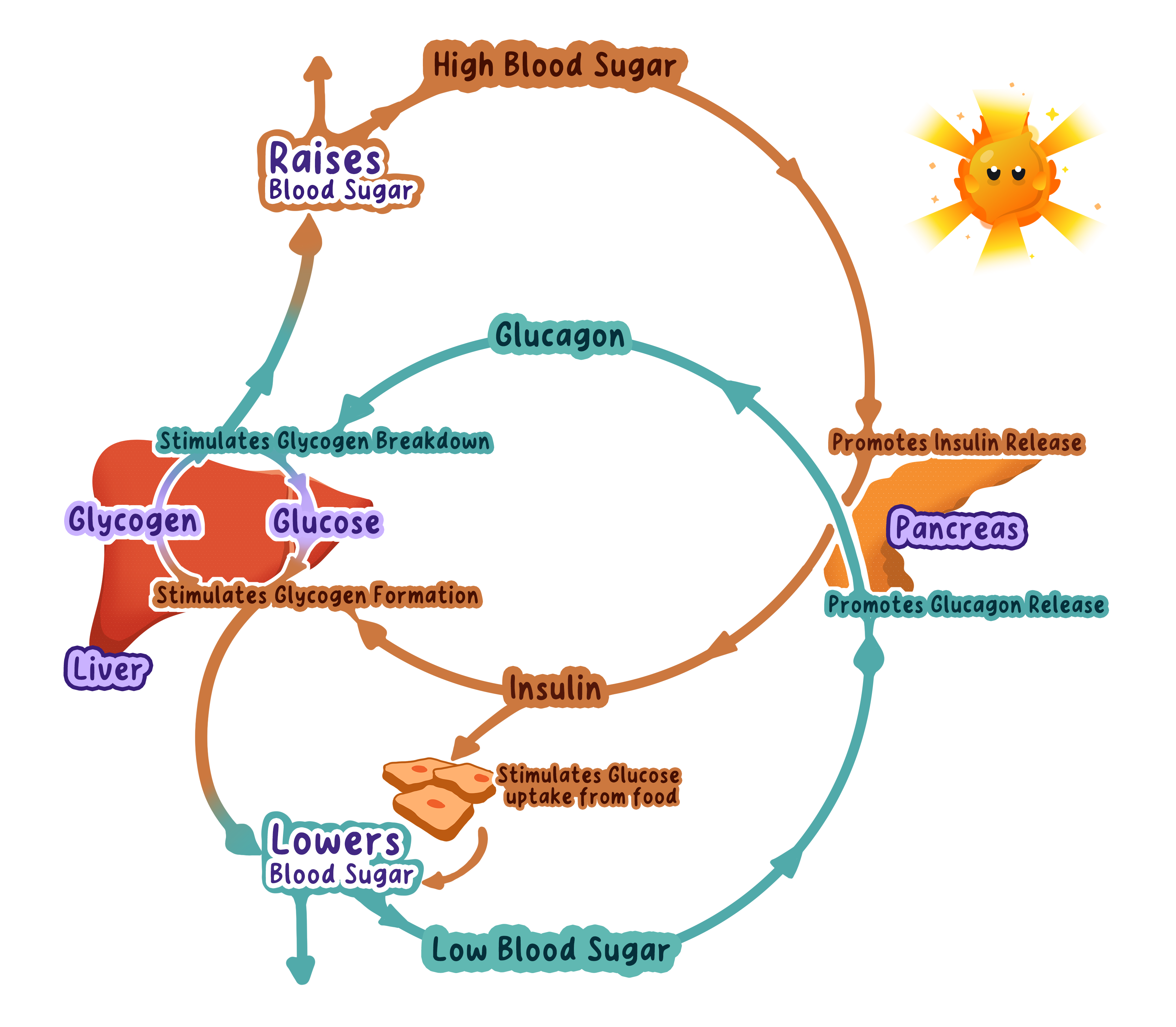
- When blood glucose is too high, for example after a meal, the pancreas releases insulin.
- Insulin makes glucose move from the blood into the body cells.
- In the liver and muscle cells, the excess glucose is converted to glycogen for storage.
- This lowers the blood glucose back towards normal.
Insulin lets glucose leave the blood, which is why it lowers the blood glucose level.
Type 1 Diabetes
Type 1 diabetes
A disorder in which the pancreas does not make enough insulin, so blood glucose rises too high; it is treated with insulin injections.
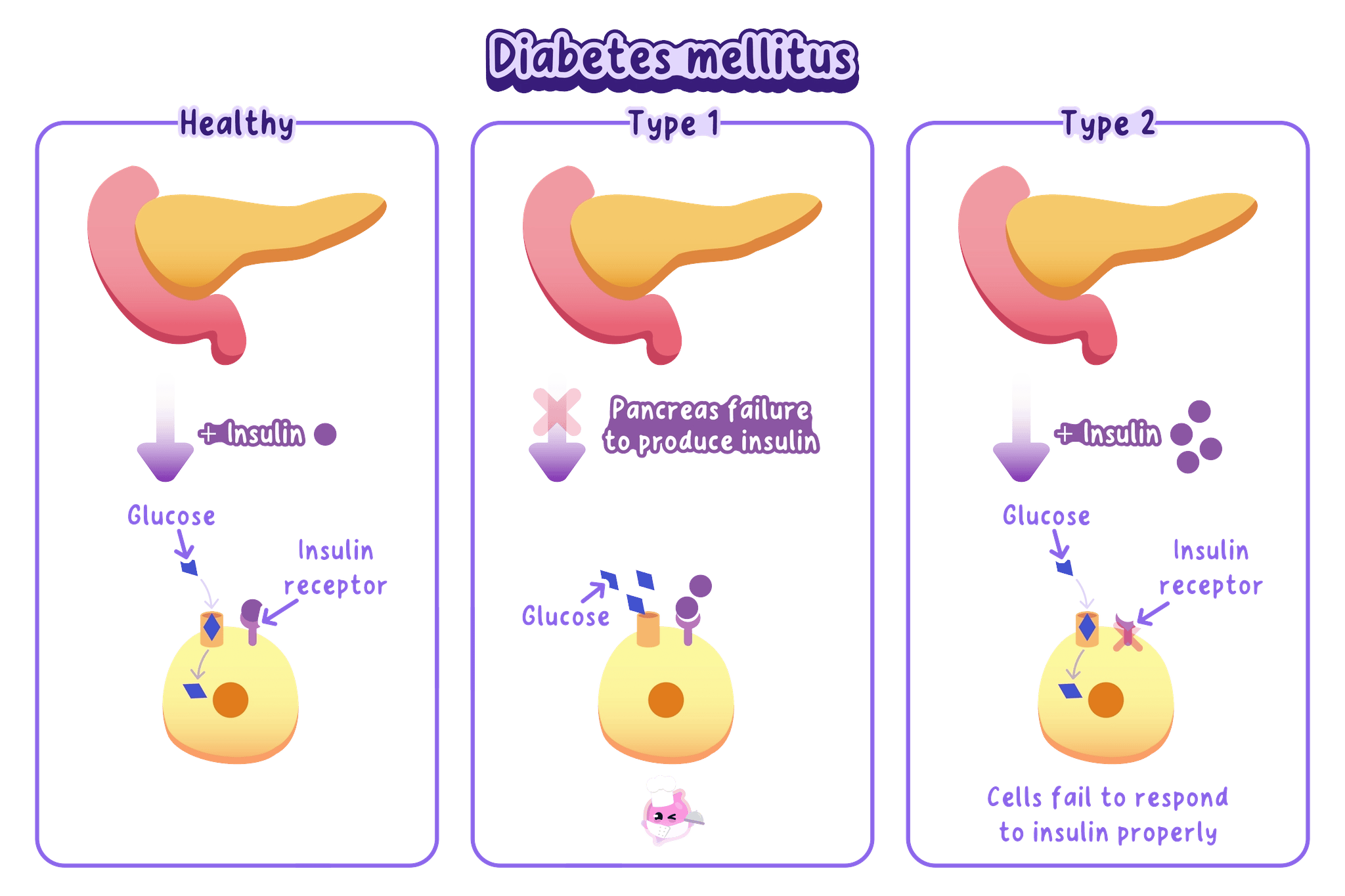
- In type 1 diabetes, the pancreas does not produce enough insulin.
- Blood glucose can rise to dangerously high levels, especially after eating.
- It usually starts in childhood.
- It is treated with insulin injections before meals.
The injected insulin does the job the pancreas cannot, moving glucose out of the blood.
Type 2 Diabetes
Type 2 diabetes
A disorder in which the body cells stop responding properly to insulin; it is linked to obesity and often treated with diet and exercise.
- In type 2 diabetes, the body cells stop responding properly to insulin.
- The pancreas may still make insulin, but it no longer works well on the cells.
- Obesity is a risk factor, and it becomes more common with age.
- It is often treated with a carbohydrate-controlled diet and regular exercise, and sometimes with drugs.
Do not confuse the two: in type 1 there is too little insulin, while in type 2 the cells stop responding to it.
Comparing the Two Types of Diabetes
- Cause:
- Type 1 is caused by the pancreas making too little insulin; type 2 by the cells no longer responding to insulin.
- Who it affects:
- Type 1 usually starts in childhood; type 2 is linked to obesity and older age.
- Treatment:
- Type 1 needs insulin injections; type 2 is managed with a controlled diet and exercise, and sometimes drugs.
- Which organ monitors and controls blood glucose?
- Explain how insulin lowers a high blood glucose level.
- What causes type 1 diabetes, and how is it treated?
- What causes type 2 diabetes, and how is it usually treated?
- Give one risk factor for type 2 diabetes.
5.3.2b Control of blood glucose concentration (Higher tier)
Glucagon Raises a Low Blood Glucose Level
Glucagon
A hormone released by the pancreas when blood glucose is too low; it makes the liver convert glycogen back into glucose.
- When blood glucose is too low, the pancreas releases glucagon.
- Glucagon makes the liver convert stored glycogen back into glucose.
- The glucose is released into the blood, raising the blood glucose back towards normal.
Insulin and glucagon have opposite effects: insulin lowers blood glucose, while glucagon raises it.
Negative Feedback Keeps Blood Glucose Steady
Negative feedback
A control mechanism in which a change from the normal level triggers a response that reverses the change and restores the normal level.
- Insulin and glucagon work together in a negative feedback cycle.
- If blood glucose rises too high, insulin is released and lowers it by storing glucose as glycogen.
- If blood glucose falls too low, glucagon is released and raises it by turning glycogen back into glucose.
- Constantly switching between the two hormones keeps blood glucose within narrow limits.
- Which hormone is released when blood glucose is too low?
- What does glucagon make the liver do?
- How do the effects of insulin and glucagon differ?
- Explain how negative feedback keeps blood glucose within narrow limits.
