5.3.4a Hormones in human reproduction
Reproductive Hormones Drive Puberty
Puberty
The stage when the reproductive organs become active and the secondary sexual characteristics develop, driven by reproductive hormones.
- At puberty, the reproductive organs become active and reproductive hormones cause the secondary sexual characteristics to develop.
- Secondary sexual characteristics are body changes such as body hair, breast development and a deeper voice.
- The main female reproductive hormone is oestrogen, made in the ovaries.
- The main male reproductive hormone is testosterone, made in the testes, and it stimulates sperm production.
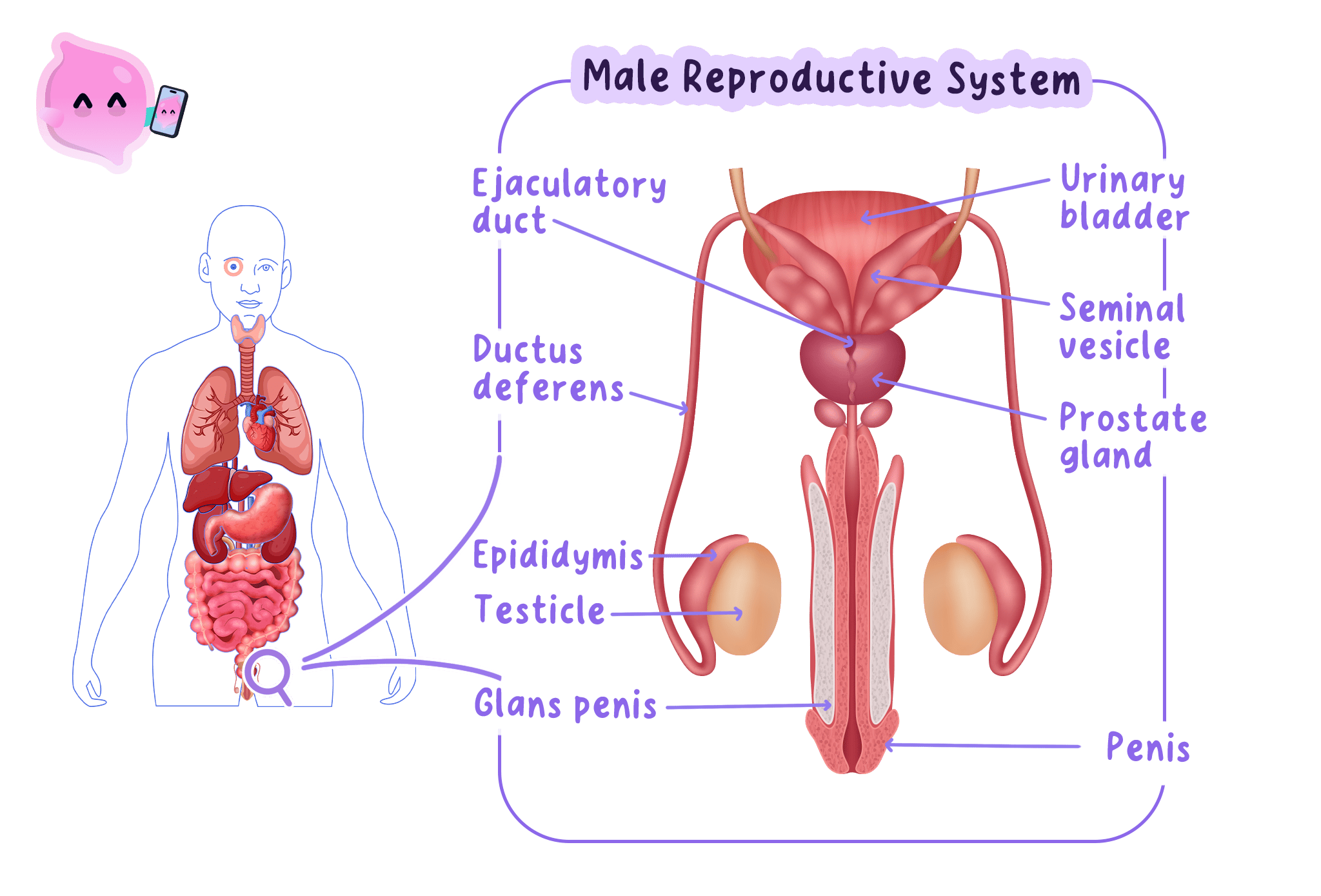
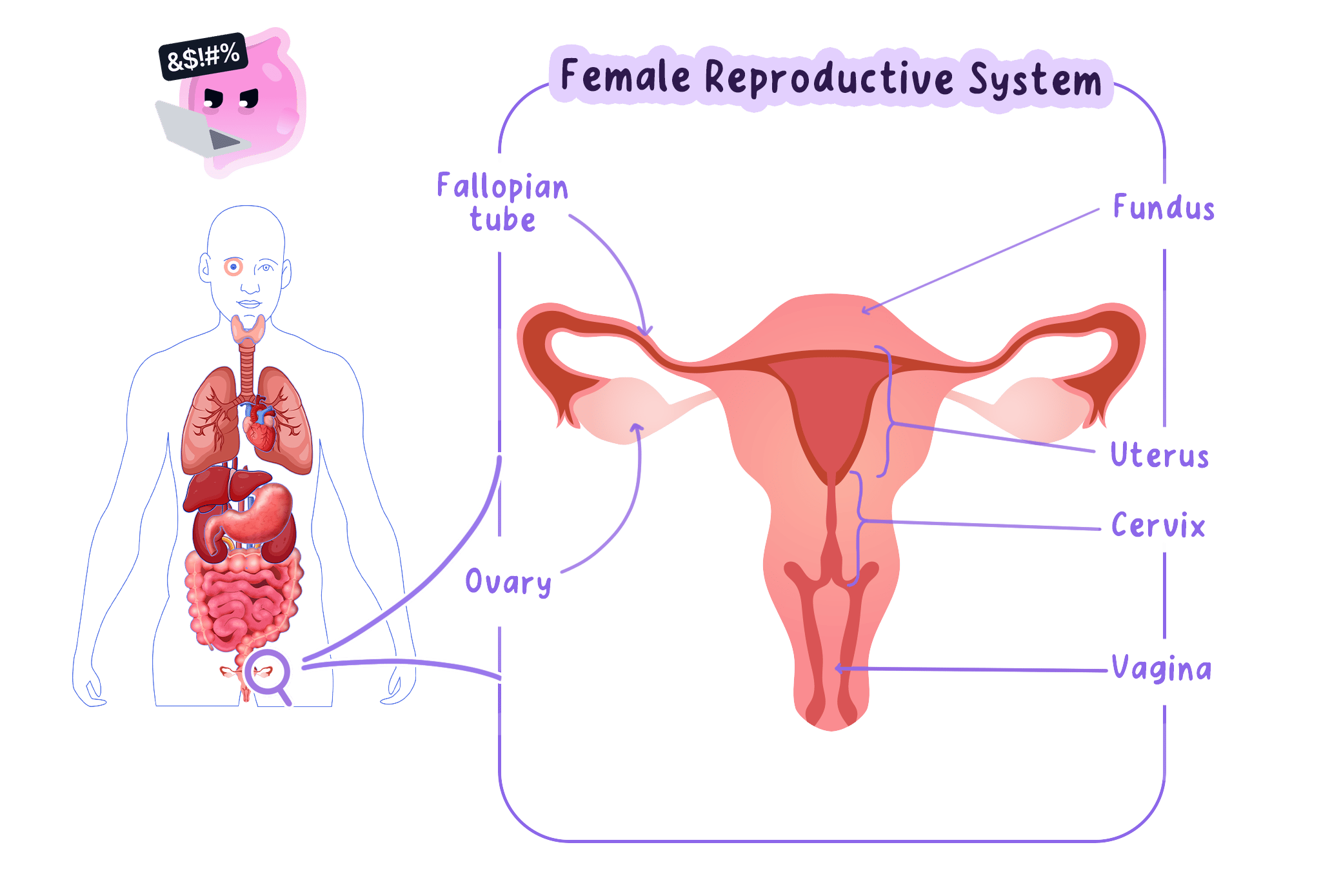
Oestrogen and testosterone bring about the changes of puberty and control the making of eggs and sperm.
The Menstrual Cycle Releases an Egg About Every 28 Days
Menstrual cycle
The roughly 28-day cycle of hormone-controlled changes that matures and releases an egg and prepares the lining of the uterus for pregnancy.
- At puberty, eggs in the ovaries begin to mature.
- About every 28 days one mature egg is released, and this release is called ovulation.
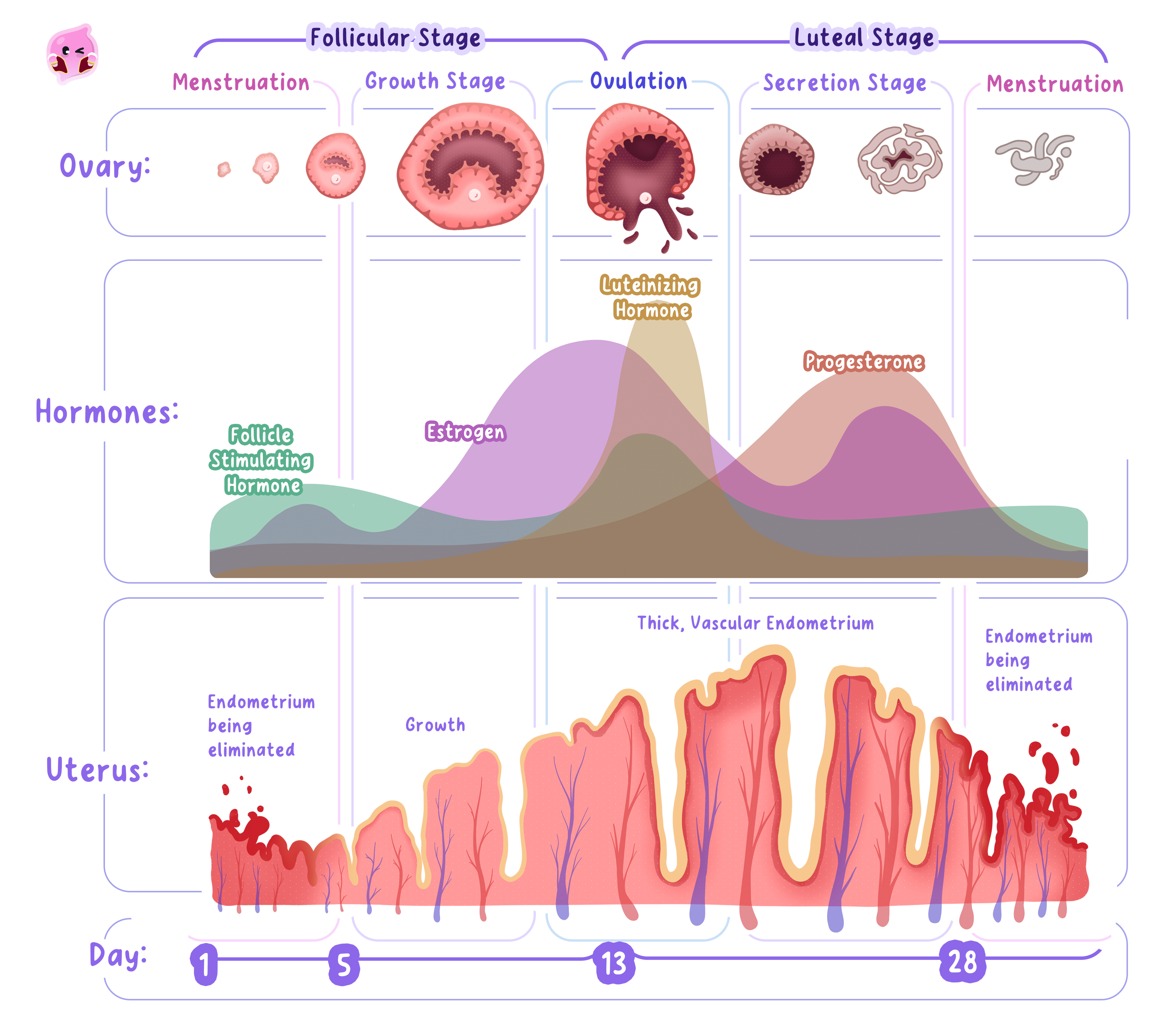
- The cycle has four main stages.
- Menstruation, when the uterus lining is lost, at the start of the cycle if no fertilisation has occurred.
- The lining of the uterus builds up and thickens.
- Ovulation, around day 14, when the mature egg is released from the ovary.
- The lining is maintained, ready to receive a fertilised egg.
If the egg is not fertilised, the lining breaks down, it is lost in menstruation, and the next cycle begins.
Four Hormones Control the Menstrual Cycle
FSH (follicle-stimulating hormone)
A hormone from the pituitary gland that causes an egg to mature in the ovary and stimulates the ovaries to produce oestrogen.
- Four hormones control the cycle: two are made in the pituitary gland and two in the ovaries.
- FSH (follicle-stimulating hormone)
- From the pituitary gland; it causes an egg to mature in the ovary.
- LH (luteinising hormone)
- From the pituitary gland; it stimulates the release of the egg at ovulation.
- Oestrogen
- From the ovaries; it is involved in building up the uterus lining.
- Progesterone
- From the ovaries; it maintains the uterus lining.
Learn the source and job of each hormone; the way they interact to control each other is Higher tier.
How the Cycle Fits Together
- FSH matures an egg while the uterus lining begins to build up.
- LH triggers ovulation about halfway through the cycle.
- Oestrogen and progesterone build up and maintain the lining, ready for a fertilised egg.
- If no egg is fertilised, the lining is shed and a new cycle starts.
- Name the main male and main female reproductive hormones and where each is made.
- What is ovulation, and roughly how often does it happen?
- Which hormone causes an egg to mature?
- Which hormone triggers the release of the egg?
- Which two hormones help build up and maintain the uterus lining?
5.3.4b Hormones in human reproduction (Higher tier)
How the Four Hormones Interact to Control the Cycle
Oestrogen
The main female reproductive hormone, made in the ovaries, involved in puberty and in controlling the menstrual cycle.
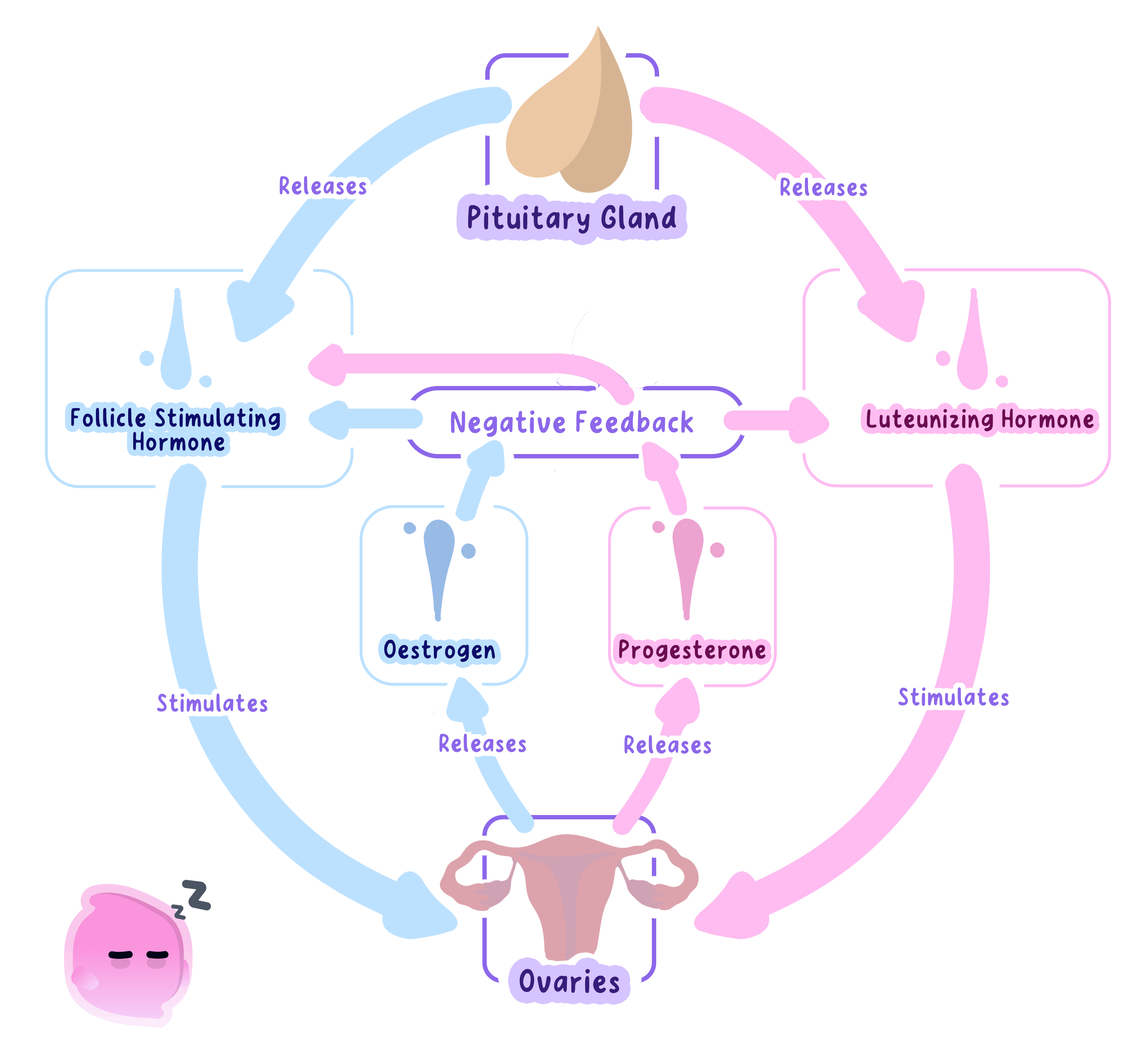
- The four hormones FSH, oestrogen, LH and progesterone interact.
- The hormones switch each other on and off, so the cycle repeats about every 28 days.
The key idea is feedback: the ovary hormones oestrogen and progesterone control the pituitary hormones FSH and LH, which in turn control the ovary.
First Half of the Cycle: FSH, Oestrogen and the LH Surge
LH (luteinising hormone)
A hormone from the pituitary gland that triggers the release of a mature egg from the ovary (ovulation).
- FSH from the pituitary gland makes a follicle in the ovary develop and the egg inside it mature.
- The developing follicle produces oestrogen, so FSH also brings about a rise in oestrogen.
- Oestrogen makes the uterus lining grow and repair, and it inhibits FSH.
- When oestrogen reaches a high enough level, it stimulates the release of LH from the pituitary gland.
- A surge of LH around day 14 triggers ovulation.
The tricky part is that oestrogen does two opposite things: it inhibits FSH but stimulates LH.
Second Half of the Cycle: Progesterone Maintains the Lining
Progesterone
A female reproductive hormone that maintains the lining of the uterus during the second half of the menstrual cycle.
- After ovulation the empty follicle produces progesterone.
- Progesterone maintains the thick uterus lining, ready for a fertilised egg.
- Progesterone inhibits both FSH and LH.
- If the egg is not fertilised, progesterone falls, the lining breaks down in menstruation, and low progesterone lets FSH rise again to start a new cycle.
- If the egg is fertilised, progesterone stays high to maintain the lining and support the pregnancy.
Do not muddle the sources: FSH and LH come from the pituitary gland, while oestrogen and progesterone come from the ovaries.
Reading Hormone Level Graphs
Ovulation
The release of a mature egg from the ovary, about halfway through the menstrual cycle.
- You must be able to extract and interpret data from graphs of hormone levels across the cycle.
- FSH is highest early in the cycle, when it starts an egg maturing.
- Oestrogen rises to a peak just before day 14.
- LH shows a sharp spike around day 14, which causes ovulation.
- Progesterone rises after ovulation, peaks around day 21, then falls if there is no pregnancy.
Line up the sharp LH spike with day 14 to find ovulation, and read the fall in progesterone at the end as the start of the next period.
The Feedback in One View
- FSH matures an egg and triggers oestrogen.
- Rising oestrogen inhibits FSH and triggers the LH surge that causes ovulation.
- Progesterone from the empty follicle maintains the lining and inhibits FSH and LH.
- Falling progesterone at the end of the cycle lets FSH rise and the cycle repeats.
- What does FSH stimulate the ovary to do and to produce?
- How does oestrogen affect FSH and LH?
- What triggers ovulation?
- What are the two roles of progesterone in the second half of the cycle?
- On a hormone graph, which hormone spikes at ovulation?
