6.2.4a Genetic engineering
Genetic engineering
Genetic engineering
Changing an organism's characteristics by transferring a gene from one organism into another, so the second organism produces a desired protein or feature.
- Genetic engineering means deliberately changing an organism's genome by adding a gene taken from a different organism, so that it gains a feature we want.
- The transferred gene codes for a useful protein, which the modified organism then makes.
- Bacteria can be given the human insulin gene so that they produce insulin to treat diabetes.
- Crops can be given genes that let them fight off insect pests, survive weedkillers, or carry extra nutrients such as vitamin A.
- Crops altered in this way are known as genetically modified (GM) crops, and they usually grow a bigger harvest.
Genetically modified bacteria grown in large tanks now make most of the insulin used by people with diabetes.
Benefits and concerns
- Benefits: more food from higher yields, crops that need less pesticide, and cheaper medicines such as insulin.
- Doctors are also researching whether adding a working gene could treat some inherited disorders.
- Concerns: GM crops might harm the wildlife around the fields, such as wild flowers and the insects that feed on them.
- There is also worry that no one yet knows for certain whether eating GM food has any long-term effect on human health.
- Because it raises ethical questions, genetic engineering is carefully regulated.
Do not give only the benefits; questions on this usually want a balanced view that also includes a risk or ethical concern.
- What does genetic engineering do to an organism's genome?
- How are bacteria used to make human insulin?
- Give two ways crops are genetically modified.
- State one benefit and one concern of genetic engineering.
6.2.4b Genetic engineering (Higher tier)
Isolating the gene and using a vector
Restriction enzyme
An enzyme that cuts DNA at a specific base sequence, used in genetic engineering to cut out a required gene and to open a vector.
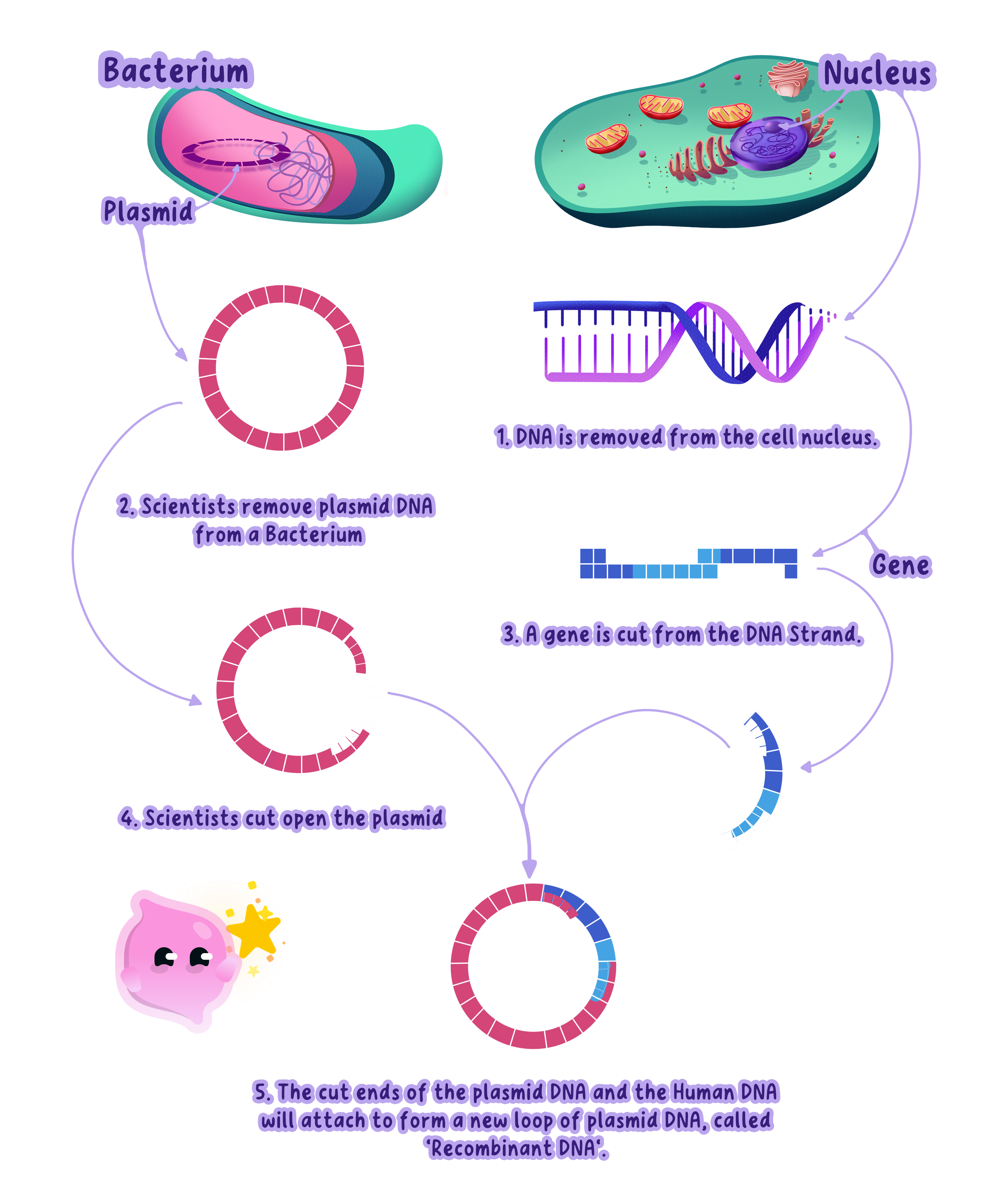
- Special enzymes called restriction enzymes are used to snip the wanted gene out of the DNA of the organism that carries it.
- These enzymes cut the DNA at a specific base sequence, leaving short sections of unpaired bases called sticky ends.
- The very same enzyme is then used to open up a vector, most often a bacterial plasmid though a virus can also be used, so it is left with matching sticky ends.
- Because the sticky ends are complementary, the gene pairs up with the cut ends of the vector.
- The enzyme DNA ligase then joins the gene into the vector, sealing the sugar-phosphate backbone.
- The vector now carries the new gene and is called recombinant DNA.
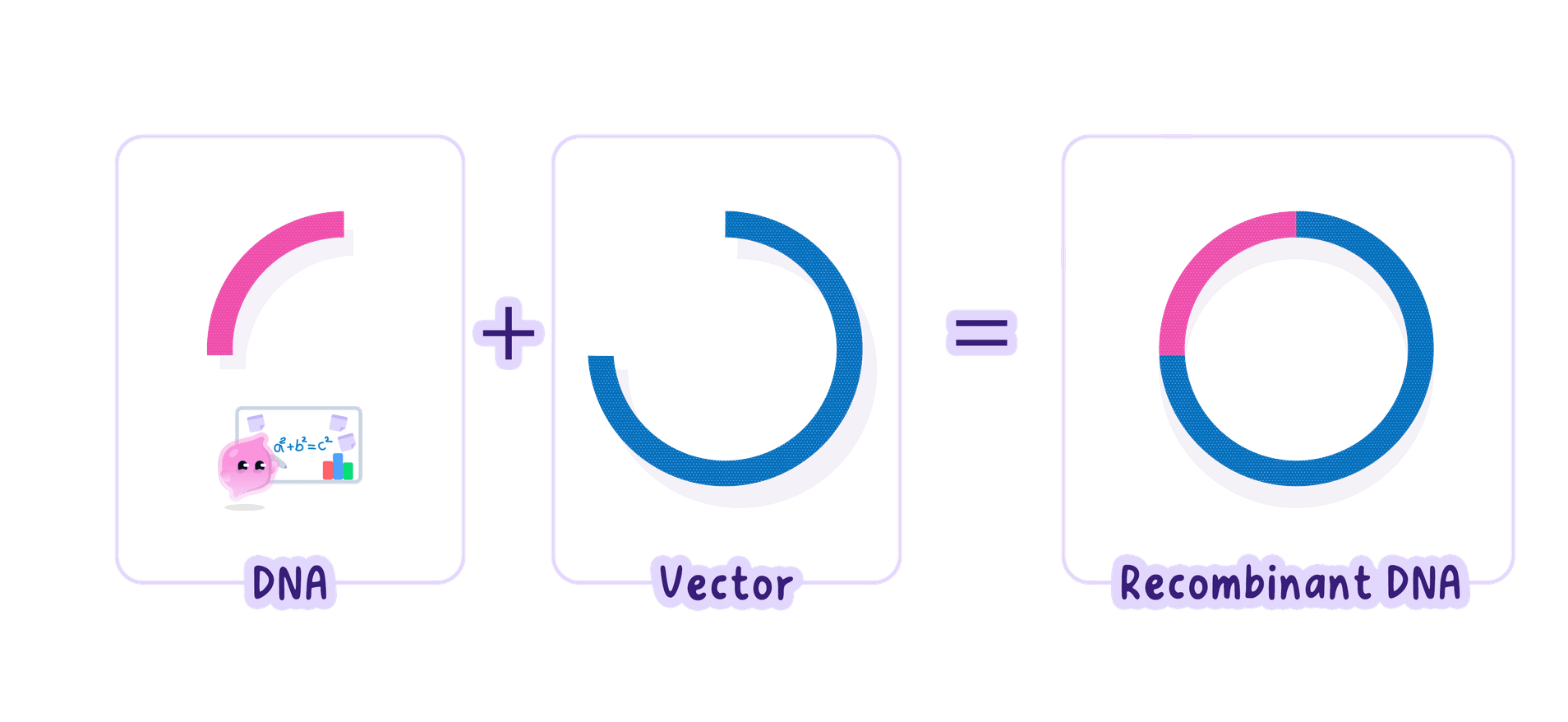
A plasmid is a small ring of DNA found in bacteria; because it is easy to cut and rejoin, it makes a convenient vector.
Transferring the gene into cells
Vector
Something used to carry a gene into a cell during genetic engineering, usually a plasmid or a virus.
- The vector carries the gene into the cells of the target organism.
- A plasmid vector is taken up by bacteria from the surrounding solution, often after they are treated with heat shock to make them take it up.
- A virus vector inserts the gene into the host cell in the same way it would during a natural infection.
- Once inside, the gene becomes part of the cell's genome.
- The cell reads the new gene and makes the protein it codes for.
- For a whole plant or animal, the gene is added while it is still an early embryo, so that it grows up with the new gene in every one of its cells.
- The modified cells grow and reproduce, so every new cell contains the transferred gene.
Restriction enzymes cut out the gene and open the vector, their sticky ends pair up, DNA ligase joins them into recombinant DNA, and the vector carries the gene into the host cells.
Do not muddle the enzymes: restriction enzymes cut the DNA, while DNA ligase joins the gene into the vector.
- Which enzymes cut the required gene out of DNA, and what do they leave at the cut ends?
- Why is the same restriction enzyme used on the gene and on the vector?
- Which enzyme joins the gene into the vector?
- How does a bacterium take up a plasmid vector, and how does a virus vector get the gene into a cell?
- Put the main steps of genetic engineering in the correct order.
- Why is the gene transferred at an early stage of development?
