The structure of DNA
Definition
DNA
The polymer that makes up the genetic material of a cell, formed from two strands twisted into a double helix.
- Inside the nucleus of a cell, the genetic material is a chemical known as DNA.
- DNA is a polymer, a long molecule built from many smaller units joined together.
- It is made of two strands twisted around each other into a shape called a double helix.
- This DNA is packaged into the structures we call chromosomes, which sit inside the nucleus.
Note
A chromosome is one very long molecule of DNA, coiled up tightly so it fits inside the nucleus.
Genes and proteins
Definition
Gene
A short section of DNA that codes for a particular protein and controls a characteristic.
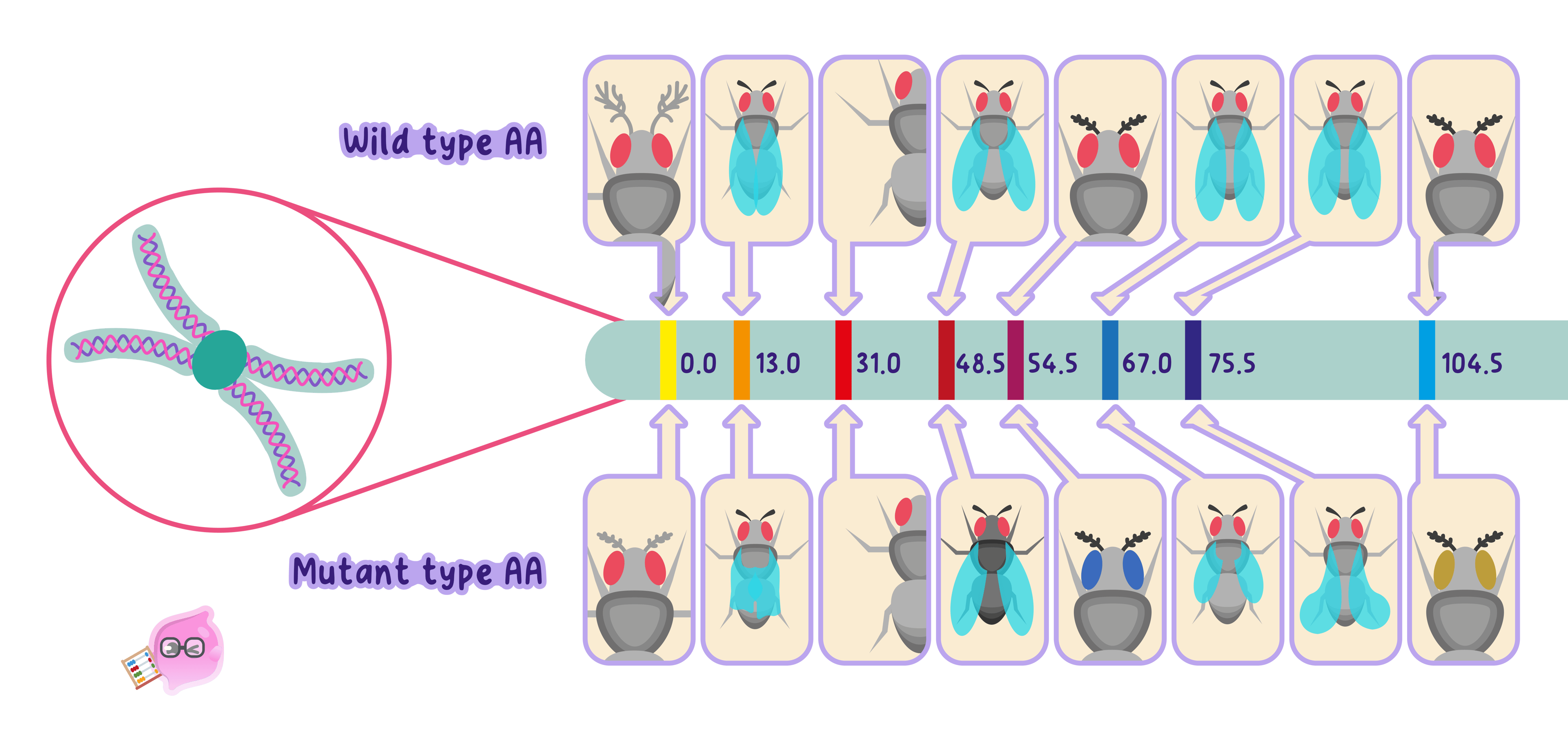
- A gene is a short stretch of the DNA within a chromosome.
- The base order of each gene sets the sequence of amino acids that are strung together to build one particular protein.
- Because proteins build and run the body, an organism's genes largely control its characteristics.
- A single chromosome carries many different genes, each a separate section along the DNA.
- The gene for a particular characteristic is always found at the same fixed position on the chromosome, called its locus.
- Different versions of the same gene, found at that locus, are called alleles.
Example
One gene codes for haemoglobin, the protein that carries oxygen in red blood cells.
Common Mistake
A gene does not build a characteristic directly; it codes for a protein, and the protein then does the job in the body.
The genome
Definition
Genome
The entire genetic material (all the DNA) of an organism.
- The genome is the entire genetic material of an organism.
- It is all of the DNA in all of the chromosomes, so it contains every gene the organism has.
- The whole human genome has now been read by the Human Genome Project, which is important for medicine in the future.
- Understanding it helps in the search for genes linked to disease.
- It also helps in the understanding and treatment of inherited disorders.
- It can be used to trace human migration patterns from the past.
Key Idea
The genome is the full set of genetic instructions for an organism, and a gene is just one instruction within it.
Self review
- What is DNA, and what shape do its two strands form?
- What is a gene, and what does it code for?
- Where on a chromosome is the gene for a characteristic found, and what are different versions of it called?
- What is the genome of an organism?
- Give two reasons why understanding the human genome is useful.
