Blood Is a Fluid Transport Tissue
- Blood is a tissue, even though it is a liquid, because it is a group of cells and cell fragments working together.
- It transports substances around the body, including oxygen, dissolved food, wastes, hormones and heat.
- It is made of a straw-coloured liquid called plasma, with cells and fragments carried in it.
- About 55% of blood is plasma; most of the rest is red blood cells, with white blood cells and platelets making up under 1%.
- An adult has about 5 litres of blood.
Blood has four parts: plasma, red blood cells, white blood cells and platelets, each with its own job.
Plasma Carries Everything Dissolved
Plasma
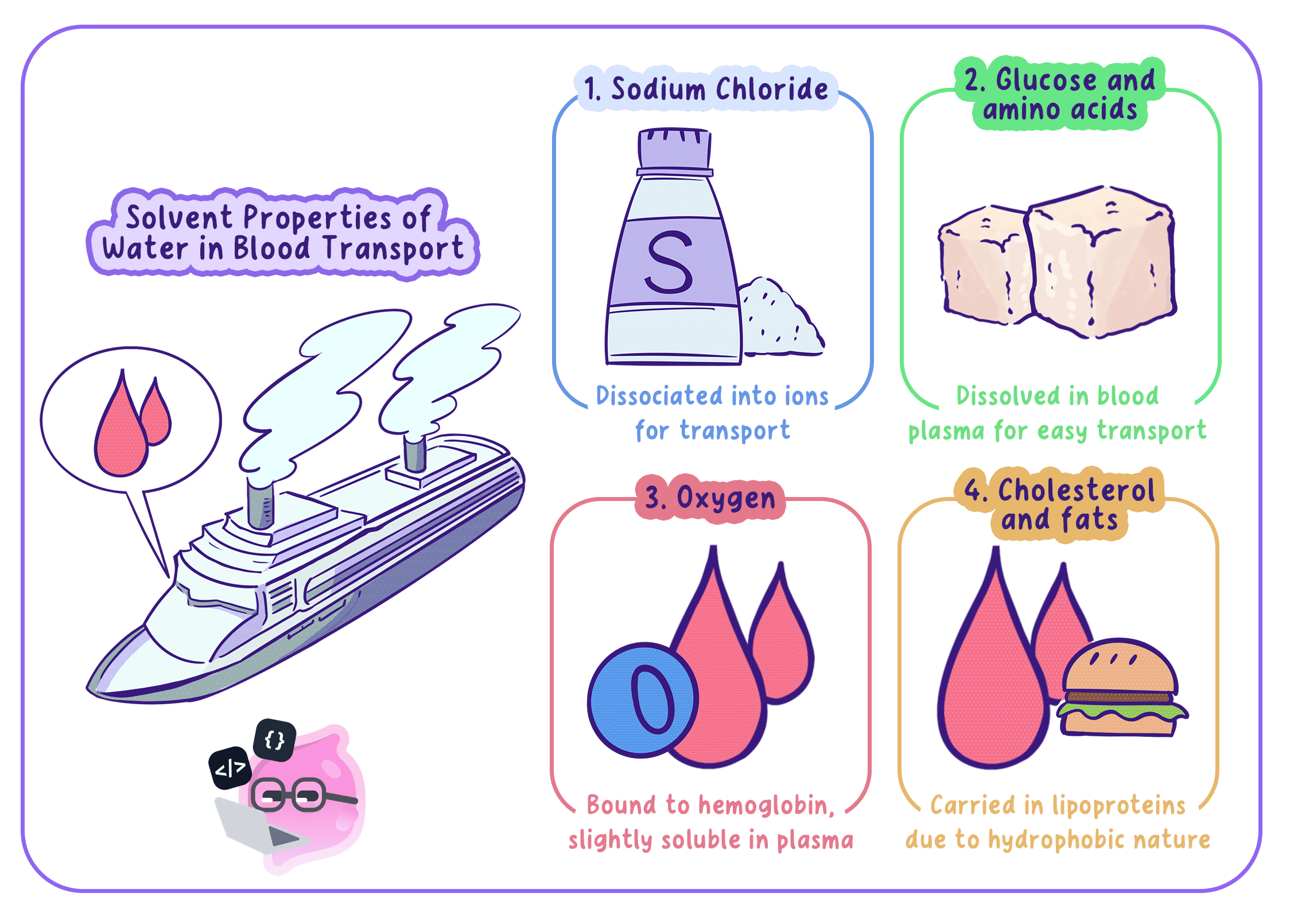
The straw-coloured liquid part of blood. It carries the blood cells and dissolved substances such as glucose, amino acids, carbon dioxide, urea and hormones, and it transports heat.
- Plasma is the straw-coloured liquid part of blood, and it is mostly water.
- It carries the blood cells and dissolved substances around the body.
- It transports dissolved food, the soluble products of digestion such as glucose and amino acids, from the intestine to the cells.
- It carries wastes such as carbon dioxide to the lungs and urea, made in the liver, to the kidneys.
- It also transports hormones and spreads heat around the body.
Almost everything the body moves in solution travels in the plasma, from digested food to waste urea.
Red Blood Cells Are Adapted to Carry Oxygen
Red blood cell
A blood cell with no nucleus, a biconcave disc shape and packed with haemoglobin, adapted to carry oxygen from the lungs to the body's cells.
- Red blood cells carry oxygen from the lungs to the respiring cells, and there are more of them than any other blood cell.
- They have no nucleus, which leaves more room inside for haemoglobin.
- They are shaped like a biconcave disc, a disc pushed in on both sides, giving a large surface area to volume ratio for fast diffusion of oxygen.
- They are small and flexible, so they can squeeze through the narrowest capillaries.
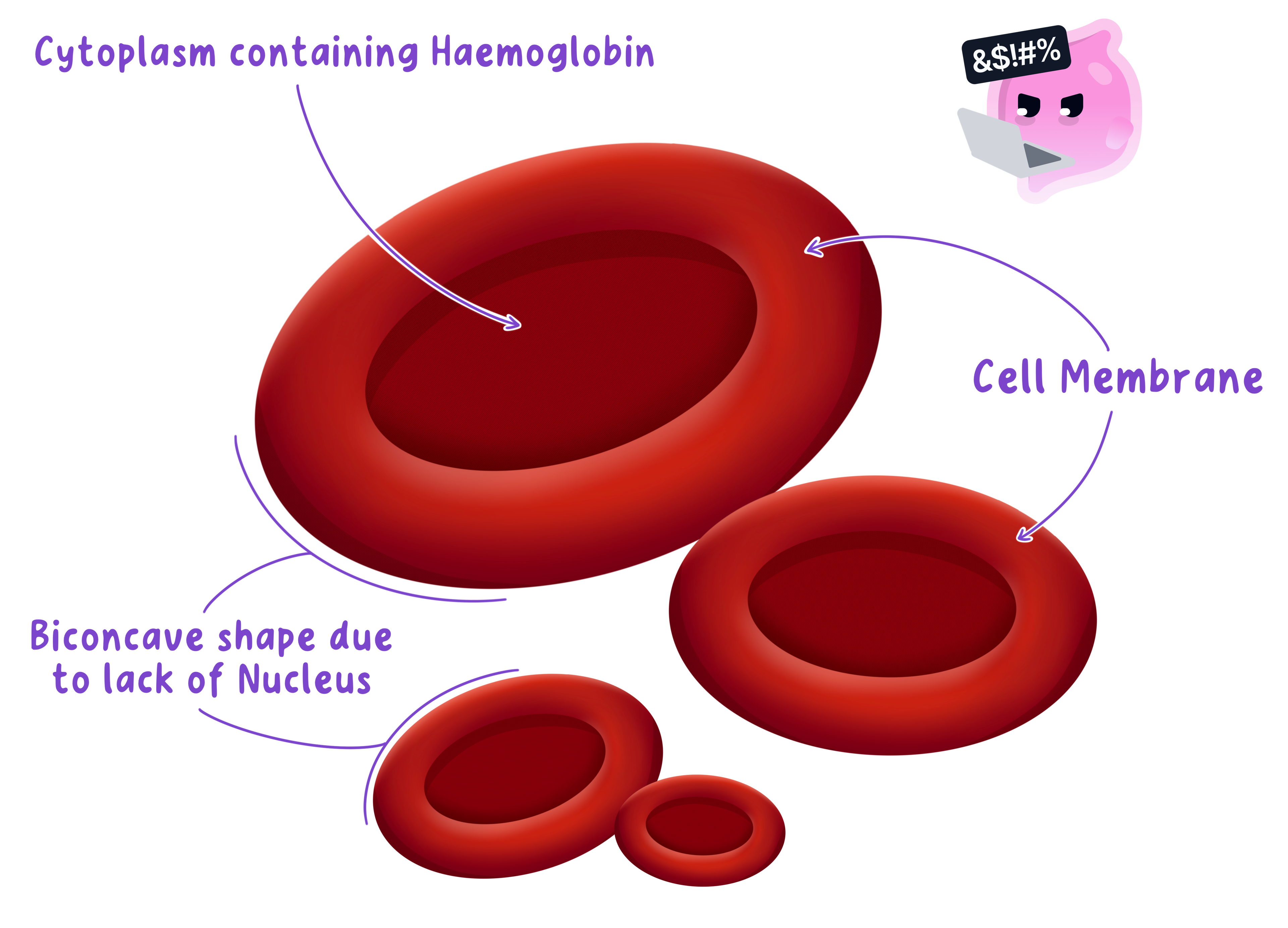
About 5 million red blood cells are packed into every cubic millimetre of your blood.
Haemoglobin Picks Up and Releases Oxygen
Haemoglobin
The red protein inside red blood cells that binds to oxygen in the lungs, forming oxyhaemoglobin, and releases it in the respiring tissues.
- Red blood cells are packed with the red protein haemoglobin.
- In the lungs, where oxygen is plentiful, haemoglobin binds oxygen to form oxyhaemoglobin.
- In the respiring tissues, where oxygen is low, oxyhaemoglobin breaks down and releases the oxygen to the cells.
- oxygen+haemoglobin⇌oxyhaemoglobin\text{oxygen} + \text{haemoglobin} \rightleftharpoons \text{oxyhaemoglobin}oxygen+haemoglobin⇌oxyhaemoglobin
The double arrow shows the reaction is reversible: haemoglobin loads oxygen in the lungs and unloads it in the tissues.
White Blood Cells Defend the Body
White blood cell
A blood cell that has a nucleus and defends the body against pathogens, either by engulfing them (phagocytosis) or by producing antibodies and antitoxins.
- White blood cells are part of the immune system and defend the body against pathogens.
- They are larger than red blood cells, far fewer in number, and always have a nucleus.
- Some, called phagocytes, engulf and digest pathogens, a process called phagocytosis.
- Others, called lymphocytes, produce antibodies that target specific pathogens.
- Lymphocytes can also produce antitoxins that neutralise the toxins made by pathogens.
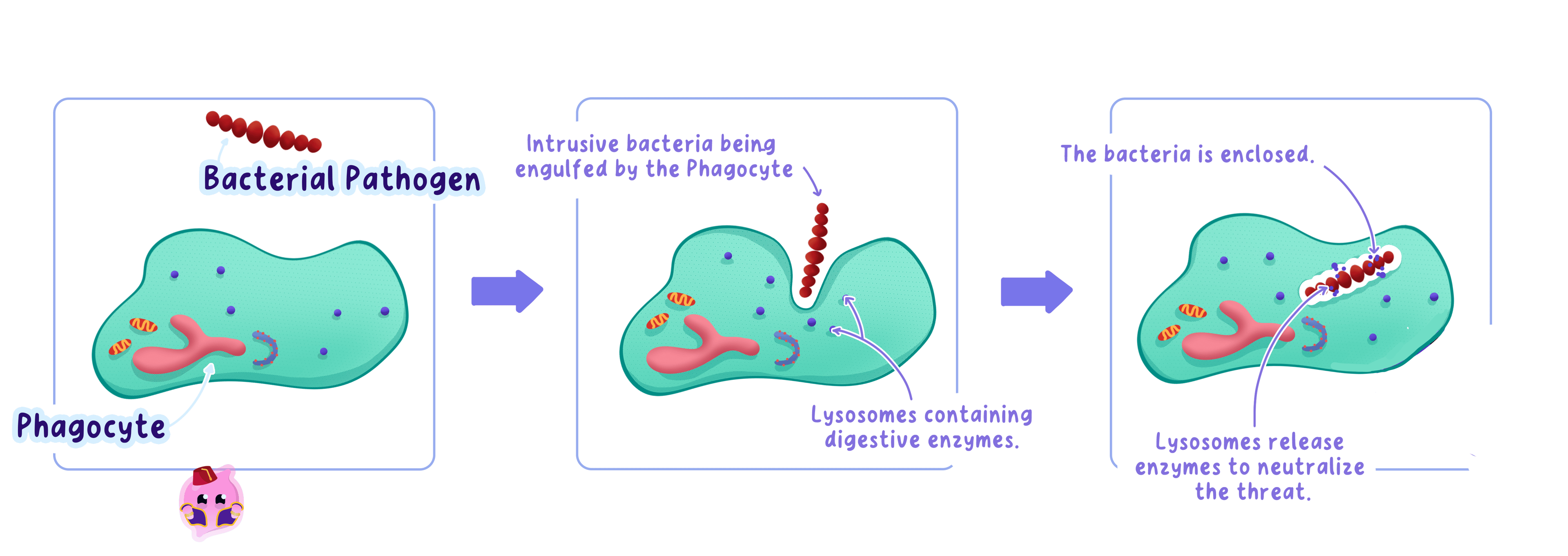
Unlike red blood cells, white blood cells keep their nucleus, which is the quickest way to tell them apart under the microscope.
Platelets Help the Blood to Clot
Platelet
A small fragment of a cell, with no nucleus, that helps the blood to clot at a wound to stop blood loss and keep pathogens out.
- Platelets are small fragments of cells with no nucleus.
- At a wound, they help the blood to clot.
- Clotting is a series of reactions that produce a mesh of protein fibres called fibrin.
- The fibrin mesh traps blood cells and plugs the cut, stopping blood loss.
- It also stops pathogens getting in through the broken skin, and dries to form a scab.
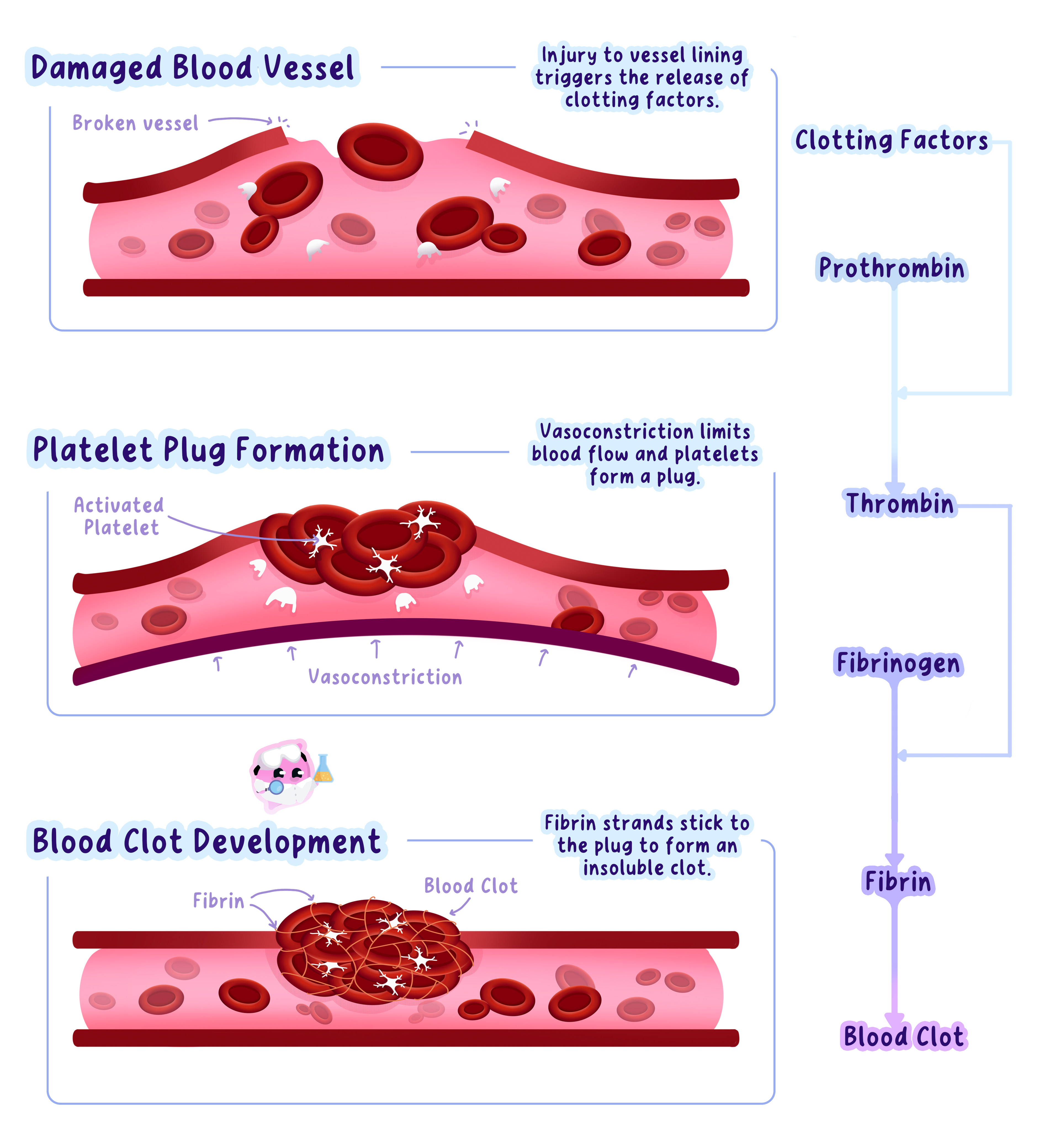
People with too few platelets cannot clot their blood properly, so even a small wound can bleed dangerously.
Recognising Blood Cells Under the Microscope
- In the exam you may be shown a photo or diagram and asked to identify the blood cells.
- Red blood cells are the smallest and most common, coloured red, with no nucleus and a biconcave-disc shape.
- White blood cells are larger, much rarer, and clearly show a nucleus that is often large or lobed.
- Platelets, if shown, are tiny fragments, smaller than either type of cell.
- Check for a nucleus first: a nucleus means it is a white blood cell.
- You can observe blood cells by looking at a prepared blood smear slide under a microscope.
- A stain makes the nucleus of each white blood cell show up, so it stands out from the red blood cells around it.
How the Four Parts Work Together
- Plasma is the transport liquid that carries the cells and all the dissolved substances.
- Red blood cells use haemoglobin to carry oxygen to the respiring cells.
- White blood cells protect the body from pathogens.
- Platelets clot the blood to seal wounds.
- Roughly what percentage of blood is plasma?
- Name three substances transported by plasma.
- Give two ways a red blood cell is adapted to carry oxygen.
- Give two ways white blood cells defend the body.
- What is the job of platelets?
