The Structures Inside an Animal Cell
Definition
Organelle
A structure inside a cell that carries out a particular function, such as the nucleus, mitochondria or ribosomes.
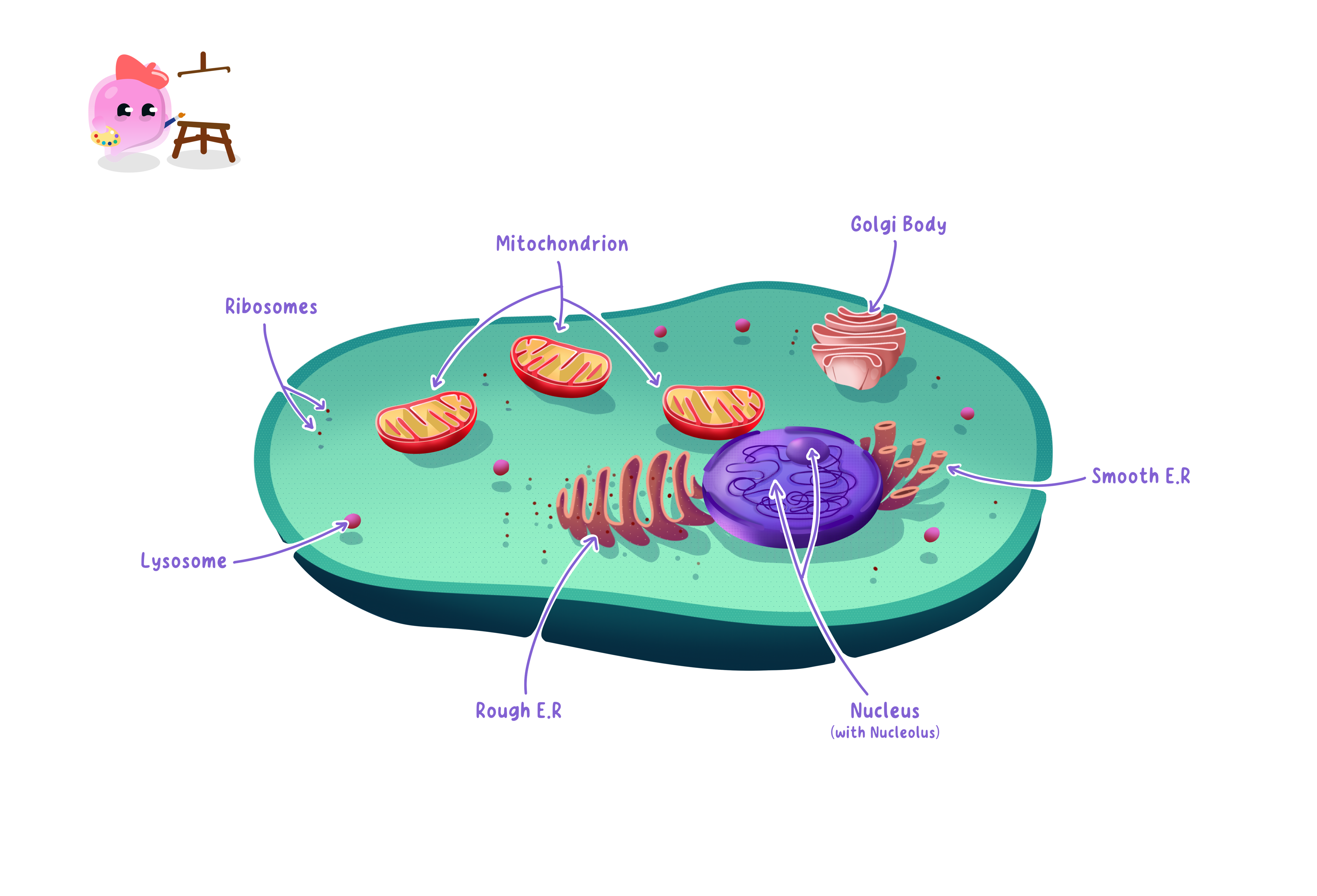
- An animal cell is a eukaryotic cell built from several sub-cellular structures, also called organelles.
- The nucleus is a large, membrane-bound structure that holds the cell's DNA.
- The cytoplasm is the jelly-like liquid that fills the cell and holds the other structures.
- The cell membrane is a thin layer around the cell.
- Mitochondria are small, rod-shaped organelles in the cytoplasm.
- Ribosomes are tiny structures in the cytoplasm, too small to see with a light microscope.
- An animal cell does not have a cell wall, a permanent vacuole or chloroplasts.
Common Mistake
An animal cell is surrounded by a cell membrane, not a cell wall.
What Each Structure Does in the Cell
Definition
Nucleus
The organelle that contains the cell's DNA and controls the cell's activities.
- The nucleus controls the cell's activities and holds the DNA that codes for proteins.
- The cytoplasm is where most of the cell's chemical reactions take place.
- The cell membrane is partially permeable and controls which substances move into and out of the cell.
- Mitochondria are the site of aerobic respiration, which transfers the energy the cell needs.
- Cells that use a lot of energy, such as muscle cells, contain many mitochondria.
- Ribosomes are the site of protein synthesis, where proteins are made.
Analogy
The nucleus is like the control centre of the cell, giving the instructions that run everything else.
The Extra Structures Found in Plant Cells
Definition
Cell wall
A rigid outer layer around the cell membrane that supports and strengthens the cell; in plant and algal cells it is made of cellulose.
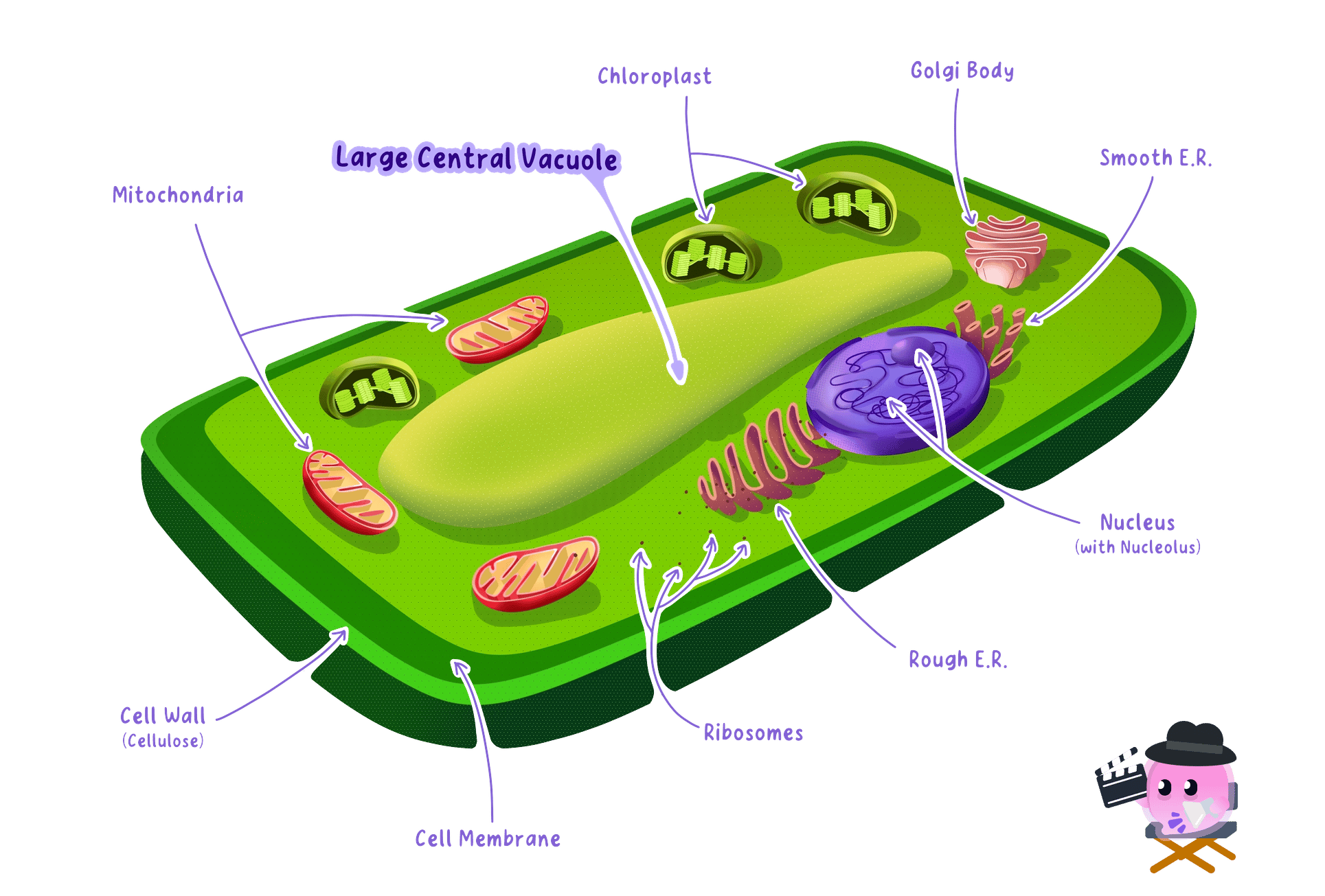
- A plant cell has everything an animal cell has, plus three extra structures, and algal cells have them too.
- A cell wall made of cellulose surrounds the cell membrane.
- A large permanent vacuole filled with cell sap sits in the middle of the cell.
- Chloroplasts are found in cells that receive light, such as leaf and stem cells.
- Cells that are not in the light, such as root cells, have no chloroplasts.
Hint
- In a diagram, a thin outer line is the cell membrane, while a thick outer layer around it is a cell wall.
- A cell with a wall, a permanent vacuole and chloroplasts is a plant cell.
What the Plant-Only Structures Do
Definition
Chloroplast
The organelle in plant and algal cells where photosynthesis takes place; it contains the green pigment chlorophyll, which absorbs light.
- The cell wall is made of cellulose and strengthens and supports the cell, helping it keep its shape.
- The permanent vacuole is filled with cell sap and helps keep the cell firm, which supports the plant.
- Chloroplasts are the site of photosynthesis and contain the green pigment chlorophyll, which absorbs light.
- These structures let a plant cell make its own food and stay rigid, which an animal cell cannot do.
Self review
- Name the five sub-cellular structures found in a typical animal cell.
- What is the function of the nucleus?
- Why do muscle cells contain many mitochondria?
- Name the three structures found in plant cells but not animal cells.
- What happens in the chloroplasts, and which pigment do they contain?
