Skip to content

Course home

Integration

Integration

EasyMediumHard
123456789101112131415161718192021222324252627282930313233343536373839404142434445464748495051525354555657585960616263646566676869707172737475767778798081828384858687888990919293949596979899100101102103104105106107108109110111112113114115116117118119120121122123124125126127128129130131132133134135136137138139140141142143144145146147148149150151152153154155156157158159160161162163164165166167168169170171172173174175176177178179180181182183184185186187188189190191192193194195196197198199200201202203204205206207208209210211212213214215216217218219220221222223224225226227228229230231232233234235236237238239240241242243244245246247248249250251252253254255256257258259260261262263264265266267268269270271272273274275276277278279280281282283284285286287288289290291292293294295296297298299300301302303304305306307308309310311312313314315316317318319320321322323324325326327328329330331332333334335336337338339340341342343344345346347348349350351352353354355356357358359360361362363364365366367368369370371372373374375376377378379380381382383384385386387388389390391392393394395396397398399400401402403404405406407408409410411412413414415416417418419420421422423424425426427428429430431432433434435436437438439440441442443444445446447448449450451452453454455456457458459460461462463464465466467468469470471472473474475476477478479480481482483484485486487488489490491492493494495496497498499500501502503504505506507508509510511512513514515516517518519520521522523524525526527528529530531532533534535536537538539540541542543544545546547548549550551552553554555556557558559560561562563564565566567568569570571572573574575576577578579580581582583584585586587588589590591592593594595596597598599600601602603604605606607608609610611612613614615616617618619620621622623624625626627628629630631632633634635636637638639640641642643644645646647648649
Question 409

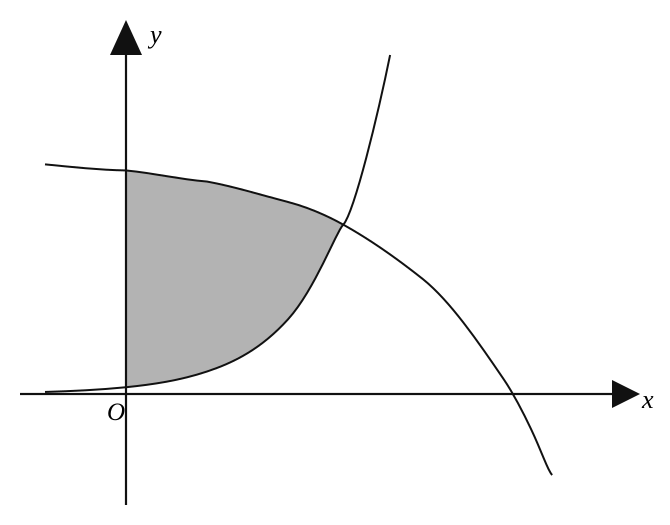
The curve C C\,C with equation y=f(x)y = f(x)y=f(x) is shown on the diagram.

A graph showing a curve C on a Cartesian coordinate system. The x-axis and y-axis are shown with arrows. The origin is labeled O. The curve C is a smooth curve that starts in the second quadrant, crosses the y-axis at a positive value, reaches a minimum point in the first quadrant, and then increases steeply into the first quadrant.

Given the minimum point of C C\,C is (1,e)(1, e)(1,e) and f′(x)=2(x−1)exf'(x) = 2(x - 1)e^xf′(x)=2(x−1)ex find an equation for f(x)f(x)f(x).

[6]
Markscheme

Integration Questions

  1. A Level
  2. /Maths
  3. /Integration

787 exam-style questions on Edexcel A Level Maths Integration, covering 11.1 Integrating Standard Functions, 11.2 Integrating f(ax + b), 11.3 Using Trigonometric Identities, 11.4 Reverse Chain Rule, 11.5 Integration by Substitution, 11.6 Integration by Parts, 11.7 Partial Fractions, 11.8 Finding Areas, 11.9 The Trapezium Rule, 11.10 Solving Differential Equations, and 11.11 Modelling with Differential Equations. Each one has a worked solution and a mark scheme showing where the marks go.

Question bank