Evaluate, using an appropriate diagram(s) and the information in Extract A, the extent to which trade unions are responsible for market failure in labour markets.
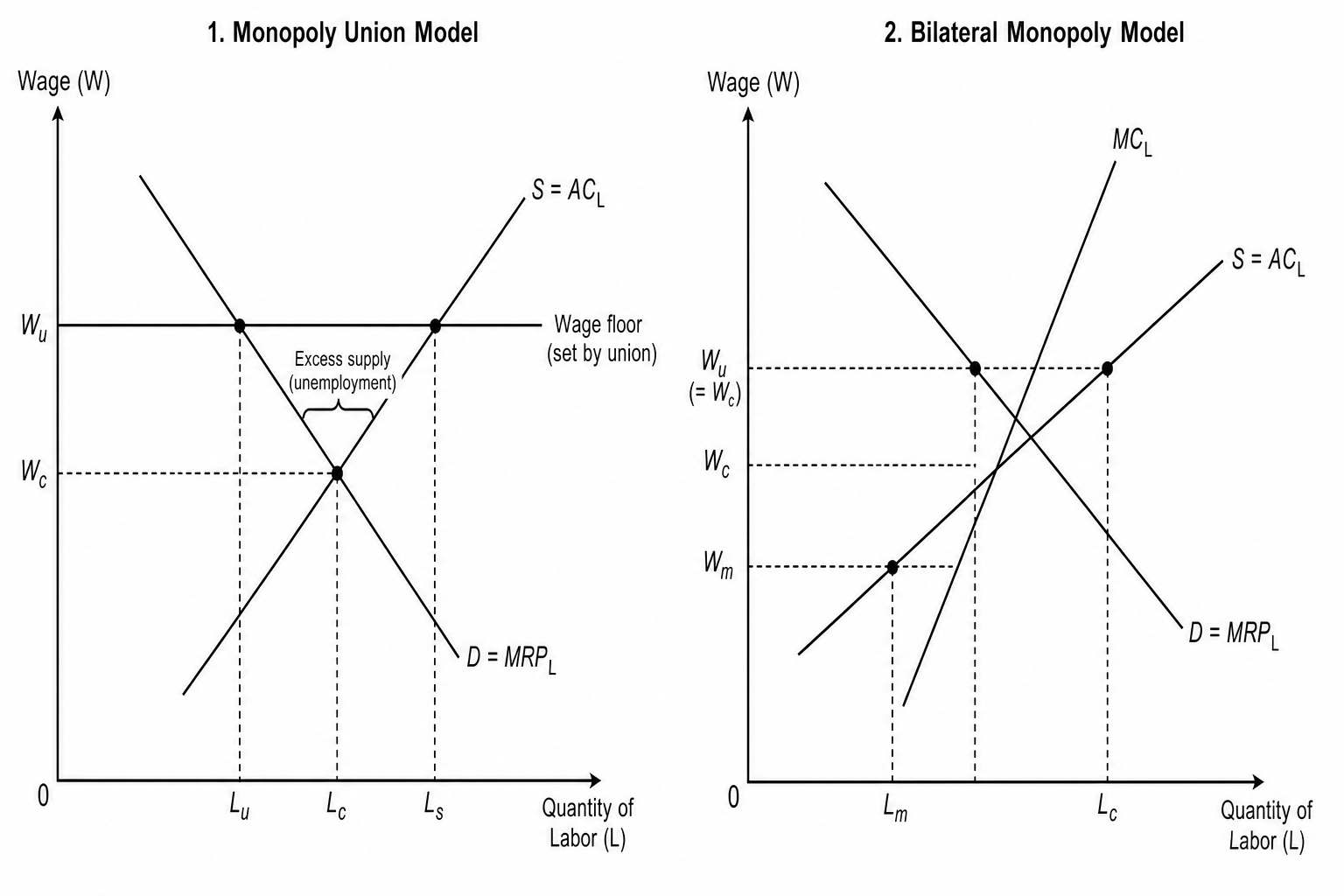
One of the most significant operational costs faced by deep-sea container terminal operators is the wages of specialised crane and straddle carrier operators. These workers have secured above-inflation pay increases for consecutive years. Trade unions retain a powerful position in wage negotiations at major shipping hubs, with the Port of Felixstowe serving as a prime example. Between 2012 and 2022, over 40,000 working hours were lost to industrial action at major UK container terminals, with operators striking over pay scales, shift patterns, and automation policies. Industry analysts argue that union intervention has driven wages for these specialised roles well above their marginal revenue product of labour, with starting salaries exceeding £62,000 in 2022—nearly double the UK median salary.
However, union representatives argue that these high wages are justified by the high-pressure environment of the role. Operators manage multi-million-pound machinery, operate at extreme heights, face strict safety regulations, and work unsociable 24/7 shift rotas. Unions assert that collective bargaining is crucial to prevent workers from being exploited by the highly consolidated, international shipping conglomerates that dominate the port sector.
While trade unions maintain leverage at strategic trading gateways, their nationwide influence has eroded. In the late 1980s, union density across the wider transport and logistics sector exceeded 50%, but this fell to under 15% by 2022. Driven by automation, flexible contracts, and globalisation, the bargaining power of unions has undergone a structural decline, leaving substantial wage-intervention capability concentrated in only a few critical infrastructure nodes.

