The diagram below shows a firm making supernormal profits in the short run under a perfectly competitive market structure.
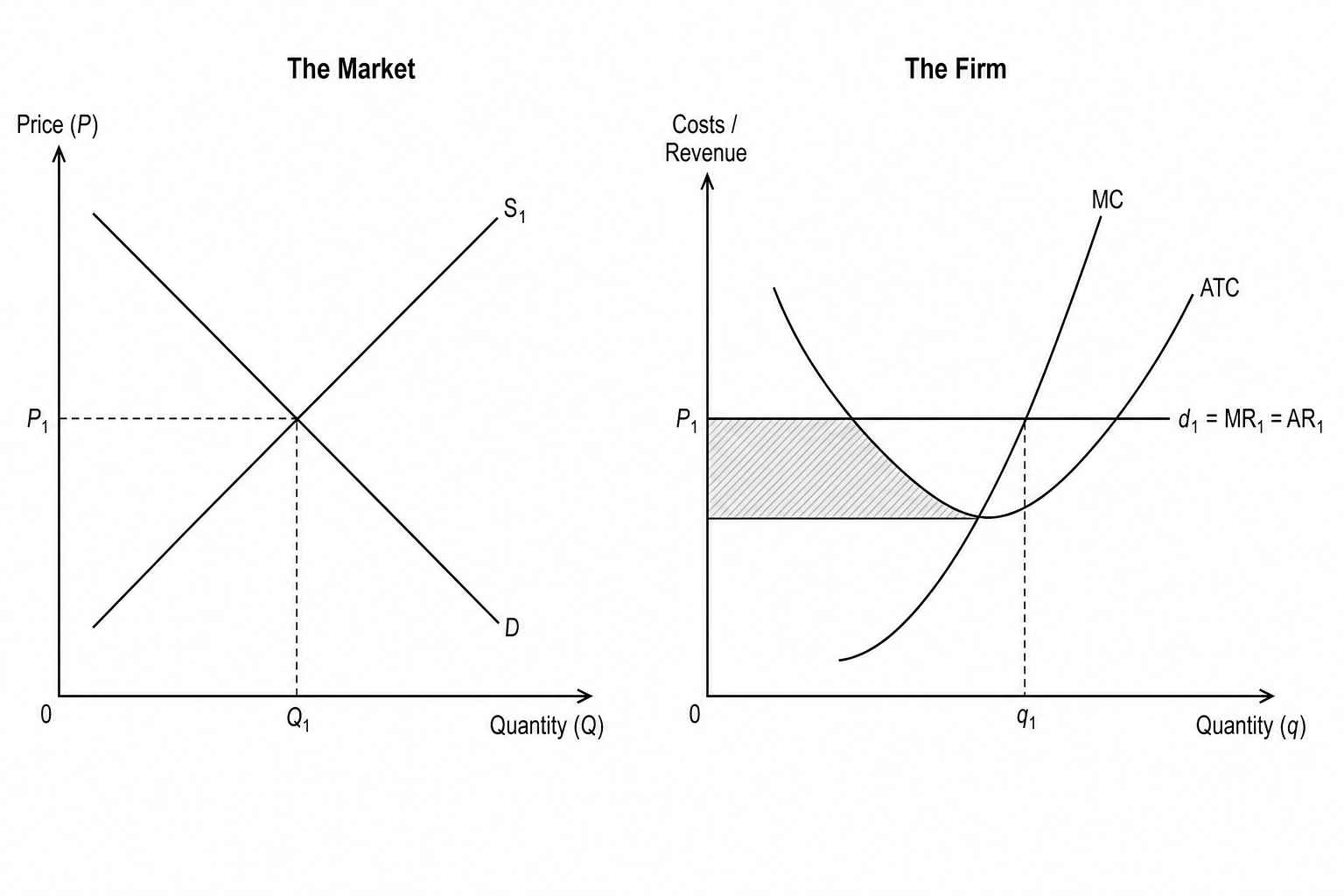
Which of the following describes the long-run adjustment process and the final equilibrium outcome for both the market and the individual firm?
New firms enter the market, shifting the market supply curve to the right. This drives the market price down until the firm's demand curve is tangent to the minimum point of its average total cost (ATCATCATC) curve, resulting in normal profits in the long run.
Existing firms expand their scale of production, shifting the market demand curve to the right. This increases the price and allows the firm to sustain supernormal profits in the long run due to product differentiation.
New firms enter the market, shifting the market supply curve to the left. This drives the market price up, forcing the firm to produce at a lower cost and earning higher supernormal profits in the long run.
High barriers to entry prevent new firms from entering, allowing the existing firm to restrict output and raise prices, resulting in monopoly profits in the long run.

