In many regional economies across the UK, massive fulfillment and distribution centres act as the dominant employers of low-skilled manual labour, creating localised monopsony power. Historically, these hubs have been able to keep wages close to the statutory minimum while operating with high staff turnover.
With recent proposals to increase the national wage floor significantly to a "Living Wage plus" standard, industry bodies argue this will accelerate the transition to fully automated warehouses (using advanced robotics and AI sorting systems), leading to substantial structural unemployment. Conversely, labour economists argue that in markets dominated by a few major employers, a higher minimum wage can correct market failures, increase wages, and actually expand employment.
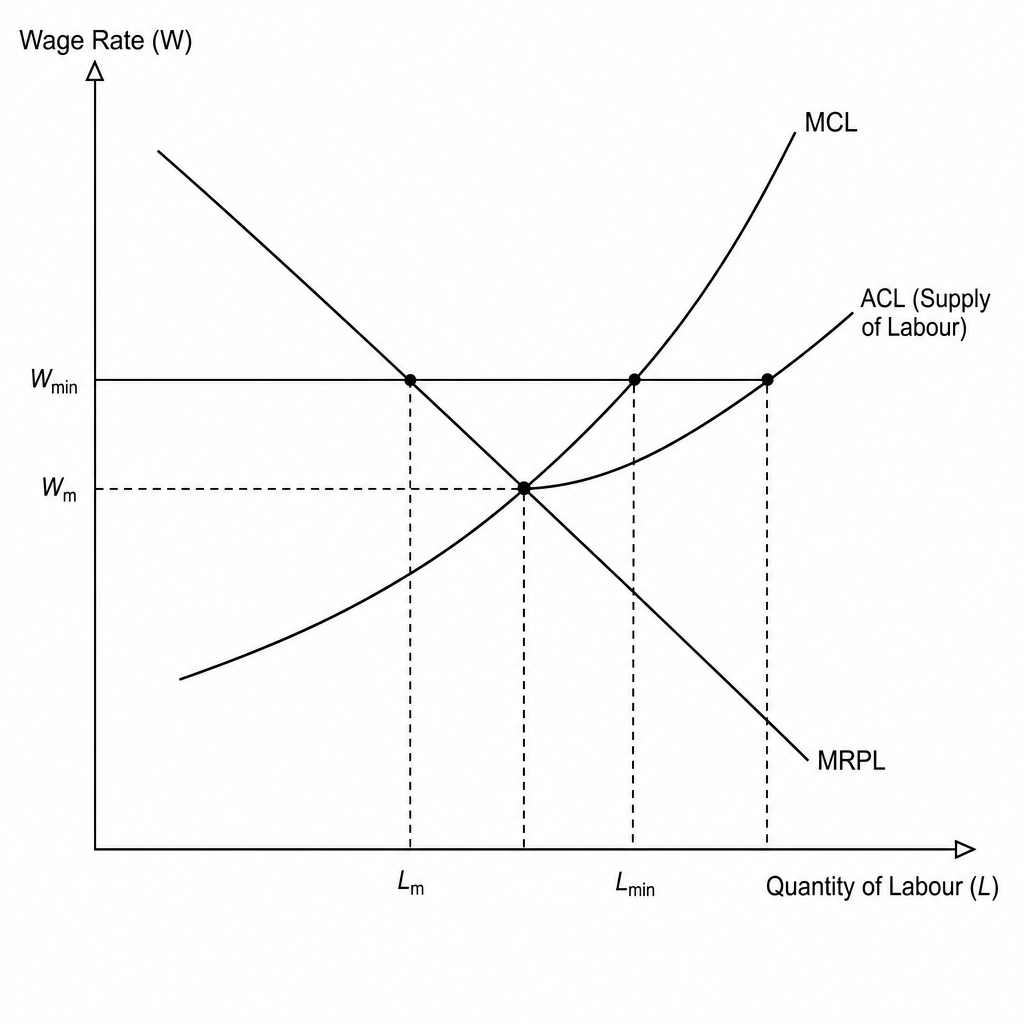
Evaluate the economic consequences of a significant increase in a statutory minimum wage on a labour market characterised by monopsony power, comparing your analysis with the impact on a perfectly competitive labour market.

