Definition
Short-run aggregate supply (SRAS): the output firms plan to supply at each price level while costs of production are given.
- SRAS holds the state of technology and factor productivity fixed, so only a change in production costs can shift it, leaving capacity for the long run.
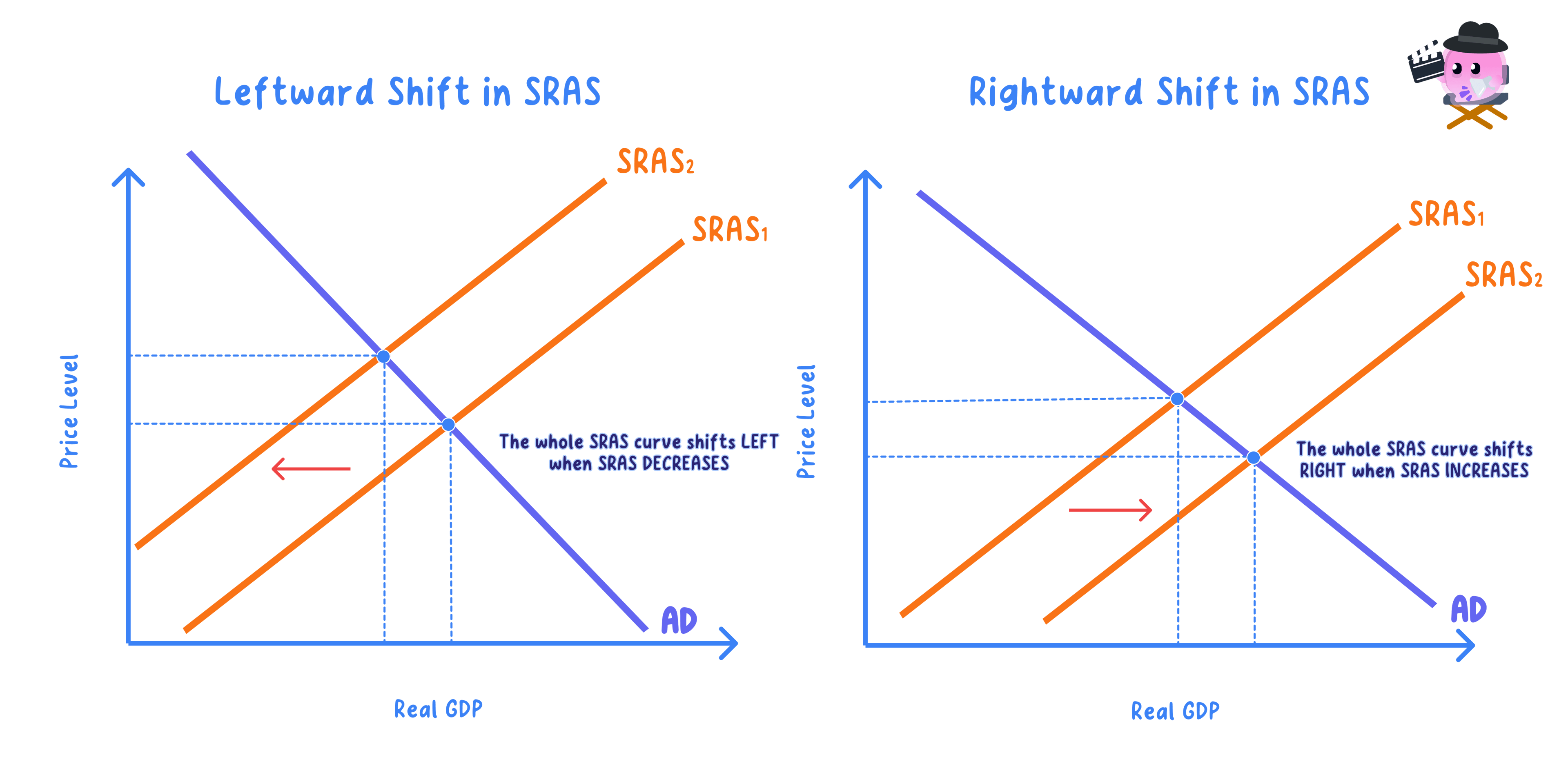
- A rise in costs shifts SRAS to the left and a fall in costs shifts it to the right, changing the output supplied at every price level.
Raw materials and energy
- Higher prices of raw materials and energy raise firms' costs and shift SRAS left, because a spike in oil or gas prices feeds into production and transport costs across the whole economy.
- Lower raw material and energy prices reduce costs and shift SRAS right, easing pressure on the price level.
Case study
- In 2022 sharp rises in global gas prices raised energy costs for UK firms, shifting SRAS to the left.
- This pushed up the average price level, contributing to cost-push inflation.
Exchange rates and taxes
Definition
Imported inputs: components, raw materials and energy that firms buy from abroad.
Business taxes: taxes that add to firms' costs, such as VAT and employer National Insurance.
- A weaker pound raises the price of imported inputs, so costs rise and SRAS shifts left, while a stronger pound makes them cheaper and shifts SRAS right; the fall in the pound after the 2016 referendum, for example, raised import costs for UK manufacturers reliant on foreign components.
- Higher business tax rates raise firms' costs and shift SRAS left, whereas lower business taxes reduce costs and shift SRAS right.
Do cost shocks always cause lasting inflation?
- It holds because a rise in costs shifts SRAS left, raising the average price level, as UK households saw when the 2022 energy shock fed through to prices.
- But it depends on persistence: a one-off cost rise lifts the price level once, whereas lasting inflation needs the shock to continue or to trigger a wage-price spiral.
- On balance the inflation effect depends on how long the cost shock lasts and on whether firms and workers expect it to continue.
Exam technique
- Trace the chain from the cost change to the direction of the SRAS shift and the effect on the price level and output.
- Draw the shift with arrows and label the new SRAS curve to earn the analysis marks.
Common Mistake
- Short-run AS shifts come from costs only, so keep productivity and skills for long-run AS.
- A rise in costs shifts SRAS left, so do not confuse it with a movement along the curve.
Self review
- What does short-run AS hold constant?
- How do higher energy prices affect SRAS?
- Why does a weaker pound shift SRAS to the left?
- How do higher business tax rates affect SRAS?
