With reference to Figure 1 and Extract A, explain one likely reason for the change in the four-firm concentration ratio of the UK EV rapid charging sector between 2018 and 2023.
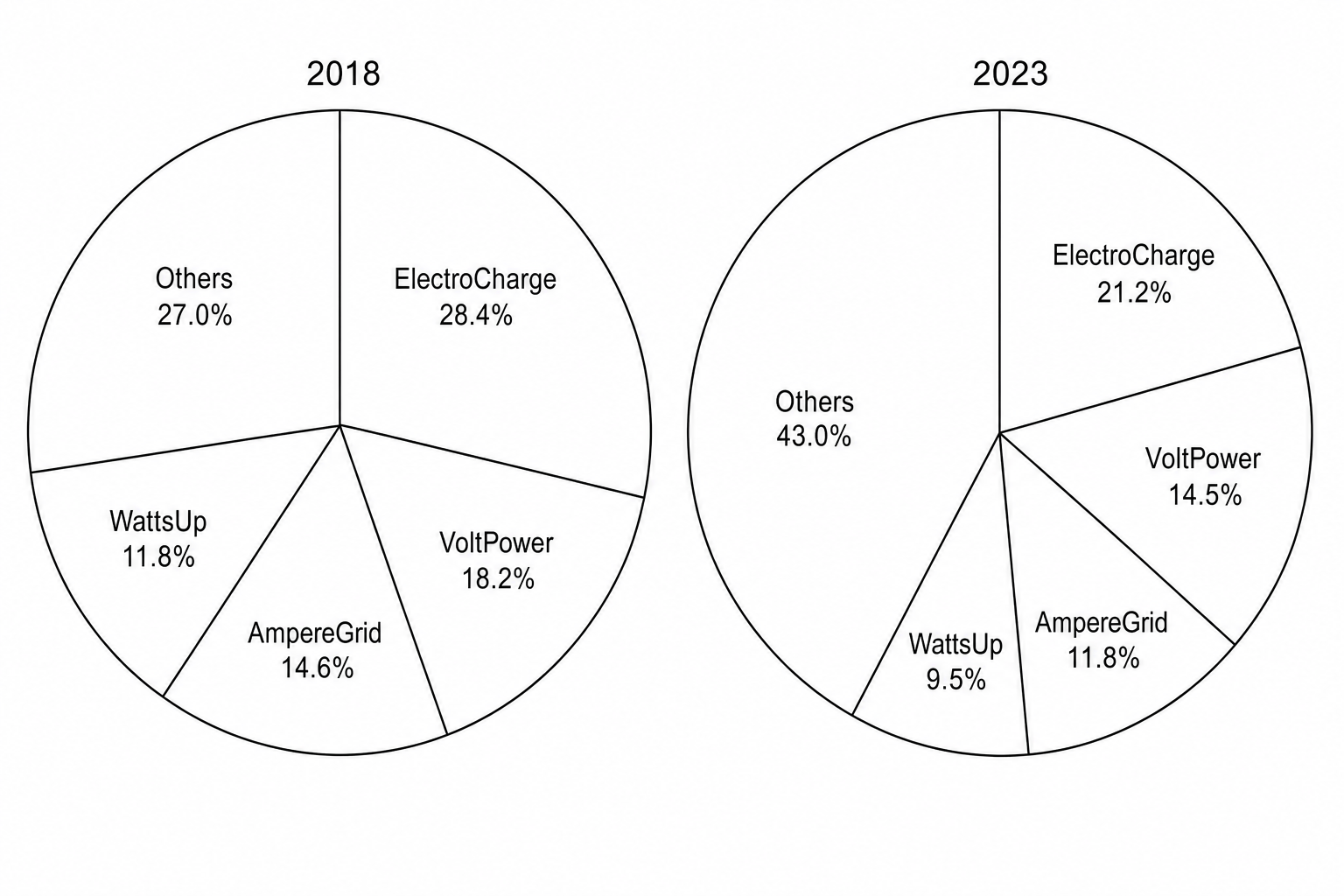
| EV Charging Operator | 2018 (%) | 2023 (%) |
|---|---|---|
| ElectroCharge | 28.4 | 21.2 |
| VoltPower | 18.2 | 14.5 |
| AmpereGrid | 14.6 | 11.8 |
| WattsUp | 11.8 | 9.5 |
| CurrentFlow | 8.5 | 7.0 |
| FlashCharge | 4.2 | 8.1 |
| SparkNet | 3.1 | 7.4 |
| NeoVolt | 2.0 | 6.2 |
| Others | 9.2 | 14.3 |
The number of electric vehicle infrastructure suppliers and regional electrical contractors struggling to stay profitable has surged as major charging network operators engage in intense price competition at rapid hub sites. Analysts point out that major networks are delaying payments to equipment suppliers and demanding heavy volume discounts to maintain their operating margins under pressure from rising wholesale electricity prices. Smaller, localized installer firms make up over 75% of those reporting severe cash flow constraints.
This aggressive competition has kept standard rapid charging tariffs relatively low, despite high inflation.
At the same time, the dominant 'big four' operators—ElectroCharge, VoltPower, AmpereGrid, and WattsUp—have faced intense pressure due to evolving driver behaviors. Many EV owners are shifting away from the legacy single-charger motorway sites operated by the market leaders. Instead, they prefer ultra-rapid hub developments by nimbler regional startups like FlashCharge and SparkNet, or localized retail-park destination charging networks like NeoVolt that offer subscription-free contactless payments and integrated food/coffee amenities.
Consequently, while the top firms struggle with legacy infrastructure and long queues to upgrade grid connections at older sites, smaller independent networks have expanded rapidly. These newer entrants have successfully secured prime local authority land and supermarket partnership contracts, rapidly installing modern hub hardware that attracts premium-paying drivers away from the established giants.

