The UK's vertical farming operations (VFOs) have emerged as a high-tech solution to food security and supply chain shocks. These farms grow crops indoors under controlled environments using hydroponic or aeroponic systems and LED lighting, bypassing traditional seasonal constraints to offer rapid, hyper-local delivery of leafy greens and herbs to supermarkets.
While still an emerging sector, industry analysts estimate there are between 150 and 300 commercial scale vertical farms operating across the UK. However, the high capital costs of setup and energy intensity make profitability challenging. Historically, indoor farming was confined to specialized research. Today, high energy costs and land-use pressures have driven firms to optimize every input, especially labor. Concurrently, consumer preferences are shifting. Even under a cost-of-living squeeze, the demand for premium, pesticide-free, locally-grown microgreens has experienced rapid growth—reflecting a green premium. Many high-end restaurants and eco-conscious shoppers are willing to pay £3.50 for a small box of hyper-local basil, viewing it as a superior quality product with minimal food miles.
The productivity of the workforce is crucial. Unlike traditional agricultural laborers, vertical farming technicians must monitor chemical balances, adjust LED spectrums, and manage automated irrigation systems. A rise in the productivity of these technicians directly enhances the output per worker. But specialized training is expensive, and many early-stage VFOs operate on tight budgets where labor costs represent up to 40% of operational expenditure.
Agricultural technology startups and venture capital have identified three main drivers shaping labor requirements in modern indoor agronomy:
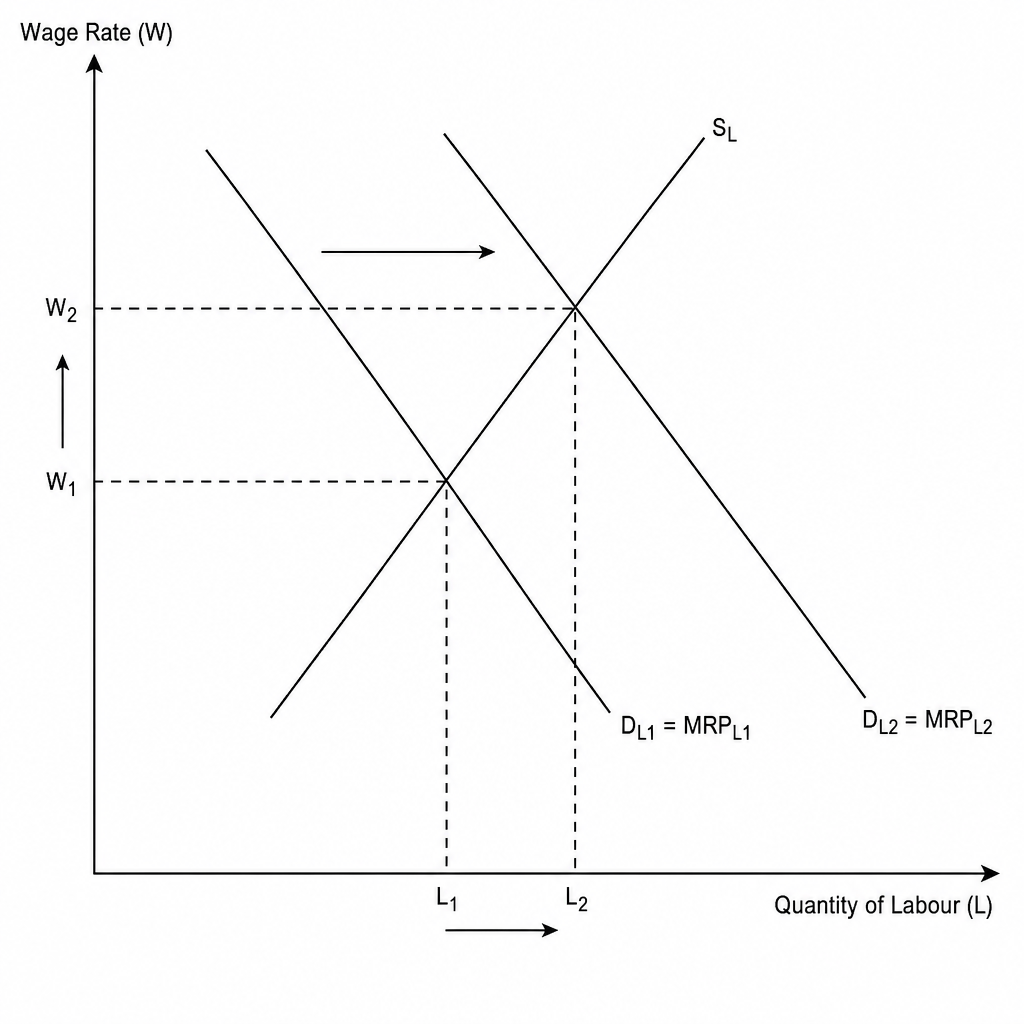
While capital-intensive automation is a threat to some low-skilled jobs, high-tech VFOs still rely heavily on human technicians for complex system diagnostics and quality control. Industry reports suggest that if the market price of premium greens rises or if technician productivity increases, the demand for these specialized workers will shift outwards, driving up equilibrium wages in the sector.
Discuss the likely effects of an increase in the market price of premium organic greens on the demand for labour in firms such as Vertical Farming Operations (VFOs) in the UK. Use a labour market diagram and the information from the extracts to support your answer.