Short-run Aggregate Supply Depends on the Price Level and Production Costs
Definition
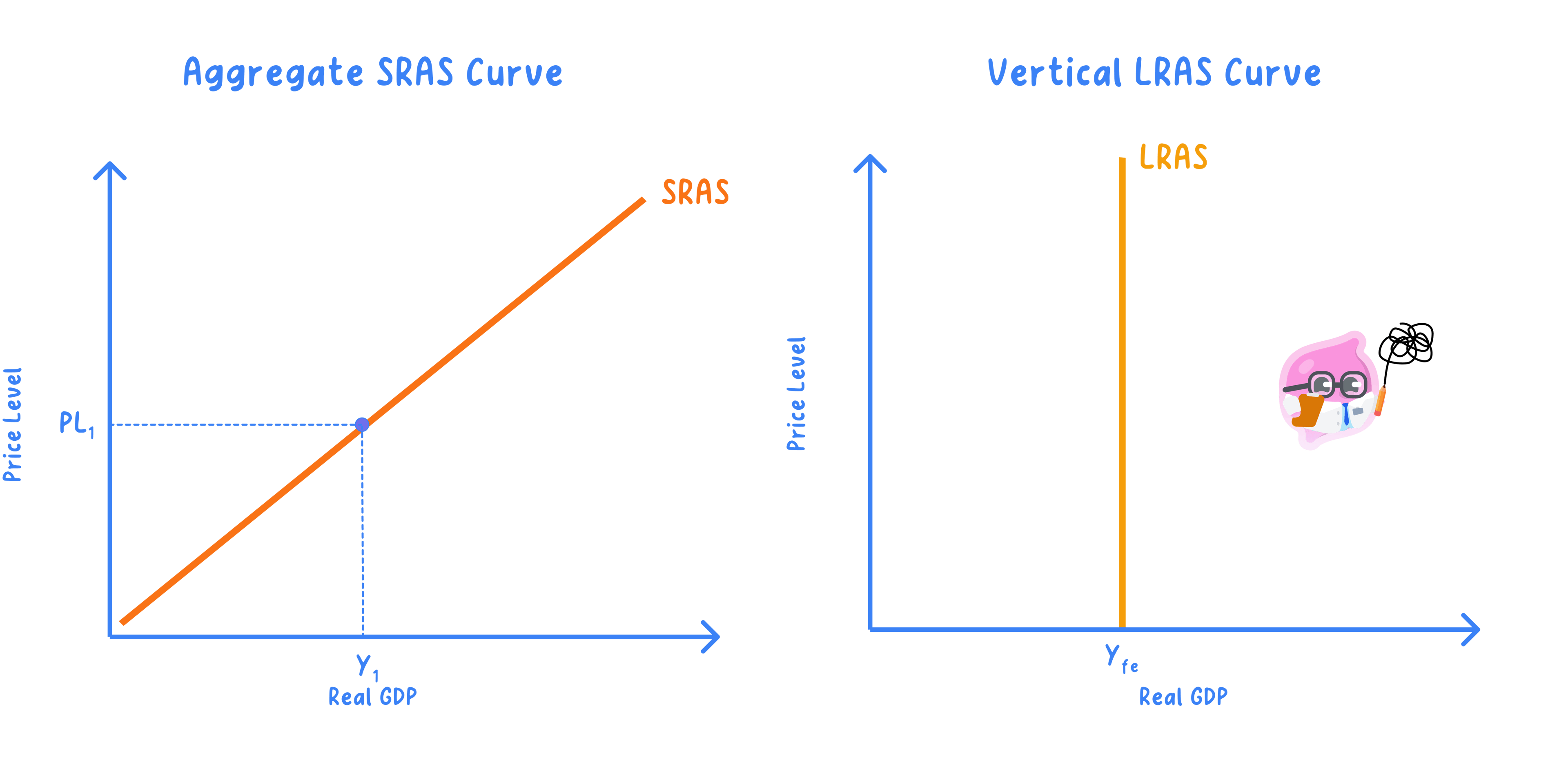
Short-run aggregate supply: the total quantity of goods and services firms are willing to produce at each price level while money wages and other input prices are assumed fixed, shown by an upward-sloping curve.
- Short-run aggregate supply (SRAS) slopes upward.
- In the short run, money wages and input prices are sticky.
- So a higher price level raises profit margins and encourages firms to expand output.
Note
- SRAS slopes up because costs lag behind prices in the short run.
- Cost changes shift the whole SRAS curve.
Changes in Production Costs Shift the SRAS Curve
- Money wage rates and raw material and energy prices change firms' costs.
- Exchange rates change the cost of imported inputs.
- Business taxation and productivity also shift SRAS, since higher productivity lowers unit costs and shifts SRAS right.
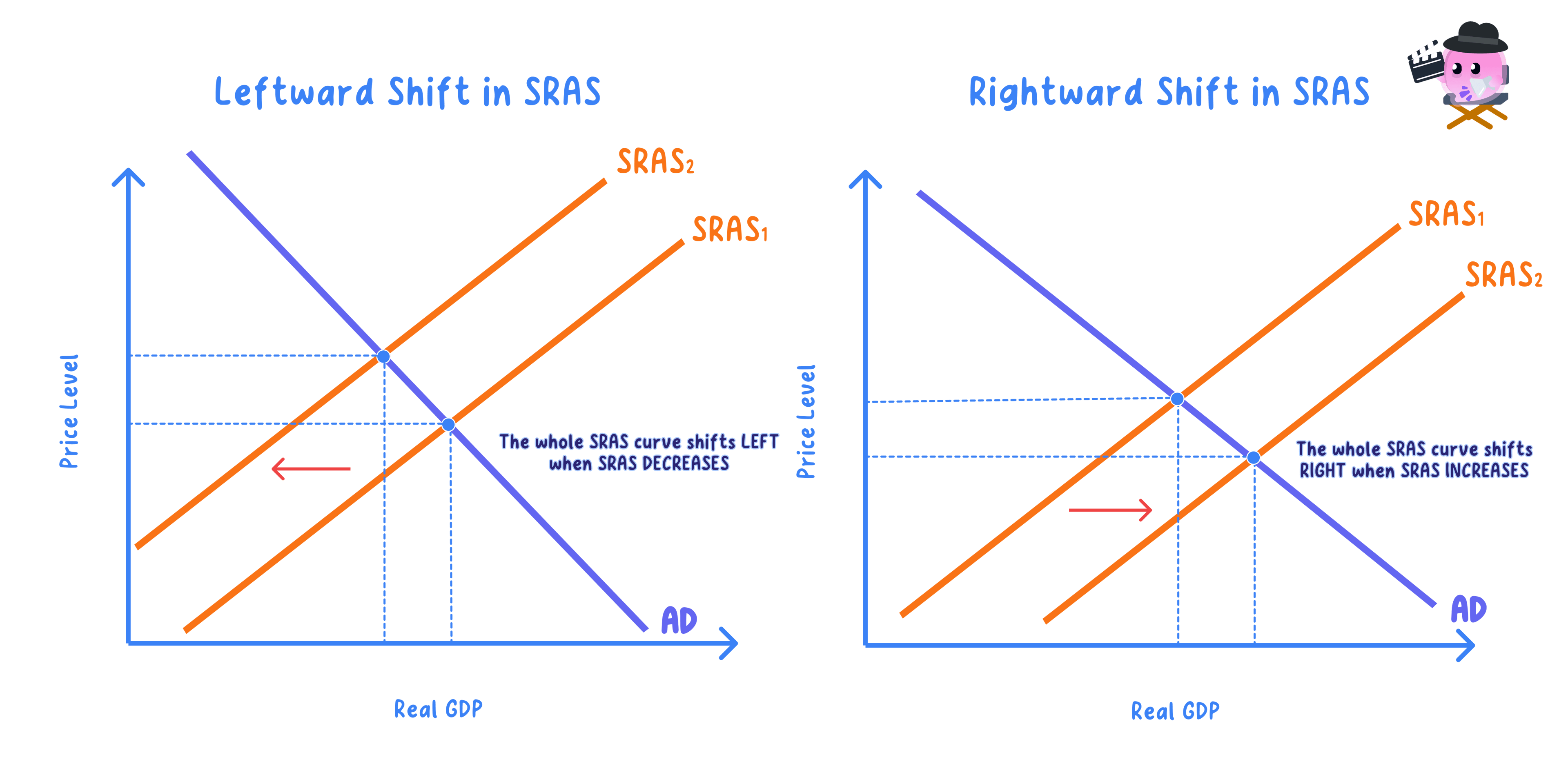
- A leftward SRAS shift raises the price level and lowers real output (cost-push inflation), while a rightward shift lowers the price level and raises output.
Example
- A rise in oil prices shifts SRAS to the left.
- A fall in the pound raises imported input costs and shifts SRAS left.
Case study
- In 2022 a surge in global gas and oil prices sharply raised UK firms' energy and transport costs, shifting SRAS left.
- The result was cost-push inflation well above the 2 per cent CPI target alongside weak output growth.
A Cost Change Shifts SRAS, While a Price-level Change Moves Along It
- A cost shock shifts the SRAS curve.
- A price-level change moves the economy along it.
- So the two must be kept apart.
Hint
- SRAS shifts come from changes in firms' costs.
- Do not confuse these with LRAS shifts, which come from changes in the economy's productive capacity, not day-to-day costs.
Separate Cost Changes From Price-level Changes
Exam technique
- Shift SRAS for a cost change and move along it for a price-level change.
- Show clear rightward or leftward shifts, and state the effect on the price level and output.
Common Mistake
- Do not confuse a cost shock that shifts SRAS with a price-level change.
- A price-level change is a movement along the curve.
Self review
- Why does SRAS slope upward?
- Name three things that shift SRAS.
- How does a fall in the pound affect SRAS?
- What happens to the price level and output when SRAS shifts left?
- What is the difference between a shift and a movement?
