In eukaryotic genetic crosses, the actual phenotypic ratios observed in the offspring frequently deviate from the expected theoretical Mendelian ratios. Other than genetic linkage, suggest two reasons why this occurs.
In the fruit fly Drosophila melanogaster, the genes governing body colour and wing shape are located on the same homologous pair of autosomes.
A geneticist crossed parent flies that were both heterozygous for both genes. The orientation of the alleles on the homologous chromosomes of each parent is illustrated below:
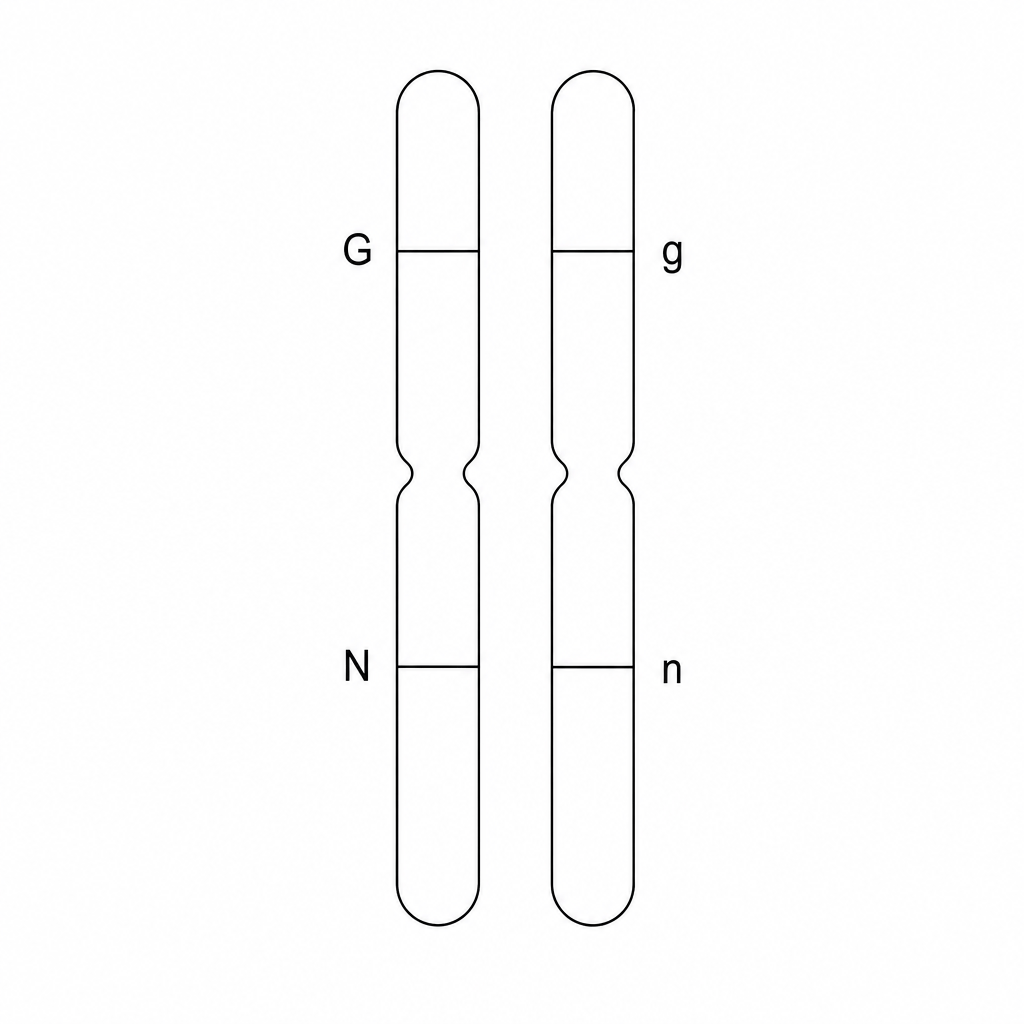
The phenotypes and numbers of offspring from this cross are detailed in the table:
| Phenotype of offspring | Number of offspring |
|---|---|
| Grey body, normal wings | 1245 |
| Grey body, vestigial wings | 42 |
| Black body, normal wings | 38 |
| Black body, vestigial wings | 375 |
Identify the genotype of the offspring displaying black bodies and vestigial wings.
Using your understanding of linkage and meiosis, explain the offspring numbers observed in the table.
Determine the expected phenotypic ratio of the offspring if these two genes were located on different homologous pairs of chromosomes and the same cross was performed.
Practise AQA A Level Biology Inheritance (A-level only) with exam-style questions for A Level Biology. 14 questions, matched to the AQA A Level Biology (7402) specification and written in Paper 1, Paper 2 and Paper 3 style. Every question includes a full worked solution and mark scheme, so you can see where marks are awarded rather than just whether you got the answer right.

