Elasticities in decision-making
- Price, income and cross elasticities of demand each inform a different decision.
- Together they let firms and governments anticipate how demand will move before it happens.
- Used well, they turn uncertainty about demand into planning.
Key Idea
- PED guides pricing and taxation, YED guides forecasting over the trade cycle, and XED guides responses to related goods.
- Each answers a distinct question about how demand will change, and both firms and governments rely on them.
What each elasticity informs
- PED
- Whether a price change raises or lowers total revenue: because petrol is inelastic, a fuel retailer or a chancellor can raise price or tax and revenue rises.
- YED
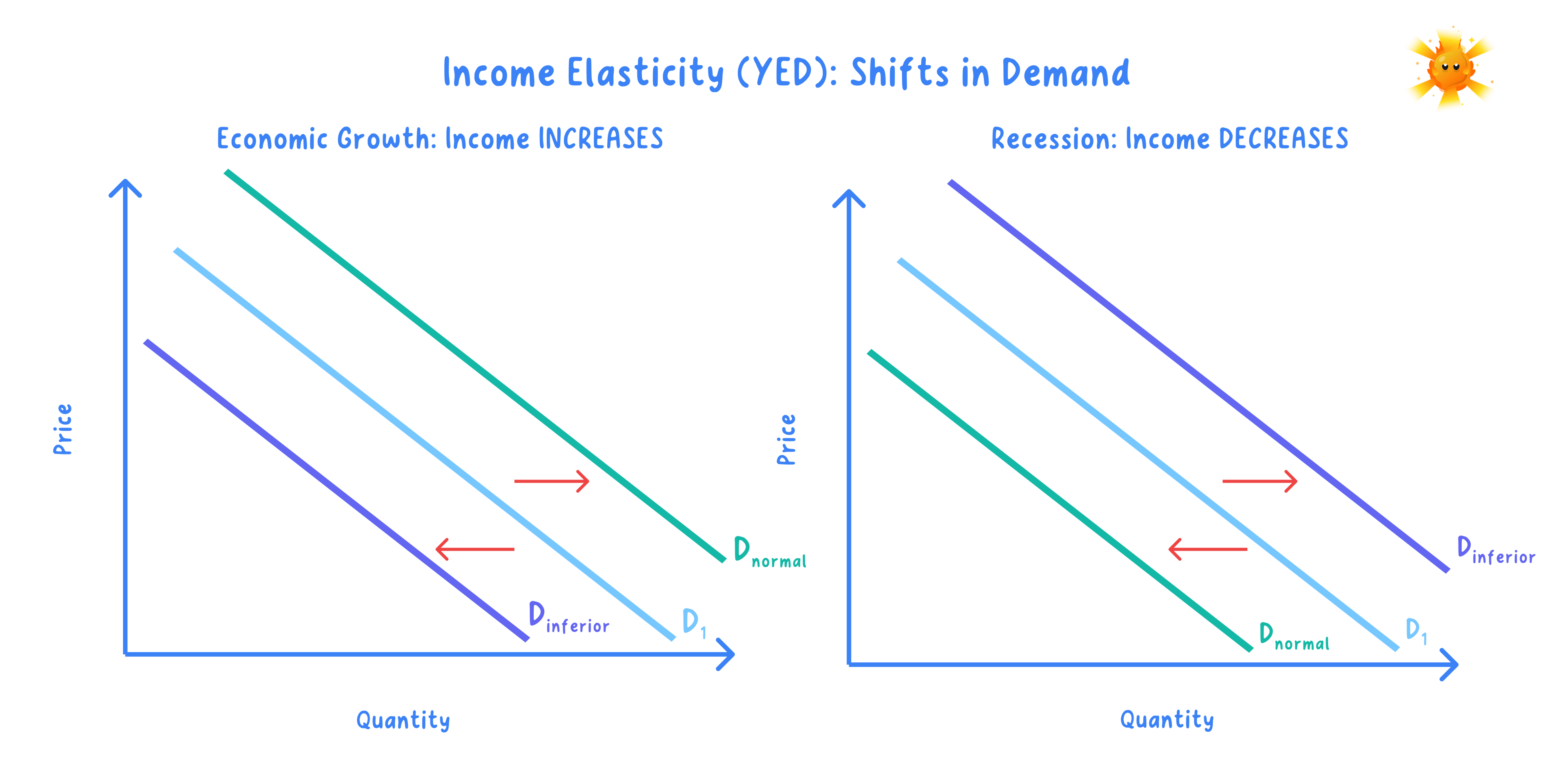
- How demand will move as incomes rise or fall over the trade cycle: high-YED luxuries such as foreign holidays boom when incomes rise but slump in a recession.
- XED
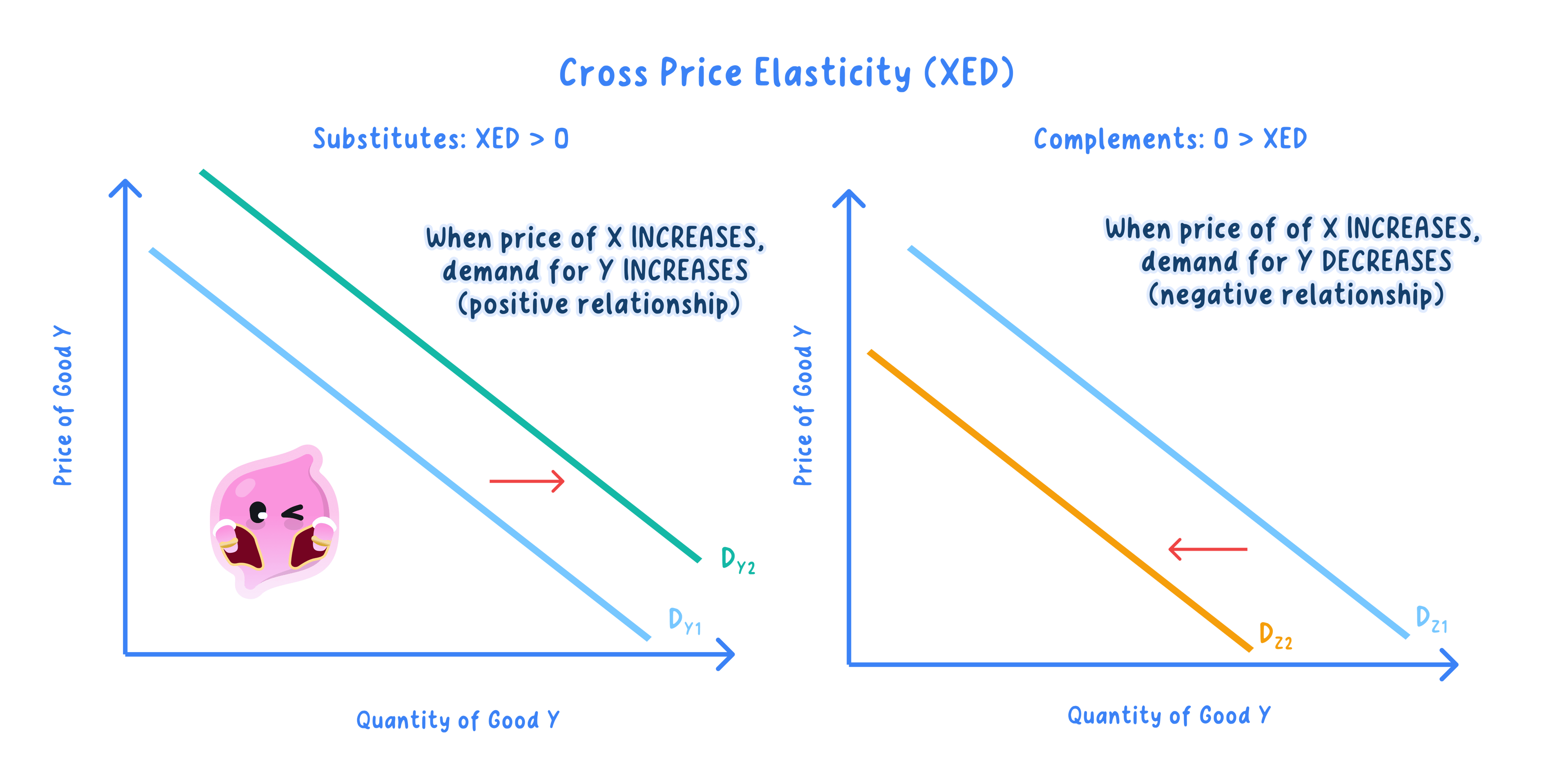
- How a rival's or a complement's price change will affect the firm's own sales: if Pepsi cuts its price, Coca-Cola's sales fall (positive XED), while dearer petrol drags down car sales (negative XED).
Firms' pricing decisions
- A firm uses PED to judge whether raising or cutting price will lift total revenue.
- It uses XED to decide how to react to a rival cutting price, or how to price a complementary product: a games console can be sold cheaply because buyers then spend heavily on high-margin games.
- Firms that build strong brands, such as Apple, make demand more inelastic, giving them more room to raise price without losing many buyers.
Government tax decisions
- Governments tax goods with inelastic demand, such as fuel and tobacco, to raise steady revenue.
- Because demand barely falls, most of an indirect tax on an inelastic good is passed on to consumers.
- To cut consumption of a demerit good sharply, a government instead needs demand to be elastic, often achieved by combining the tax with information or substitutes: there is a trade-off, since the same tax cannot both maximise revenue and slash consumption.
Example
- A government taxing cigarettes relies on inelastic demand so that revenue stays high even as the price rises to, say, £15 a packet.
- The same inelasticity, though, means consumption falls only a little, so the health goal is weakly served.
- A car maker uses positive YED to expand output of luxury models when incomes are forecast to rise.
Production planning
- YED tells a firm how sensitive its sales are to the ups and downs of the trade cycle.
- Producers of luxuries with a high YED, such as cruise lines and jewellers, expand capacity in a boom but face sharp falls in a recession.
- Producers of necessities and inferior goods, such as budget supermarkets, plan for steadier demand across the cycle and can even gain in a downturn.
- Knowing YED helps a firm diversify its product range to smooth demand over the cycle.
Using them together
- Each elasticity covers a different source of change in demand.
- Combined, they give a fuller picture than any one alone.
- This supports better pricing, production and policy decisions.
Note
- A supermarket uses PED to set prices, YED to plan its premium range and XED to react to a rival's promotion.
- Governments use the same measures when designing taxes and subsidies.
Limits of elasticity
- Elasticities are valuable guides only when the data behind them is reliable.
- Measured values are estimates that change over time, so they can date quickly.
- They assume other things stay equal, so they inform rather than dictate decisions.
How useful are elasticity estimates in practice?
- They are genuinely useful, because they turn vague expectations about demand into structured forecasts: a firm can anticipate how a price change, an income change or a rival's move will affect its sales, and a government can estimate the revenue from an indirect tax before it is set.
- But every estimate assumes ceteris paribus, and in practice the other determinants rarely stay constant, so a shift in incomes, a new substitute or a change in tastes can move demand in ways the coefficient alone does not capture.
- The figures are also backward-looking estimates drawn from past data, so they can be imprecise and date quickly, and a value measured for a small price change need not hold for a large change or for a different point on the demand curve.
- On balance, elasticities are valuable as one input among several rather than a precise instruction, so how far they can be trusted depends on the data: they are most reliable when the estimate is recent, based on good data and combined with qualitative judgement, and the weaker the data and the more volatile the market, the more cautiously they should be used.
Exam technique
- Match each decision to PED, YED or XED before you analyse it.
- Use more than one where a decision has several dimensions.
- Qualify conclusions with the limits of measured elasticity.
Common Mistake
- Do not use one elasticity for every decision, because pricing needs PED, income effects need YED and related goods need XED.
- Do not treat the values as certain, because they are estimates that can change as conditions change.
Self review
- Which elasticity informs a pricing decision?
- Why do governments tax goods with inelastic demand?
- How does YED help a firm plan production over the trade cycle?
- Which elasticity anticipates a rival's price change?
- Give one limit on relying on these measures.
