Shifts versus movements
Definition
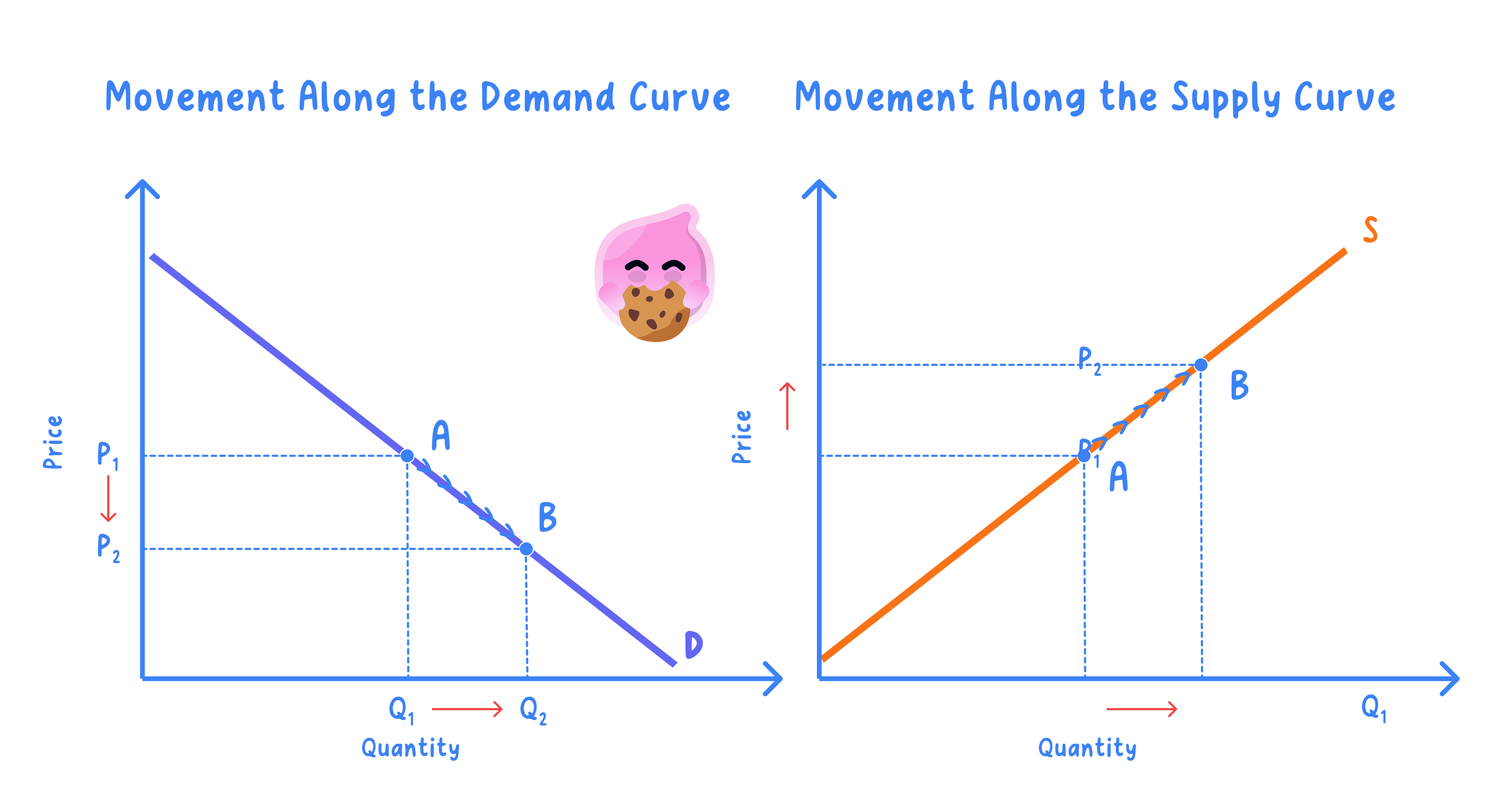
Movement along a curve: a change in quantity demanded or quantity supplied caused by a change in the good's own price, staying on the same curve.
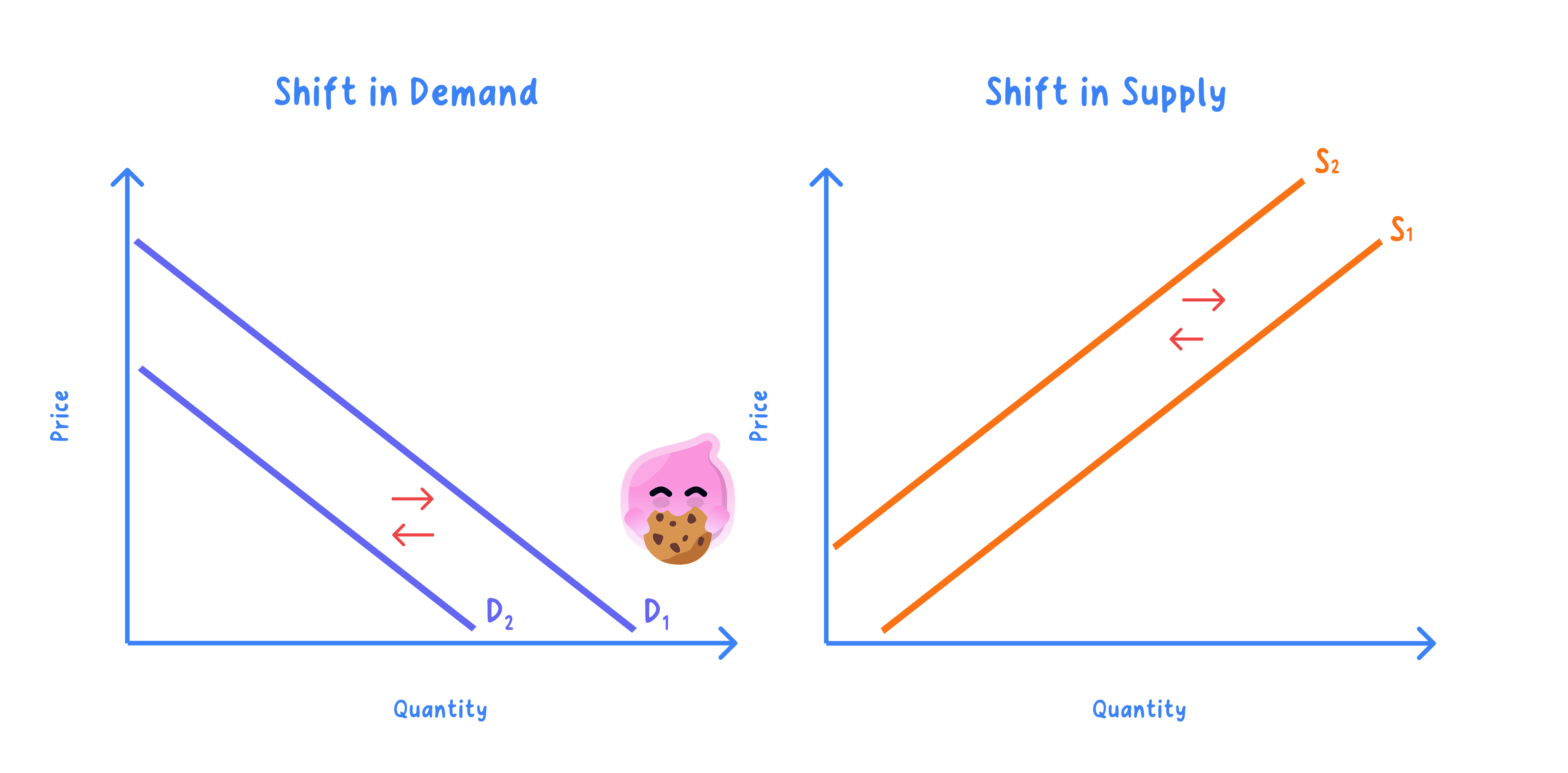
Shift of a curve: a change in demand or supply caused by a change in a condition other than own price, giving a different quantity at every price.
- Start by asking what actually triggered the change in the market.
- If the good's own price changed, you slide along the existing curve, which is a change in quantity demanded or quantity supplied.
- If any other condition changed, the whole curve moves to a new position, giving a different quantity at every price.
- So the cause, own price versus a condition, decides whether you move along or shift, and the identical test applies to both curves.
Key Idea
- Own price gives a movement along: a change in quantity demanded or quantity supplied.
- Any other determinant gives a shift: a change in demand or supply.
The same test for both
- Movement along: only the good's own price changes, so you slide up or down the existing curve.
- Shift: a condition of demand or supply changes, so the whole curve moves to a new position.
- Both curves alike: apply the identical own-price-versus-condition rule to demand and to supply.
Example
- In the market for coffee, first suppose the price of coffee itself rises from £3 to £4 a cup.
- Quantity demanded falls as buyers move up the same demand curve, which is a movement along.
- Now instead suppose the price is unchanged but a report warns that coffee harms health.
- Demand falls at every price, so the whole demand curve shifts left, which is a shift.
- Same good, yet the own-price change moves along the curve while the condition change shifts it.
Why it is fundamental
- Price-mechanism analysis works by tracing a shift to a new equilibrium, so the label must be right or the diagram misleads.
- Both a shift and a movement change the quantity traded, so the outcome alone cannot tell them apart.
- Only the trigger, own price or a condition, reveals which has happened, so always name the cause first.
Exam technique
- Identify the trigger before drawing anything.
- Own price means a movement along; any other determinant means a shift.
- Use the phrase change in quantity demanded for a movement, and change in demand for a shift.
Common Mistake
- Do not judge by the outcome; both a shift and a movement change the quantity traded, so the cause is what distinguishes them.
- Do not use different rules for demand and supply; the own-price-versus-condition test applies to both curves.
Self review
- What causes a movement along a curve?
- What causes a shift of a curve?
- Why is the outcome a poor guide to which has happened?
- State the correct phrase for a movement and for a shift in demand.
- Does the same test apply to both curves?
