Depreciation and appreciation
Definition
Appreciation: a market-driven rise in the value of a floating currency against another currency.
Depreciation: a market-driven fall in the value of a floating currency against another currency.
How they happen
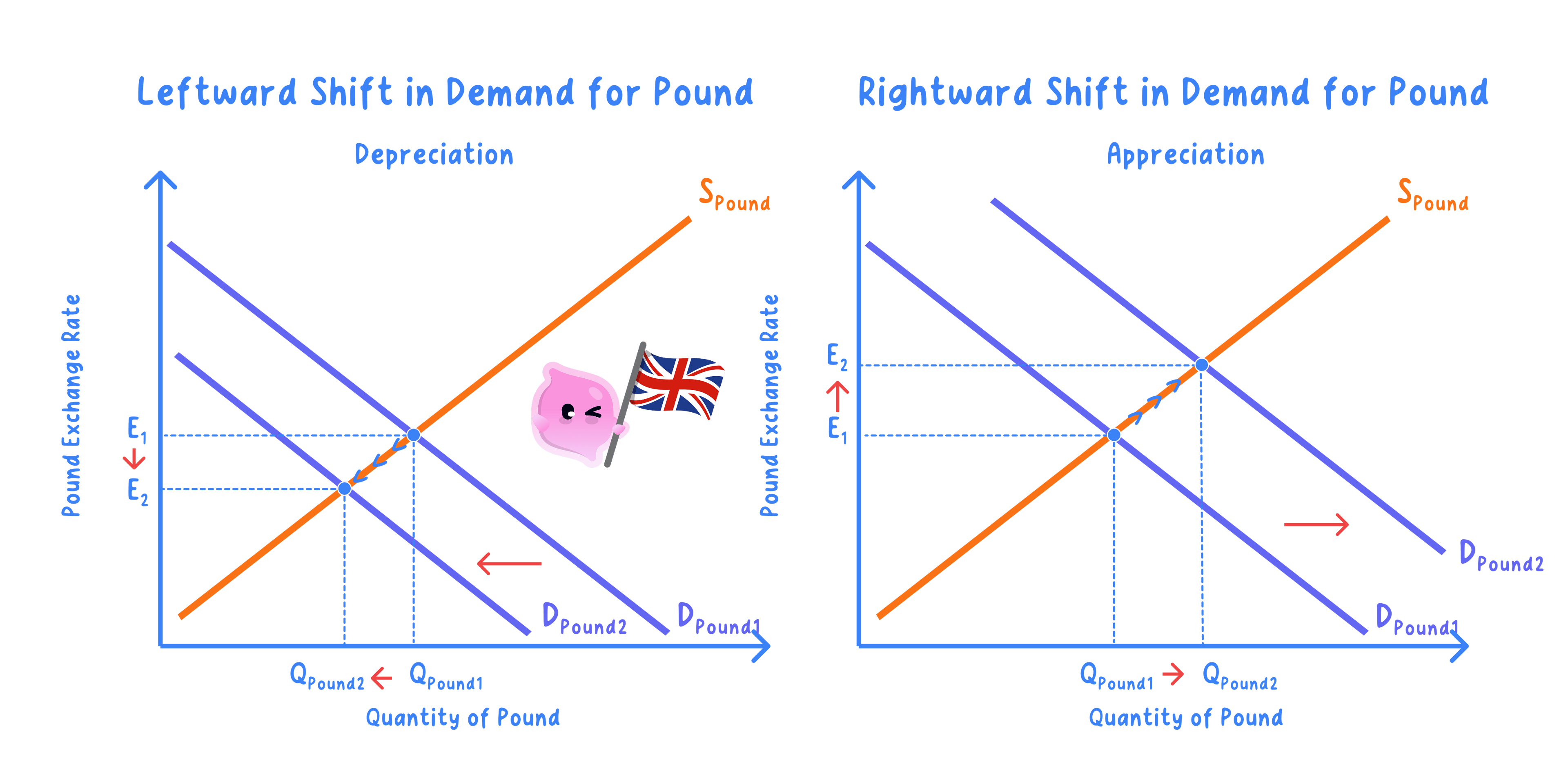
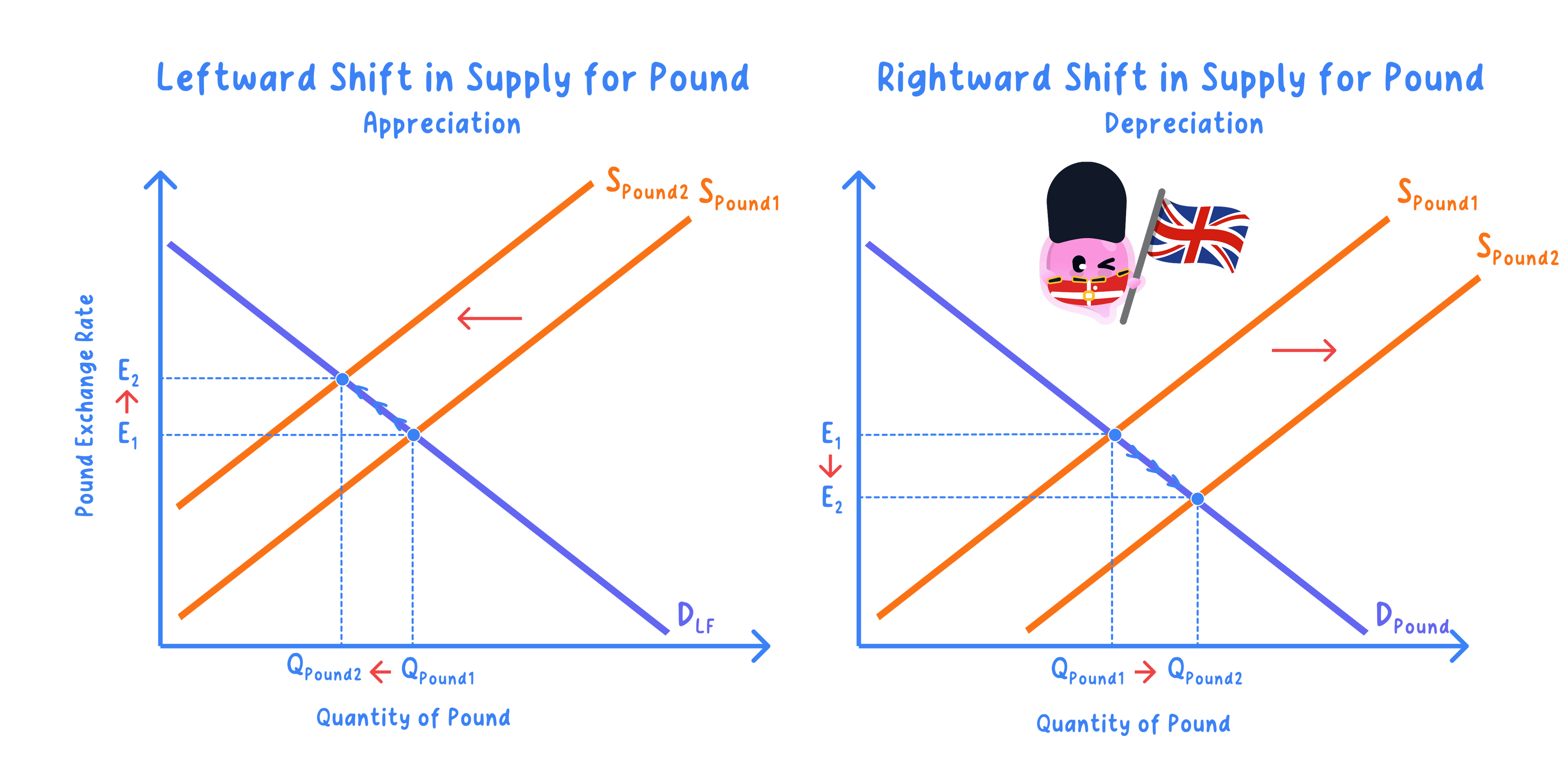
- A rightward shift in the demand for £, or a leftward shift in its supply, causes an appreciation.
- A leftward shift in the demand for £, or a rightward shift in its supply, causes a depreciation.
- Both movements are driven by market forces rather than by any government decision.
Key Idea
- Watch the direction: up is an appreciation, down is a depreciation.
- The value settles where the demand for and supply of £ meet.
Not devaluation
Definition
Devaluation: an official lowering of a fixed or pegged exchange rate by the monetary authorities.
Revaluation: an official raising of a fixed or pegged exchange rate by the monetary authorities.
- These are deliberate policy changes, set by the authorities rather than by market forces.
- They belong to the A Level treatment of fixed exchange rates (Cambridge 9708 11.2.3) and must not be confused with the floating-rate terms.
Note
- Use appreciation and depreciation only when the rate floats and moves with market forces.
- Use devaluation and revaluation only when the authorities reset a fixed or pegged rate.
Effect on trade prices
- A depreciation of £ makes UK exports cheaper for foreign buyers, because each £ now costs them less foreign currency.
- The same depreciation makes imports dearer for UK buyers, because each unit of foreign currency now costs more £.
- An appreciation of £ makes UK exports dearer abroad, tending to reduce the quantity sold.
- The same appreciation makes imports cheaper for UK buyers, tending to raise the quantity bought.
Example
- Suppose £1 = $1.40, then the £ depreciates to £1 = $1.20, a fall of about 14.3%.
- A UK export priced at £100 falls from £100 × 1.40 = $140 to £100 × 1.20 = $120 for a US buyer.
- So the depreciation makes UK exports cheaper abroad, which tends to raise the quantity demanded.
- A US import priced at $210 must be converted back into £ at each rate.
- The import rises from £150 to £175, so the depreciation makes imports dearer at home and tends to lower the quantity imported.
- Whether the current account improves depends on how elastic export and import demand are.
Exam technique
- Reserve appreciation and depreciation for floating rates and devaluation and revaluation for fixed rates.
- State the cause as a shift in the demand for or supply of the currency.
- Then trace the effect through to export and import prices.
Common Mistake
- Do not treat depreciation and devaluation as interchangeable, because the correct term depends on the exchange rate system.
- Do not assume a depreciation helps everyone, since it raises the price of imports for domestic buyers.
Self review
- What is an appreciation of a floating currency?
- Which shifts in the demand for or supply of a currency cause a depreciation?
- How do depreciation and devaluation differ?
- What happens to export prices after a depreciation?
- What happens to import prices after an appreciation?
