Inflation, deflation and disinflation
Definition
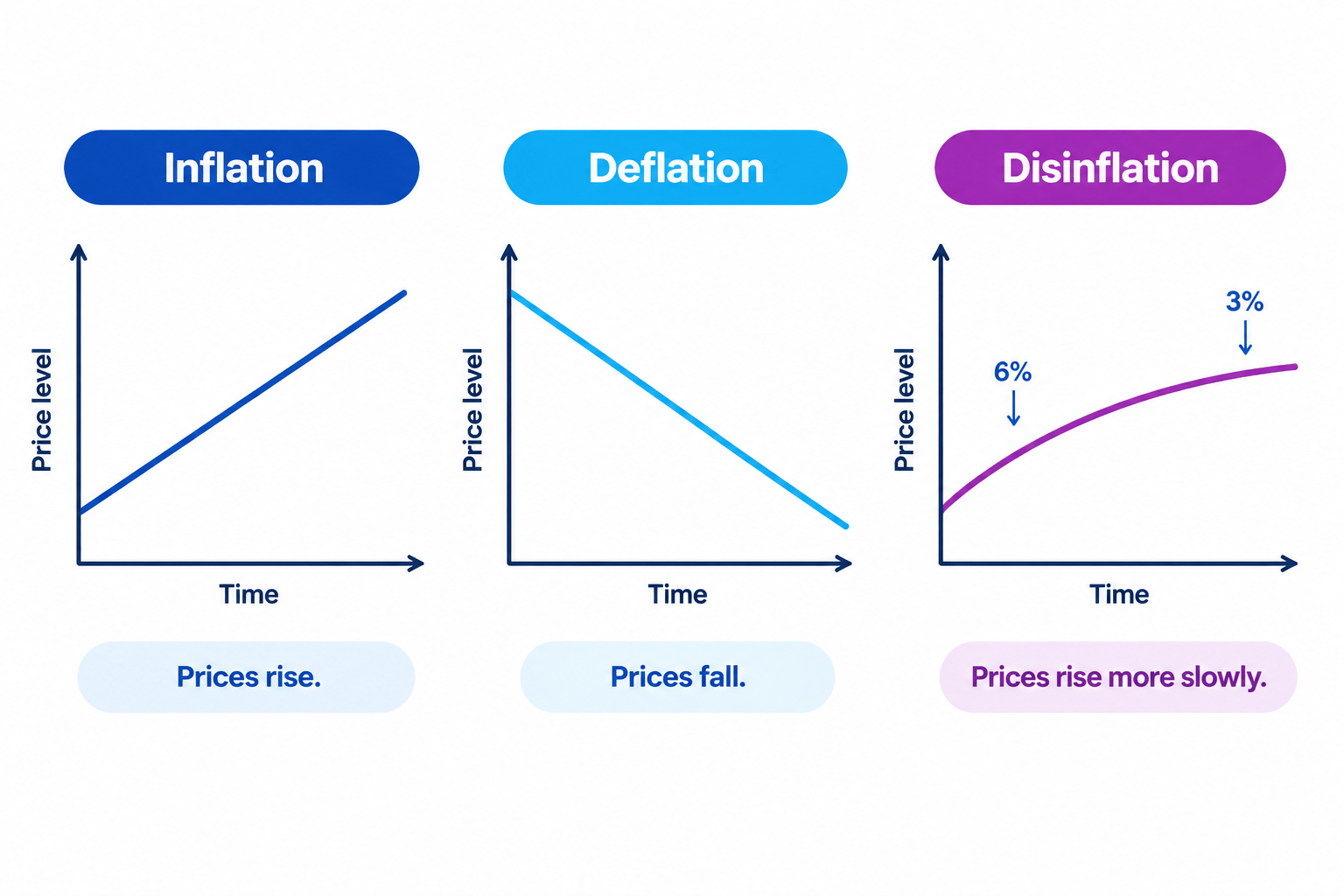
Inflation: a sustained rise in the general price level, which reduces the purchasing power of money.
Deflation: a sustained fall in the general price level.
Disinflation: a fall in the rate of inflation, so prices still rise but more slowly.
Three distinct ideas
Key Idea
- A one-off jump in prices is not sustained inflation, so it need not signal ongoing inflation.
- As the price level rises, each £ buys fewer goods, so the purchasing power of money falls.
Level versus rate
- Inflation and deflation describe the direction of the price level itself.
- Disinflation describes the direction of the rate of inflation, not the level.
- Under disinflation the price level is still rising, just by a smaller % each period.
- Only deflation means the price level is actually lower than before.
Effect on money
- When the price level rises, each unit of currency buys fewer goods and services.
- So inflation erodes the real value of money, because the same £ commands less output than before.
- This is why price stability is a common macroeconomic objective.
Example
- Inflation slowing from 6% to 3% a year is disinflation, because prices still rise.
- A price index falling from 104 to 102 is deflation, because the level itself has fallen.
- Suppose £100 is held in cash while the price index rises from 100 to 105.
- So the £100 now buys only about £95.24 of base-year goods, showing how inflation erodes the real value of money.
Exam technique
- Define inflation, deflation and disinflation as three separate terms.
- Stress that disinflation still means rising prices, only at a slower rate.
Common Mistake
- Do not confuse deflation with disinflation.
- Deflation is falling prices, whereas disinflation is slower inflation.
Self review
- Define inflation.
- Define deflation.
- Define disinflation.
- What happens to the purchasing power of money as the price level rises?