Skip to content

Course home

Revision guides·5.4.2 Structure of personality
Sign up

5.4.2 Structure of personality

  1. The psychodynamic approach splits personality into three parts.
  2. They are the id, the ego and the super-ego.
  3. These parts pull in different directions, and their balance shapes what you do.
Key Idea
  • The id wants, the super-ego judges, and the ego negotiates between them.
  • Whichever wins that tug-of-war drives your behaviour.

The Id, Ego and Super-ego

  1. The id
    1. The demanding part that wants things at once and chases whatever feels good.
  2. The ego
    1. The realistic part that weighs up what is sensible and keeps the peace.
  3. The super-ego
    1. The part that holds your sense of right and wrong, like a strict inner voice.
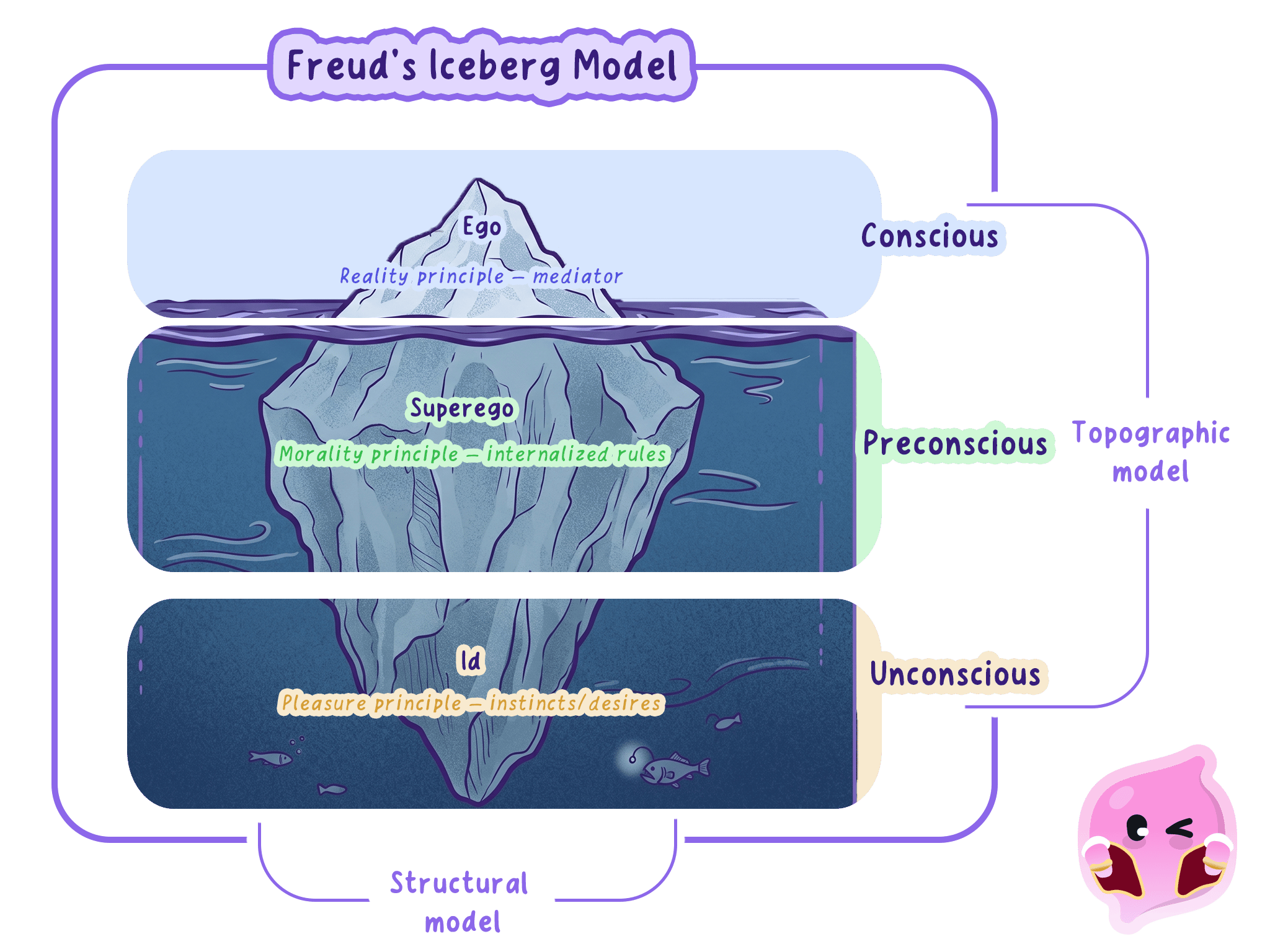
Freud's iceberg model showing the id, ego and super-ego across the conscious and unconscious mind

Example
  • You are last in a long queue for the bus and the id says push to the front.
  • The super-ego says wait your turn, so the ego settles on quietly moving up as gaps appear.

How the Three Parts Shape Motivation

  1. The id pushes you towards instant satisfaction.
  2. The super-ego pulls you towards doing the right thing.
  3. The ego balances the two, and that balance decides how you finally act.
Common Mistake
  • Do not blur the three parts together.
  • Remember the ego is the balancer sitting between the id and the super-ego.

Explaining the Structure in the Exam

  1. Name the three parts.
  2. Say what each part wants or does.
  3. Explain how they interact to shape motivation.
Self review
  • What are the three parts of personality?
  • What does the id want?
  • What is the role of the super-ego?
  • How does the ego balance the id and super-ego?

PreviousNext

How was this guide?

Teach Genie

Review 5.4.2 Structure of personality by teaching Genie

Teach it back in your own words, spot gaps, and remember it better.

Start teaching
Genie and Baby Genie

Lesson

Recap your knowledge with an interactive lesson

8 minute activity

Start lesson

The psychodynamic approach divides personality into three interacting parts: the id, the ego and the super-ego. Each part has different aims, so they can pull behaviour in different directions.

The id wants immediate pleasure, the super-ego judges what is morally right, and the ego negotiates a realistic response. The balance between these competing demands helps determine how a person behaves.

Questions

Put it into practice with exam-style questions

18 exam-style questions

Practice questions

Question 1

2 marks

At a family gathering, Nadia sees the last two slices of cake. She wants to eat both slices immediately, but believes she should save both slices for guests who have not had any cake.

Flashcards

Remember key concepts with flashcards

20 flashcards

Practice flashcards

What three parts does the psychodynamic approach split personality into?

5.4.2 Structure of personality Revision Guide

  1. IGCSE
  2. /Psychology
  3. /5.4.2 Structure of personality

Revision notes for CIE IGCSE Psychology 5.4.2 Structure of personality: explanations and worked examples.

More revision guides