The Limbic System
Definition
Limbic system
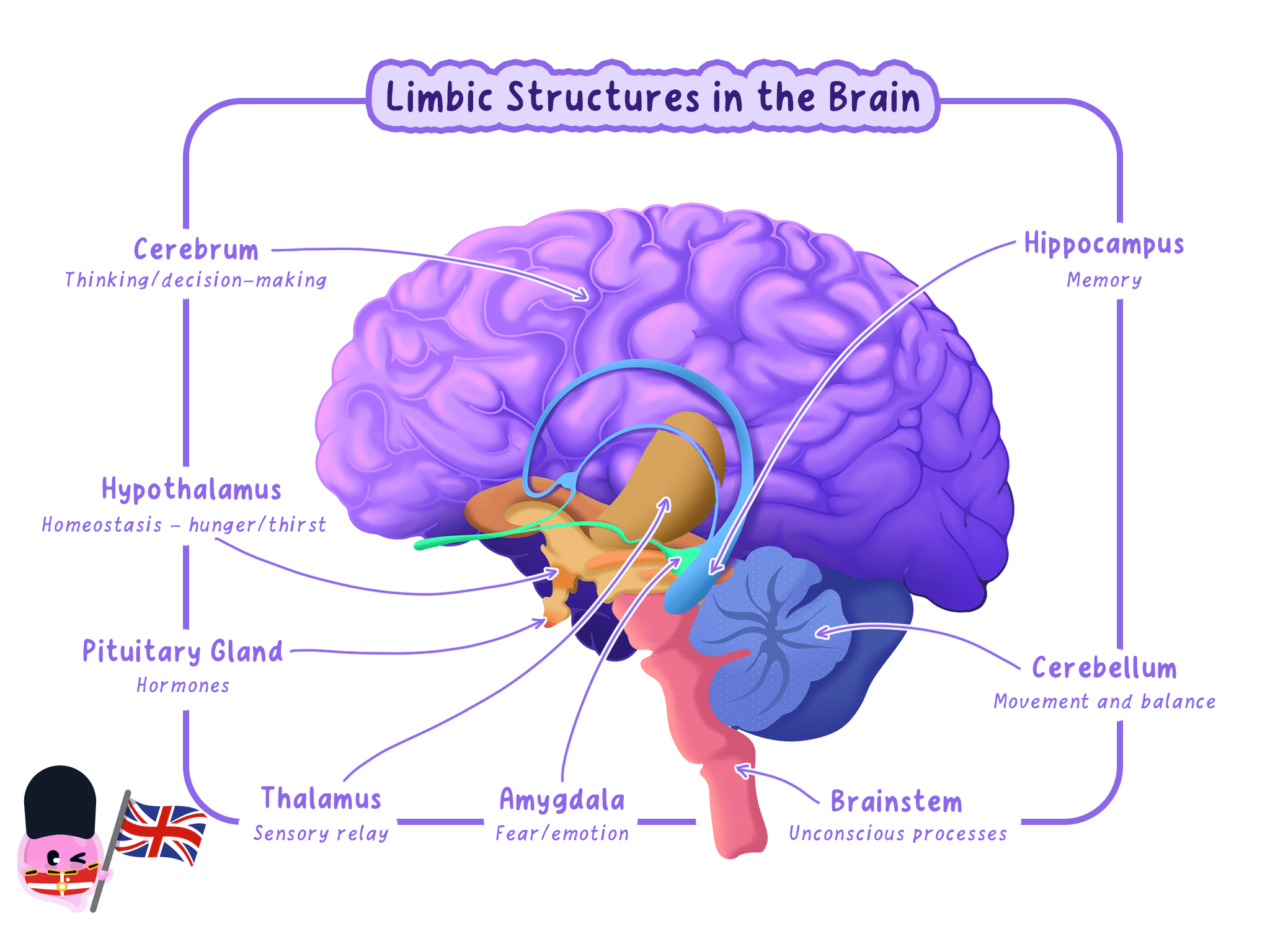
A network of structures deep in the brain, including the hippocampus and amygdala, involved in processing emotion, learning and memory.
- The limbic system is a network of structures deep inside the brain, not a single part.
- It is involved in emotion, memory and learning, and these jobs overlap.
- It also holds the brain's key memory structures.
Key Idea
- The limbic system is where emotion and memory meet.
- The amygdala and hippocampus both sit inside it.
What It Does
- It processes emotions, such as fear.
- It plays a central role in forming new memories, largely through the hippocampus.
- It also supports learning, which depends on being able to store and recall memories.
Example
- Think of GCSE results day, opening the envelope in the school hall with your heart pounding.
- Years later you can still picture that exact moment, because the limbic system tied strong emotion to the memory.
- Emotional events like this are often remembered far more vividly than ordinary ones.
The Key Structures It Contains
- The amygdala deals with emotional memories.
- The hippocampus helps turn short-term memories into long-term ones.
- Their detailed memory roles, and what happens when each is damaged, come in the next article.
Common Mistake
- The limbic system is a network of several structures, not a single part, so describe it that way.
- The cerebellum is not in the limbic system, since it sits separately at the back of the brain.
Describing the Limbic System in the Exam
- For a describe item, say it is a network of structures, not one part, involved in emotion, memory and learning.
- Name the amygdala and hippocampus as its key memory structures, the point most answers miss, and keep the cerebellum out of it.
Self review
- What is the limbic system?
- What three things is it involved in?
- Which two key memory structures does it contain?
- Why are emotional events often remembered well?
