Definition
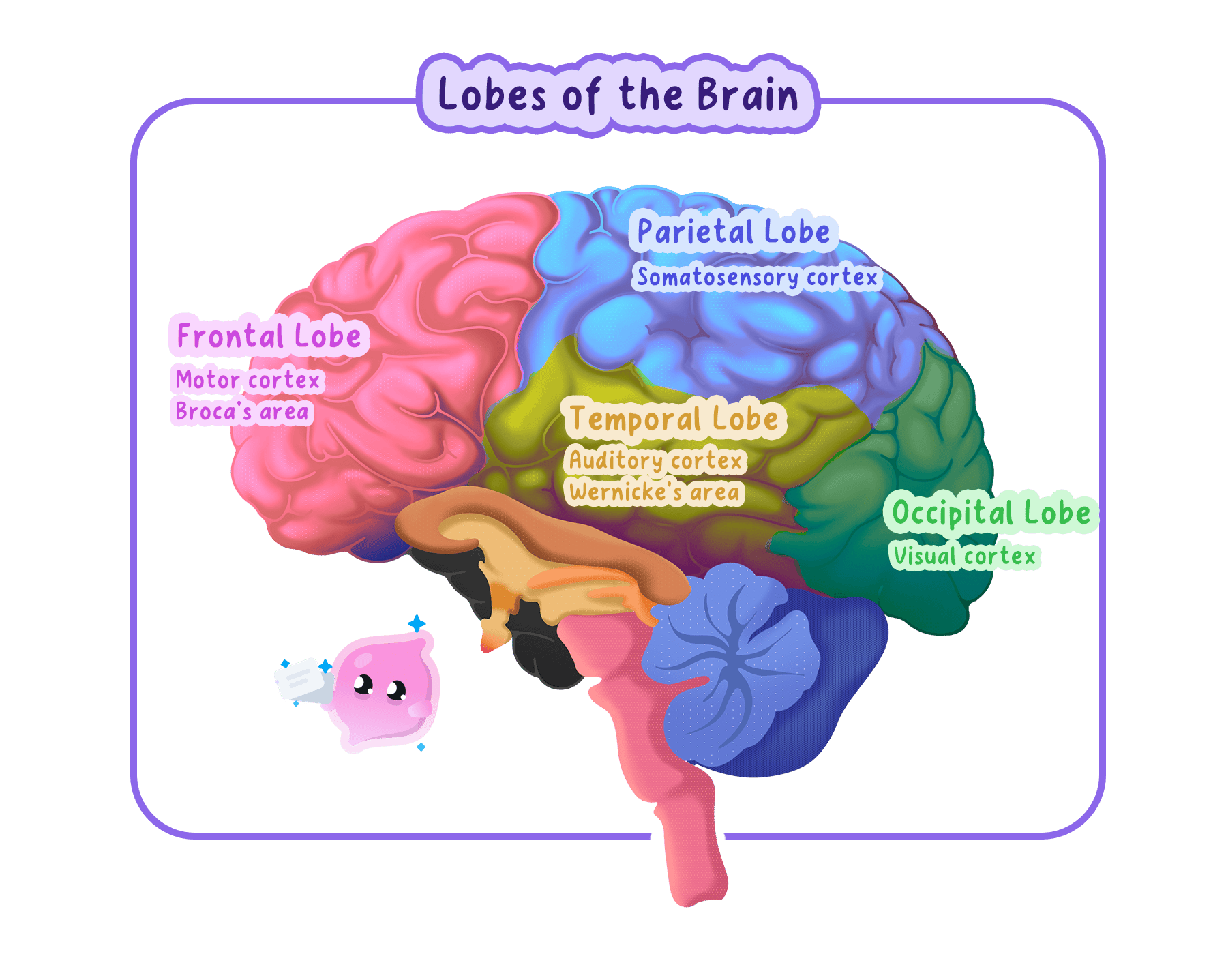
Localisation of function
The idea that specific areas of the brain are responsible for specific functions, so particular areas play a bigger role in forming and storing memories than others.
- Localisation of function means specific areas of the brain carry out specific jobs.
- Memory is one of these jobs, so it relies on particular areas rather than the whole brain working as one.
- Different regions specialise, much as the departments in a large hospital each handle different work.
Key Idea
- Localised means tied to a particular place in the brain.
- Some areas play a far bigger role in memory than others.
Why Localisation Matters for Memory
- If an area that handles memory is damaged, that memory can be impaired while your other abilities keep working.
- This explains why brain damage often disrupts some memories yet leaves skills, speech or personality intact.
- It also lets researchers link a particular area to a particular part of how memory works.
Example
- Picture a man in Cardiff who has a stroke that damages one memory area.
- He can still ride his bike and chat easily, yet he struggles to hold on to what he did yesterday.
- That split, some memory affected while skills stay intact, is exactly what localisation predicts.
Answering Localisation Questions
- State the definition first: specific areas carry out specific functions, so memory depends on particular areas, not the whole brain.
- Then link damage in a named area to the exact memory problem in the scenario, such as new memories failing while a skill survives, since the scenario link is where the application marks sit.
Common Mistake
- Localisation means areas specialise, so never claim the whole brain does everything equally.
- Damage to one area does not wipe out every memory, because other memory systems keep working.
Linking to Specific Structures
- The structures you meet next, such as the hippocampus and amygdala, each have their own memory job.
- Because each job is localised, damaging that structure affects its job in particular.
Self review
- What does localisation of function mean?
- Why does localisation matter for understanding memory?
- Why can brain damage affect memory but leave other abilities intact?
- Is memory spread evenly across the whole brain?
